Catholic saint biography
St. Maurice and the Theban Martyrs
- Commemoration:
- September 22
- Lived:
- Traditionally late third century — Agaunum, present-day Switzerland
Why dates and liturgical observances can differ
Read the sources for this biography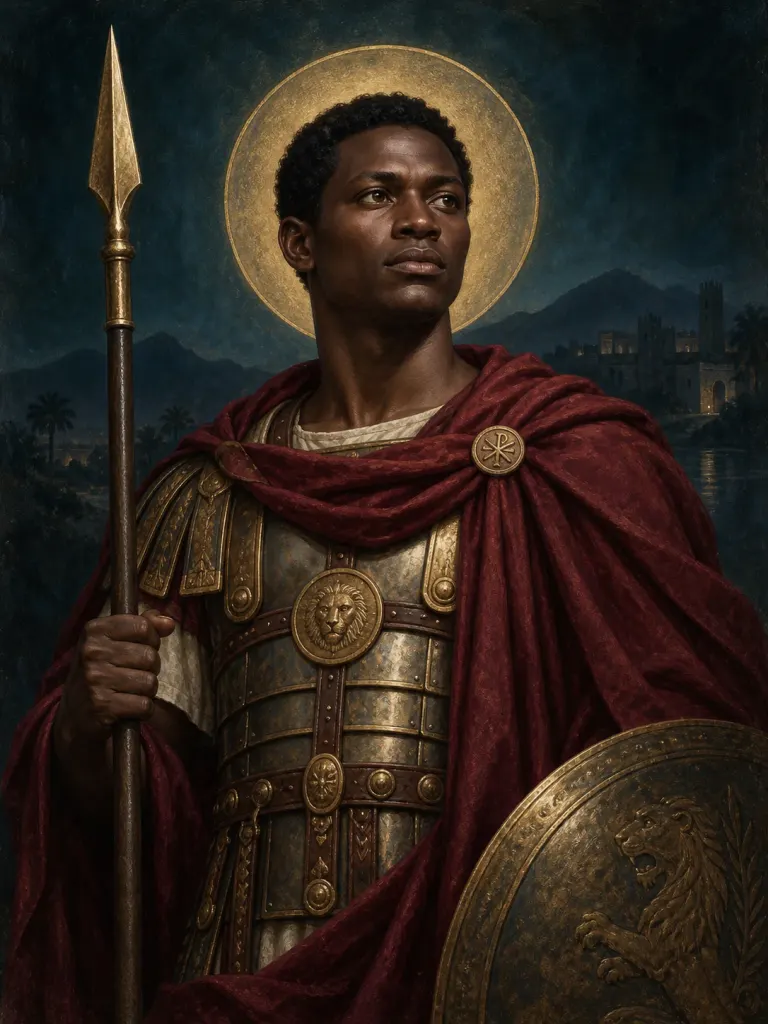
Biography
Maurice is remembered as the leader of Christian soldiers associated with the Theban Legion, whose martyrdom tradition centers on Agaunum in present-day Switzerland. According to the later account, they refused orders incompatible with their faith and were killed under imperial authority.
The name Theban connects the soldiers with Egypt in the received story, while Agaunum locates their remembrance in the Alpine world. The narrative's focus is a conflict of allegiance: service under military authority is presented as having a limit when commands contradict Christian faith.
The best-known narrative was written well after the events it describes. The size of the group, chronology, speeches, and military circumstances have been debated, so these details should not be treated as a contemporary military report. An ancient local cult nevertheless developed into a major monastic and pilgrimage center. Maurice's memory influenced Christian art and the ideal of faithful service under pressure.
Churches and religious institutions spread his memory well beyond the original shrine. In art he may appear with armor, a standard, or a martyr's palm, and some medieval works depict him as a Black African. Such representations are important evidence of the history of devotion, not independent proof of every detail of the legion's organization.
Context & contribution
The shrine becomes a center of continuous prayer
The institution at Agaunum developed a legacy distinct from the disputed details of the legion's martyrdom. King Sigismund's patronage renewed its monastic community, and in the early sixth century the abbey became known for perpetual psalmody: successive groups of monks continued the Divine Office through day and night.
The practice, known as the custom of Agaunum, spread to other houses in Gaul, including important communities at Lyon and Paris. Maurice's shrine thus influenced the organization of communal prayer as well as ideals of military fidelity. This later institutional history can be investigated on its own evidence, without assuming that every number, speech, or military circumstance in the martyrdom narrative is established.
Explore the sources for this section
AI-assisted source comparison updated 2026-09-26. Editorial approach
From the Saint Discovery blog
Keep exploring your faith
Practical guides to prayer, the saints, and living the Catholic faith.
Why Do Catholics Pray to Saints? Intercession Explained
Why do Catholics pray to saints? Learn how intercession differs from worship, how it relates to Jesus, and a simple way to ask a saint to pray for you.
A next step with your saintRead the article Living the seasonsHow to Celebrate Your Patron Saint's Feast Day at Home
Celebrate your patron saint's feast day with prayer, a short biography, and an act of kindness. A practical plan for families, sponsors, and individuals.
A next step with your saintRead the articleFrom reading to reflection
What will you carry with you?
After reading about St. Maurice and the Theban Martyrs, take a moment to consider:
- Design a simple rota for uninterrupted communal prayer, then consider what resources and commitments explain the influence of Agaunum's practice.
These are reflection prompts from Saint Discovery, not quotations from the saint.
Sources and further reading
- www.newadvent.org: Maurice and the Theban Martyrs ↗
- www.newadvent.org: Maurice and the Theban Martyrs ↗
Biography source comparison recorded on . This is an AI-assisted comparison, not independent human or ecclesiastical approval.
What the recorded review covers
AI-assisted expansion of the existing source-reviewed biography with comparison to retrieved cited sources; not ecclesiastical approval
A source list helps you check an account; it does not establish that every claim is certain. Follow the biography’s qualifications about historical evidence, traditions and feast calendars.
Suggest a correction to this biography
How we research these pages and handle corrections · Directory corrections log
More lives to explore
Suggestions based on the site’s quiz themes, not a historical relationship or a measure of holiness.