Catholic saint biography
St. Mary Elizabeth Hesselblad
- Commemoration:
- June 4
- Lived:
- 1870–1957 — Fåglavik, Sweden
June 4 commemoration; death anniversary April 24.
Why dates and liturgical observances can differ
Read the sources for this biography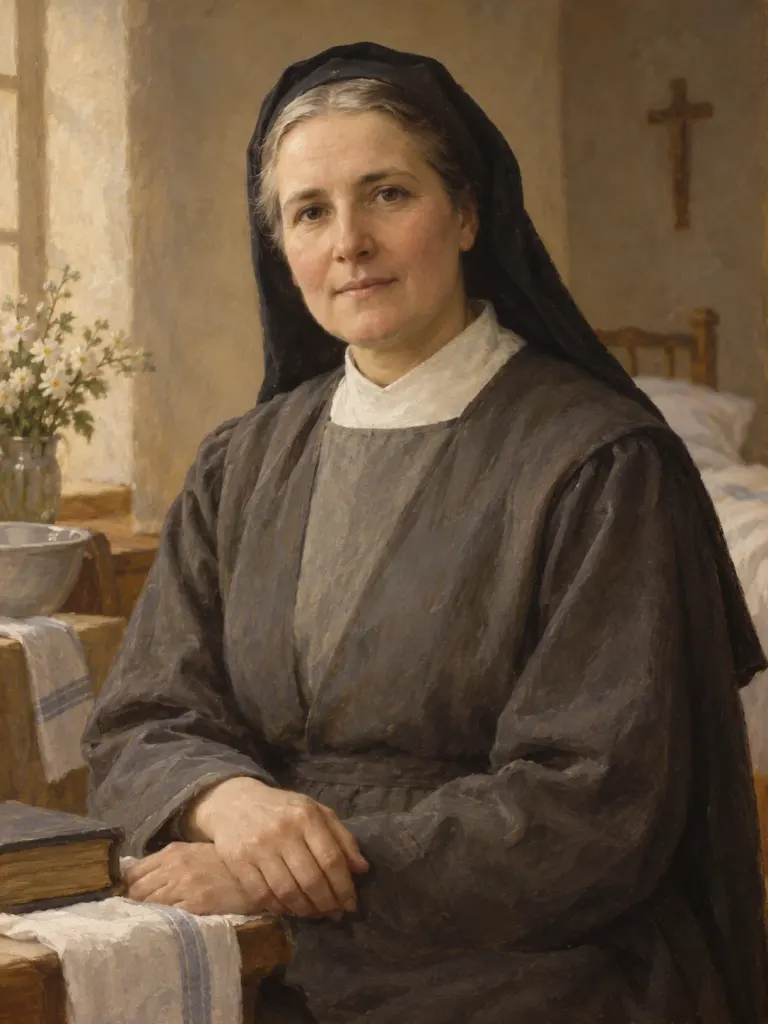
Biography
Elizabeth Hesselblad was a Swedish convert, nurse, and founder of a renewed branch of the Bridgettine religious family. Her work joined hospitality and prayer with a particular concern for Christian unity.
Born in 1870 into a large Lutheran family, she experienced economic insecurity before emigrating to the United States. She trained at New York's Roosevelt Hospital and nursed people in their homes. Contact with Catholic patients formed part of a prolonged search that led her to enter the Catholic Church in 1902.
She moved to Rome despite poor health and became attached to the house associated with Bridget of Sweden. Permission to wear the Bridgettine habit came in 1906. In 1911 she began a new community, seeking to renew Bridgettine life through worship, hospitality, and service rather than merely preserve a historic costume.
During the Second World War, she sheltered Jewish people in Rome, an aspect of her work later recognized by Yad Vashem. She died in 1957 and was canonized in 2016. Her commemoration on June 4 follows her birthday. Her life crossed national and denominational boundaries while giving those concerns a concrete home in a religious community.
Context & contribution
Renewal required a changed plan
Hesselblad first hoped to restore Bridgettine life in Rome with women from existing monasteries. Her visits did not bring that plan to completion. The arrival of three English postulants in 1911 instead enabled a new branch to take shape, illustrating how her foundation developed through adaptation rather than a seamless return to medieval arrangements.
Permanent use of Bridget's Roman house and church was granted in 1931, and an Indian foundation followed in 1937. The combination of a historic center with communities in other countries made her concern for Christian unity organizationally concrete. Shared formation had to create common life across national backgrounds.
Explore the sources for this section
AI-assisted source comparison updated 2026-09-26. Editorial approach
From the Saint Discovery blog
Keep exploring your faith
Practical guides to prayer, the saints, and living the Catholic faith.
What Is the Domestic Church? John Paul II on Faith at Home
What Catholics mean by the domestic church, how John Paul II explained family life, and practical ways to begin with prayer, forgiveness and welcome.
Bring reflection into prayerRead the article Prayer & reflectionHow to Make a Spiritual Communion When You Cannot Receive
Learn how to make a spiritual communion, with a short original prayer and clear guidance on Mass, Confession, and times when you cannot receive.
Bring reflection into prayerRead the articleFrom reading to reflection
What will you carry with you?
After reading about St. Mary Elizabeth Hesselblad, take a moment to consider:
- Compare Hesselblad's original recruitment plan with the community that actually emerged. Identify what remained essential when the practical means changed.
These are reflection prompts from Saint Discovery, not quotations from the saint.
Sources and further reading
- Holy See: Hesselblad biography ↗
- Holy See: Canonization booklet 2016 ↗
- Diocese of Madison: Hesselblad ↗
Biography source comparison recorded on . This is an AI-assisted comparison, not independent human or ecclesiastical approval.
What the recorded review covers
AI-assisted expansion checked against cited sources; historical traditions distinguished from documented evidence; not ecclesiastical approval
A source list helps you check an account; it does not establish that every claim is certain. Follow the biography’s qualifications about historical evidence, traditions and feast calendars.
Suggest a correction to this biography
How we research these pages and handle corrections · Directory corrections log
More lives to explore
Suggestions based on the site’s quiz themes, not a historical relationship or a measure of holiness.