Catholic saint biography
St. Elijah the Prophet
- Commemoration:
- July 20
- Lived:
- Traditionally ninth century BC — Ancient Israel
Carmelite proper feast; also July 20 in Eastern calendars.
Why dates and liturgical observances can differ
Read the sources for this biography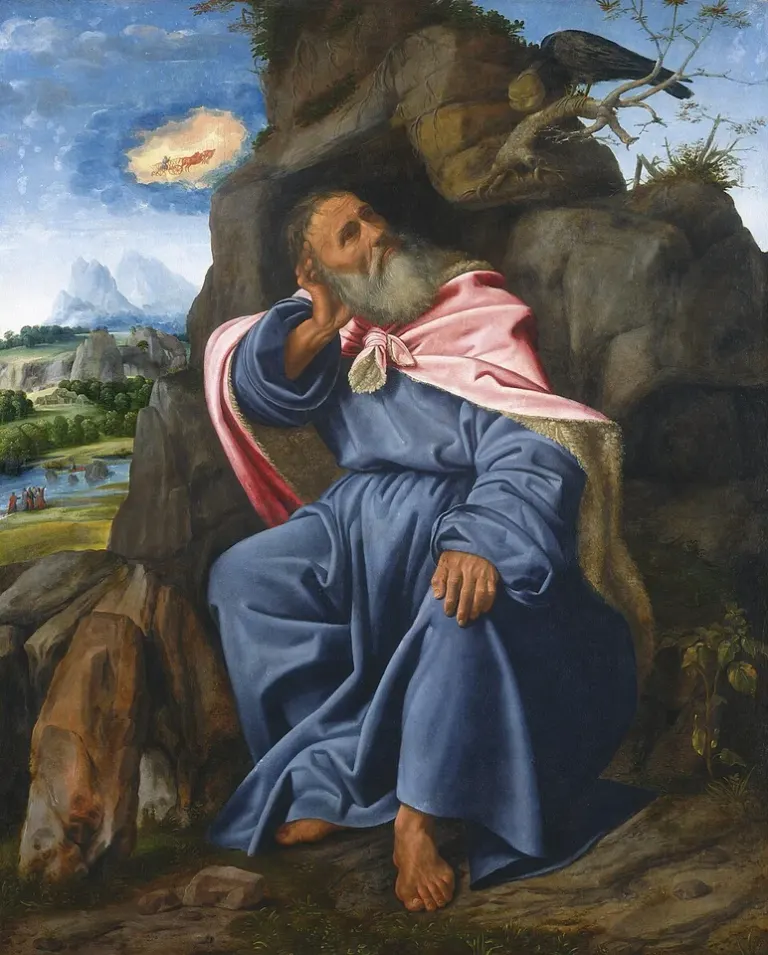
Biography
Elijah, also called Elias, is the biblical prophet whom Carmelites honor as a spiritual model. He belongs to ancient Israel's scriptural history, not to the medieval period in which the Carmelite order emerged.
The books of Kings portray him confronting the worship of Baal and the abuse of royal power. Episodes include the contest on Mount Carmel, the provision of food for a widow during famine, and his challenge to injustice surrounding Naboth's vineyard.
His story also includes fear, flight, and renewed vocation. After withdrawing into the wilderness, he encounters God at Horeb. The biblical account therefore combines forceful public witness with dependence, solitude, and listening rather than presenting an uninterrupted career of triumph.
Medieval hermits on Mount Carmel adopted his example, and Carmelite tradition developed a lasting relationship with his prophetic and contemplative identity. This spiritual ancestry is different from claiming that Elijah historically founded a Christian religious order. His July 20 celebration expresses the connection between prayer and responsibility for others. Reverence for Elijah within Judaism, Christianity, and Islam also gives his figure significance beyond the Carmelite family.
Context & contribution
A prophet's memory and a medieval community
Jacques de Vitry, bishop of Acre in the early thirteenth century, described hermits living near a fountain named for Elijah on Mount Carmel. The brothers sought a form of life from Albert, patriarch of Jerusalem. These details locate the beginning of the Carmelite community in the medieval Holy Land.
Elijah's role was a spiritual inheritance drawn from Scripture and the landscape. Carmelite interpretation joins his attention to God with his defense of people oppressed by the powerful. The connection is therefore richer than sharing a place name: the order reads the prophet as a pattern for both contemplation and public responsibility.
Explore the sources for this section
AI-assisted source comparison updated 2026-09-26. Editorial approach
From the Saint Discovery blog
Keep exploring your faith
Practical guides to prayer, the saints, and living the Catholic faith.
Why Is Saint Luke's Symbol an Ox? Meaning and Biblical Roots
Discover why Saint Luke's symbol is a winged ox, its biblical roots, and how the image connects his Gospel with priesthood and sacrifice.
Go deeper into ScriptureRead the article Prayer & reflectionHow to Pray the Jesus Prayer: A Catholic Beginner's Guide
Learn the Jesus Prayer, its Eastern Christian roots and biblical meaning, with a simple Catholic practice focused on Christ and mercy.
Go deeper into ScriptureRead the articleFrom reading to reflection
What will you carry with you?
After reading about St. Elijah the Prophet, take a moment to consider:
- Put Elijah's biblical period and Jacques de Vitry's testimony on separate timelines, then explain how spiritual ancestry can connect them without implying continuous institutional membership.
These are reflection prompts from Saint Discovery, not quotations from the saint.
Sources and further reading
Biography source comparison recorded on . This is an AI-assisted comparison, not independent human or ecclesiastical approval.
What the recorded review covers
AI-assisted expansion checked against cited sources; historical traditions distinguished from documented evidence; not ecclesiastical approval
A source list helps you check an account; it does not establish that every claim is certain. Follow the biography’s qualifications about historical evidence, traditions and feast calendars.
Suggest a correction to this biography
How we research these pages and handle corrections · Directory corrections log
More lives to explore
Suggestions based on the site’s quiz themes, not a historical relationship or a measure of holiness.