Catholic saint biography
St. Mamertus of Vienne
- Commemoration:
- May 11
- Lived:
- Died shortly after 475 — Vienne, Gaul
Why dates and liturgical observances can differ
Read the sources for this biography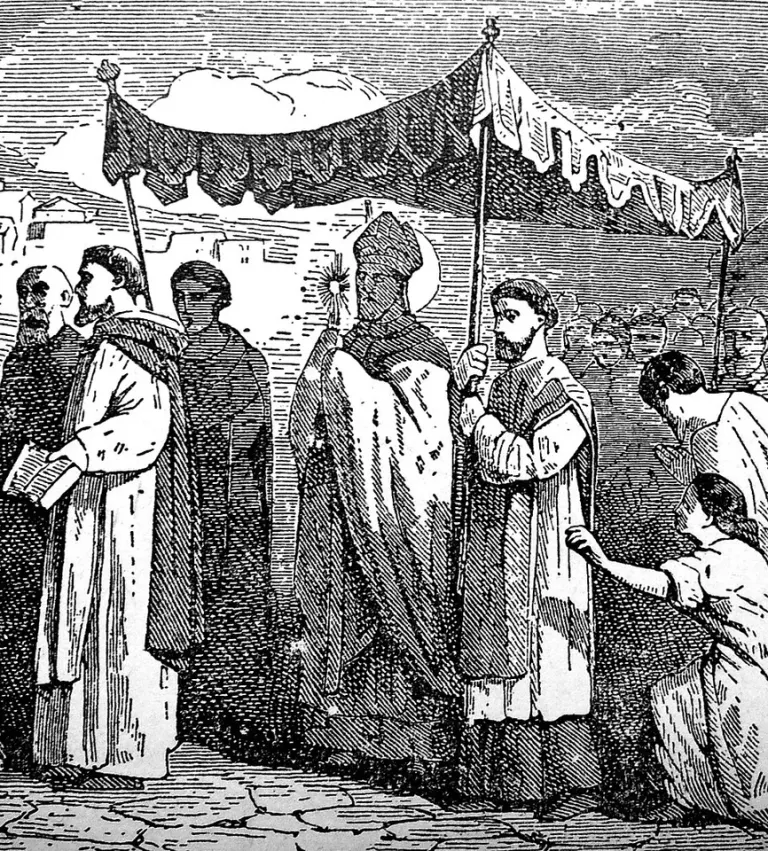
Biography
Mamertus was bishop of Vienne in fifth-century Gaul. Little can be established about his early life, but his episcopal activity is known through letters and later accounts. He worked with his brother Claudianus, a learned priest and theological writer, and participated in the church affairs of southern Gaul.
Letters of Sidonius Apollinaris help place the brothers within the learned Christian culture of late Roman Gaul. The dispute with Arles concerned episcopal authority and the consecration of a bishop. It reminds readers that a venerated bishop's career could include correction by other church authorities.
He is particularly remembered for establishing Rogation processions: public prayers of repentance and petition that later spread beyond Vienne. His career also included a jurisdictional dispute with the bishop of Arles, addressed by Pope Hilary, showing the complexities of regional church government. Mamertus was still active around 475 and probably died shortly afterward. His traditional feast is May 11.
Rogation observances joined fasting, petition, and public procession before Ascension. Their later spread made Mamertus's name familiar far beyond the limited information surviving about his private life. The lasting significance of the practice is communal prayer in times of need; elaborate childhood stories are not necessary to explain his place in church history.
Context & contribution
Public prayer supported by regional decisions
Mamertus's introduction of Rogation processions is supported by testimony associated with Sidonius Apollinaris and Avitus, a later bishop of Vienne. The Catholic Encyclopedia also connects the observances with a synod held at Vienne between 471 and 475. Their establishment was consequently a matter of organized church life, not simply a private devotional initiative.
His participation around 475 in an Arles synod concerning the teaching of the priest Lucidus supplies another identifiable part of his career. These meetings place Mamertus within the councils and correspondence through which Gallic bishops governed together. The evidence is stronger for such public actions than for reconstructing a detailed childhood or interior spiritual diary.
Explore the sources for this section
AI-assisted source comparison updated 2026-09-26. Editorial approach
From the Saint Discovery blog
Keep exploring your faith
Practical guides to prayer, the saints, and living the Catholic faith.
Why Do Catholics Pray to Saints? Intercession Explained
Why do Catholics pray to saints? Learn how intercession differs from worship, how it relates to Jesus, and a simple way to ask a saint to pray for you.
A next step with your saintRead the article Living the seasonsHow to Celebrate Your Patron Saint's Feast Day at Home
Celebrate your patron saint's feast day with prayer, a short biography, and an act of kindness. A practical plan for families, sponsors, and individuals.
A next step with your saintRead the articleFrom reading to reflection
What will you carry with you?
After reading about St. Mamertus of Vienne, take a moment to consider:
- Distinguish a private prayer, a diocesan procession, and a synodal decision; explain what changes when a community's prayer becomes an organized public observance.
These are reflection prompts from Saint Discovery, not quotations from the saint.
Sources and further reading
Biography source comparison recorded on . This is an AI-assisted comparison, not independent human or ecclesiastical approval.
What the recorded review covers
AI-assisted expansion of the existing source-reviewed biography with comparison to retrieved cited sources; not ecclesiastical approval
A source list helps you check an account; it does not establish that every claim is certain. Follow the biography’s qualifications about historical evidence, traditions and feast calendars.
Suggest a correction to this biography
How we research these pages and handle corrections · Directory corrections log
More lives to explore
Suggestions based on the site’s quiz themes, not a historical relationship or a measure of holiness.