Catholic saint biography
St. Willibald
- Commemoration:
- July 7
- Lived:
- Eighth century — England; later Eichstätt, Germany
Why dates and liturgical observances can differ
Read the sources for this biography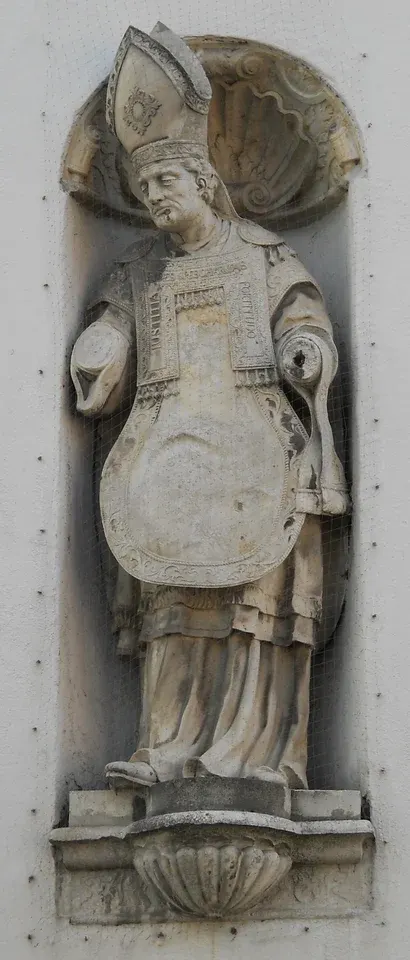
Biography
Willibald was an English religious whose early life included an extensive pilgrimage through Rome and the Holy Land. His journeys connect the Christian communities of western Europe with the places associated with the life of Jesus. He later became the first bishop of Eichstätt.
His pilgrimage was shaped by hardship as well as devotion: his father died at Lucca, and Willibald himself suffered illness before continuing east. The itinerary took him through Mediterranean Christian centers and back to Italy. Travel gave him contact with several forms of religious life before his later mission.
After time at Monte Cassino, he was sent to the German lands and worked with Boniface. The eventual diocese at Eichstätt and the family’s foundation at Heidenheim turned those years of formation into lasting institutions. His story joins pilgrimage, monastic learning, and the patient establishment of a local church.
His ministry formed part of the wider Anglo-Saxon contribution to Christianity in the German lands. Members of his family, including Winnebald and Walburga, also helped establish monastic communities there. The sources preserve differing precise dates, so his life is placed broadly in the eighth century. He is commemorated on July 7, with other dates occurring in particular calendars.
Context & contribution
A pilgrim whose journey became local service
Willibald's travels connected England, Rome, the Holy Land, Constantinople, and Monte Cassino before his work in the German mission. The journey was not simply a continuous trip toward one destination. Periods of residence, learning, and religious life helped shape the person who later served at Eichstätt.
His collaboration with his brother Winnebald and sister Walburga at Heidenheim adds a local dimension to that wide horizon. Experience of distant Christian communities could support the patient work of establishing one nearby. Reading the itinerary this way shifts attention from collecting sacred destinations to considering what a pilgrim brings home: habits, relationships, and a readiness to serve people who cannot travel.
Explore the sources for this section
AI-assisted source comparison updated 2026-09-26. Editorial approach
From the Saint Discovery blog
Keep exploring your faith
Practical guides to prayer, the saints, and living the Catholic faith.
Walking the Camino de Santiago: A Catholic Beginner’s Guide
Walking the Camino de Santiago? Explore its Catholic meaning, beginner routes, preparation tips, pilgrim credentials, and ways to pray along the journey.
Explore the pilgrim journeyRead the article Prayer & reflectionWhy Do Catholics Pray to Saints? Intercession Explained
Why do Catholics pray to saints? Learn how intercession differs from worship, how it relates to Jesus, and a simple way to ask a saint to pray for you.
A next step with your saintRead the articleFrom reading to reflection
What will you carry with you?
After reading about St. Willibald, take a moment to consider:
- Choose one place where you learned something about faith. What practice from that experience could benefit your own community?
These are reflection prompts from Saint Discovery, not quotations from the saint.
Sources and further reading
Biography source comparison recorded on . This is an AI-assisted comparison, not independent human or ecclesiastical approval.
What the recorded review covers
AI-assisted expansion using the linked historical and ecclesiastical sources; devotional traditions distinguished from documented history.
A source list helps you check an account; it does not establish that every claim is certain. Follow the biography’s qualifications about historical evidence, traditions and feast calendars.
Suggest a correction to this biography
How we research these pages and handle corrections · Directory corrections log
More lives to explore
Suggestions based on the site’s quiz themes, not a historical relationship or a measure of holiness.