Catholic saint biography
St. Luke the Evangelist
- Commemoration:
- October 18
- Lived:
- First century — Early Christian Mediterranean world
Why dates and liturgical observances can differ
Read the sources for this biography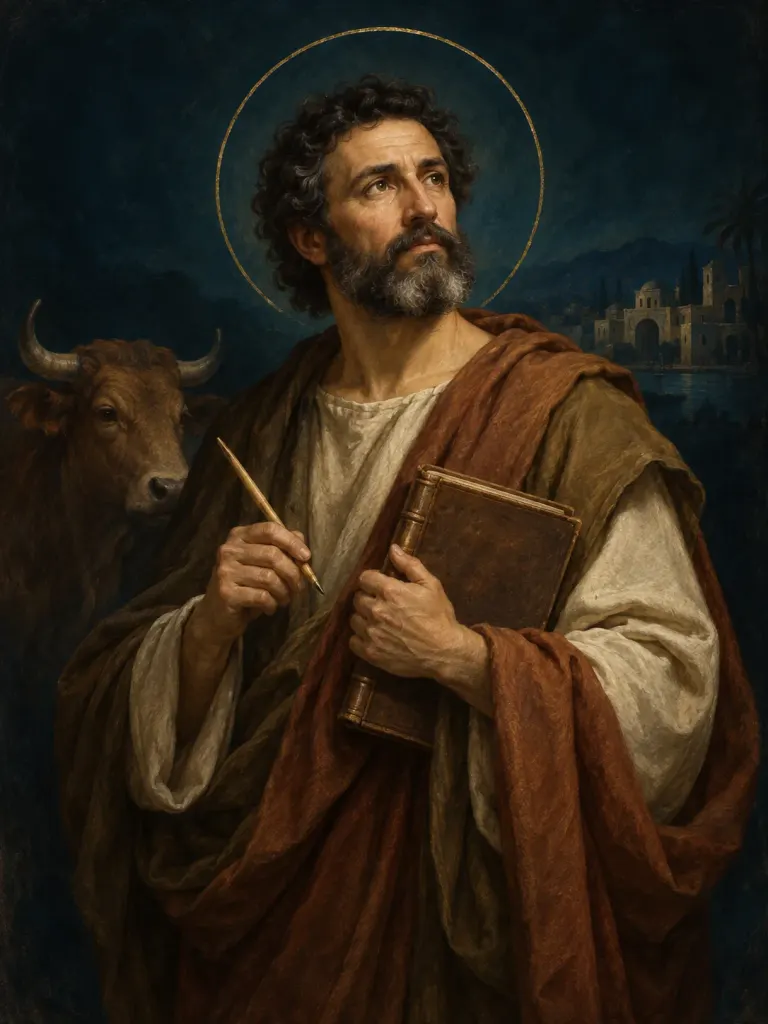
Biography
Christian tradition identifies Luke, a companion of Paul, as the author of the third Gospel and the Acts of the Apostles. These books connect the life, death, and resurrection of Jesus with the beginnings and spread of the Christian community. The Gospel's opening describes the author's effort to draw on earlier testimony.
The two works attributed to Luke form a connected narrative: the Gospel moves toward Jerusalem, while Acts follows the proclamation outward through the apostolic community. The reference to earlier witnesses in the Gospel's prologue helps explain its character as an ordered account based on received testimony.
Luke's Gospel gives particular attention to mercy, prayer, poor people, and women in Jesus' ministry. It preserves such distinctive passages as the Good Samaritan and the father welcoming his lost son. Although later traditions supply additional biographical details, his precise birthplace and death are not securely established. His Western feast is October 18.
The identification with Paul's companion rests on ancient Christian tradition and readings of New Testament references. The books themselves do not give a conventional author biography. Later portrayals of Luke as a painter or detailed accounts of his final travels should therefore be distinguished from the literary evidence of the Gospel and Acts.
Context & contribution
An account addressed to a reader who has already learned
The prologue of Luke addresses Theophilus as someone who has already received instruction. The ordered narrative is intended to give assurance about that teaching. This stated purpose places the Gospel within the formation of readers, not simply the preservation of isolated memorable episodes.
The New American Bible introduction also emphasizes Luke's practice of locating the Christian story amid named political rulers and events. His presentation joins God's promises to Israel with the extension of salvation to the nations. Those literary choices are accessible evidence for the evangelist's work even when his personal movements or later death cannot be reconstructed securely.
Explore the sources for this section
AI-assisted source comparison updated 2026-09-26. Editorial approach
From the Saint Discovery blog
Keep exploring your faith
Practical guides to prayer, the saints, and living the Catholic faith.
Why Is Saint Luke's Symbol an Ox? Meaning and Biblical Roots
Discover why Saint Luke's symbol is a winged ox, its biblical roots, and how the image connects his Gospel with priesthood and sacrifice.
Connected to this saintRead the article Meet the saintsWhy Is Saint Luke the Patron Saint of Artists?
Why is Saint Luke the patron saint of artists? Explore the painting tradition, his Gospel's influence, and the October 18 calendar in 2026.
Connected to this saintRead the articleFrom reading to reflection
What will you carry with you?
After reading about St. Luke the Evangelist, take a moment to consider:
- Read Luke's prologue and identify the intended reader, the sources acknowledged, and the purpose stated; compare these with the opening of Acts.
These are reflection prompts from Saint Discovery, not quotations from the saint.
Sources and further reading
Biography source comparison recorded on . This is an AI-assisted comparison, not independent human or ecclesiastical approval.
What the recorded review covers
AI-assisted expansion of the existing source-reviewed biography with comparison to retrieved cited sources; not ecclesiastical approval
A source list helps you check an account; it does not establish that every claim is certain. Follow the biography’s qualifications about historical evidence, traditions and feast calendars.
Suggest a correction to this biography
How we research these pages and handle corrections · Directory corrections log
More lives to explore
Suggestions based on the site’s quiz themes, not a historical relationship or a measure of holiness.