Catholic saint biography
St. Brigid of Kildare
- Commemoration:
- February 1
- Lived:
- Fifth–sixth centuries — Ireland
Why dates and liturgical observances can differ
Read the sources for this biography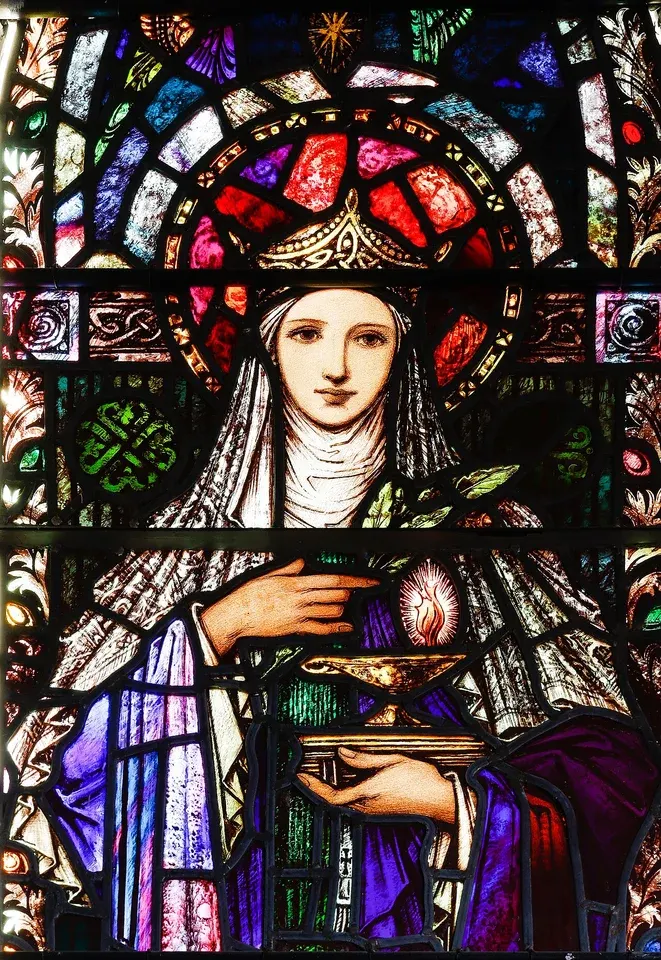
Biography
Brigid is remembered as the abbess associated with Kildare, whose name means church of the oak. The religious community connected with her became an important center of worship and learning, and she came to hold a prominent place in Irish Christian devotion.
The community at Kildare is associated with both women and men, with Brigid exercising leadership among the women. Descriptions of its church and worship in the Lives reveal the later community’s importance, even when they do not resolve every detail of its foundation.
Stories of generosity and abundance became prominent in the way she was remembered. Their recurring themes tell us about Christian ideals and local devotion, while individual miracles require the language of tradition. Her history should also be kept distinct from that of the much later Bridget of Sweden.
Her surviving Lives preserve accounts of generosity, religious leadership, and miracles, but they differ in their details and were written after her lifetime. Precise dates and individual episodes should therefore be treated with care. The history of devotion to her and of Kildare’s community is more secure than every story attached to her name. Her feast is February 1.
Context & contribution
Kildare's lost book and remembered craftsmanship
One part of Brigid's legacy is the artistic reputation of Kildare. Gerald of Wales, writing centuries after her lifetime, praised a richly illuminated Gospel book associated with the community. The manuscript he described is no longer available for direct examination, but his account preserves the impression its intricate decoration made on a medieval visitor.
This evidence belongs to Kildare's later cultural history, not to a claim that Brigid personally made the book. Stories connecting its beauty with supernatural assistance show how craftsmanship became woven into devotion to the founder. The distinction leaves room to appreciate both the religious imagination of the community and the human skill of its scribes and artists, whose labor helped sustain the institution's reputation.
Explore the sources for this section
AI-assisted source comparison updated 2026-09-26. Editorial approach
From the Saint Discovery blog
Keep exploring your faith
Practical guides to prayer, the saints, and living the Catholic faith.
Why Do Catholics Pray to Saints? Intercession Explained
Why do Catholics pray to saints? Learn how intercession differs from worship, how it relates to Jesus, and a simple way to ask a saint to pray for you.
A next step with your saintRead the article Living the seasonsHow to Celebrate Your Patron Saint's Feast Day at Home
Celebrate your patron saint's feast day with prayer, a short biography, and an act of kindness. A practical plan for families, sponsors, and individuals.
A next step with your saintRead the articleFrom reading to reflection
What will you carry with you?
After reading about St. Brigid of Kildare, take a moment to consider:
- Write a museum label for the lost Book of Kildare that distinguishes Gerald's report, the unknown makers' labor, and the tradition connecting it with Brigid.
These are reflection prompts from Saint Discovery, not quotations from the saint.
Sources and further reading
Biography source comparison recorded on . This is an AI-assisted comparison, not independent human or ecclesiastical approval.
What the recorded review covers
AI-assisted expansion checked against retrieved historical and institutional sources; traditions distinguished from documented history; not ecclesiastical approval
A source list helps you check an account; it does not establish that every claim is certain. Follow the biography’s qualifications about historical evidence, traditions and feast calendars.
Suggest a correction to this biography
How we research these pages and handle corrections · Directory corrections log
More lives to explore
Suggestions based on the site’s quiz themes, not a historical relationship or a measure of holiness.