Catholic saint biography
St. John of Ávila
- Commemoration:
- May 10
- Lived:
- 1499/1500–1569 — Almodóvar del Campo, Spain
Roman optional memorial.
Why dates and liturgical observances can differ
Read the sources for this biography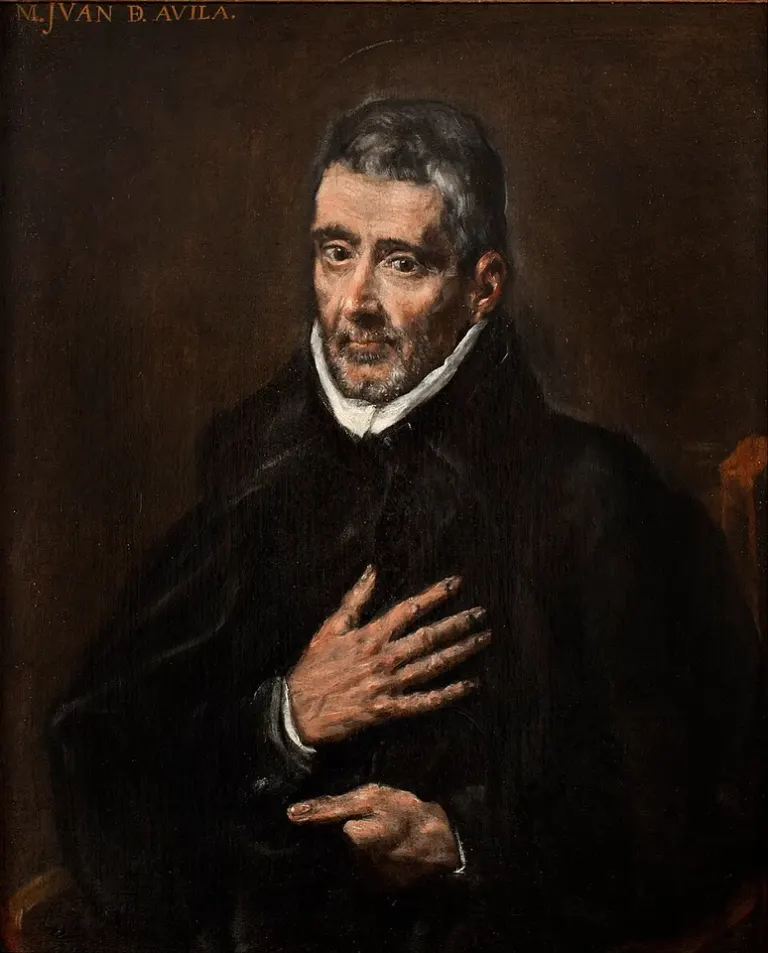
Biography
John of Ávila was a Spanish diocesan priest, preacher, and spiritual director whose work centered largely on Andalusia. After abandoning an initial course of legal studies, he pursued theology and ministry. He endured imprisonment during an investigation of his preaching and began his spiritual work Audi, Filia in that period.
At first he intended to travel to the Americas as a missionary. His preaching in Seville persuaded church authorities that he was needed in Spain instead. He distributed inherited wealth and chose a poor manner of life, making his teaching on trust in God part of his practical decisions as well as his sermons.
He supported the formation of priests, the reform of church life, and educational foundations including the University of Baeza. His counsel influenced other major figures of the Spanish Catholic renewal. Canonized in 1970, he was proclaimed a Doctor of the Church by Benedict XVI in 2012.
His educational and pastoral work gave reform an institutional expression: clergy needed sound preparation, and laypeople needed accessible preaching. His surviving spiritual counsel emphasizes grace and the love revealed in Christ. The title Doctor of the Church recognizes the enduring value of that teaching, rather than a university appointment or medical profession.
Context & contribution
Reform through correspondence and teaching tools
Illness prevented John from attending the final sessions of the Council of Trent, although the archbishop of Granada wanted him as a theological adviser. He instead prepared Memoriales that carried his proposals into the council's reforming discussions. His influence therefore reached an international assembly through writing without his personal presence.
His 1554 Catechism or Christian Doctrine condensed teaching for children and adults, while Audi, Filia offered sustained spiritual guidance. He also directed a substantial group of students toward the emerging Society of Jesus without joining it himself. These examples reveal a ministry that multiplied through usable texts, trained people, and collaboration across institutional boundaries.
Explore the sources for this section
AI-assisted source comparison updated 2026-09-26. Editorial approach
From the Saint Discovery blog
Keep exploring your faith
Practical guides to prayer, the saints, and living the Catholic faith.
Why Is St. Thérèse the Patron Saint of Missions?
Why is St. Thérèse patron saint of missions? Discover her support for missionaries and practical ways to participate in the Church's mission from home.
Sharing the faithRead the article Everyday faithWhat Is Evangelization? A Catholic Guide to Sharing the Faith
What is evangelization? Learn the Catholic meaning, the new evangelization, and practical ways to share your faith with respect, confidence, and love.
Sharing the faithRead the articleFrom reading to reflection
What will you carry with you?
After reading about St. John of Ávila, take a moment to consider:
- Prepare two explanations of one Christian teaching: a brief lesson for beginners and a question for advanced study; compare this distinction with John's catechism and Audi, Filia.
These are reflection prompts from Saint Discovery, not quotations from the saint.
Sources and further reading
Biography source comparison recorded on . This is an AI-assisted comparison, not independent human or ecclesiastical approval.
What the recorded review covers
AI-assisted expansion of the existing source-reviewed biography with comparison to retrieved cited sources; not ecclesiastical approval
A source list helps you check an account; it does not establish that every claim is certain. Follow the biography’s qualifications about historical evidence, traditions and feast calendars.
Suggest a correction to this biography
How we research these pages and handle corrections · Directory corrections log
More lives to explore
Suggestions based on the site’s quiz themes, not a historical relationship or a measure of holiness.