Catholic saint biography
St. John Baptist de Rossi
- Commemoration:
- May 23
- Lived:
- 1698–1764 — Voltaggio, Italy
Traditional commemoration.
Why dates and liturgical observances can differ
Read the sources for this biography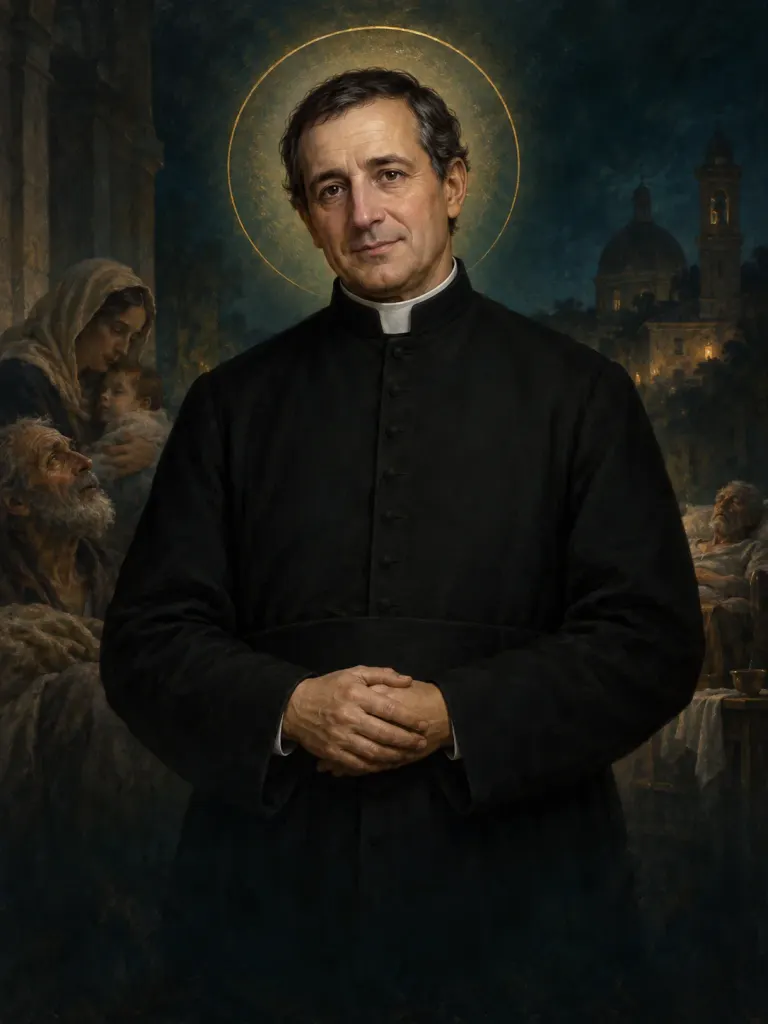
Biography
Saint John Baptist de Rossi was an eighteenth-century priest whose ministry brought him close to Rome's laborers, sick people, prisoners, and poor families. Chronic illness shaped his work without ending his commitment to pastoral service.
After studying in Rome, he was ordained in 1721 with a dispensation because of his health. He sought out workers at times they could attend, preaching early or late near the Forum rather than expecting their working lives to accommodate ordinary schedules.
He served people at the hospital of Saint Galla and helped establish a refuge for vulnerable women. His charity included using income from an ecclesiastical position for others. These efforts joined instruction and worship with attention to the immediate circumstances of people lacking security.
For years he hesitated to hear confessions because of his illness. Encouragement from a bishop changed that, and reconciliation became a major part of his ministry in churches, hospitals, and homes. He died in 1764 and was later canonized. He is distinct from the nineteenth-century archaeologist of the same name; his own historical importance lies in persistent, accessible ministry among people easily overlooked.
Context & contribution
The associations behind an accessible ministry
De Rossi's early formation included the Marian sodality and the Ristretto of the Twelve Apostles at the Roman College. The Catholic Encyclopedia describes him leading fellow members in visits to sick people and other works of mercy. Organized service thus formed part of his student years, before the better-known ministry of his priesthood.
His later move into hearing confessions also involved renewed study. After encouragement from the bishop at Cività Castellana, he reviewed moral theology before receiving permission to hear confessions across Rome's churches. The sequence joins personal encouragement with preparation and authorization. It shows pastoral accessibility developing through learning and institutional support, rather than goodwill alone.
Explore the sources for this section
AI-assisted source comparison updated 2026-09-26. Editorial approach
From the Saint Discovery blog
Keep exploring your faith
Practical guides to prayer, the saints, and living the Catholic faith.
St. Josephine Bakhita: Hope Without Denying Suffering
Learn what St. Josephine Bakhita teaches about Christian hope, dignity, and freedom, with practical reflection prompts and an original prayer.
Faith in difficult timesRead the article Prayer & reflectionWhat Is Redemptive Suffering? A Catholic Guide
What is redemptive suffering? Learn what Catholics mean by offering it up, how to unite suffering to Christ, and why seeking help belongs with faith.
Faith in difficult timesRead the articleFrom reading to reflection
What will you carry with you?
After reading about St. John Baptist de Rossi, take a moment to consider:
- Trace the sequence from De Rossi's student associations to his review of moral theology. Identify how companionship, study, and authorization each supported practical service.
These are reflection prompts from Saint Discovery, not quotations from the saint.
Sources and further reading
Biography source comparison recorded on . This is an AI-assisted comparison, not independent human or ecclesiastical approval.
What the recorded review covers
AI-assisted expansion checked against cited sources; historical traditions distinguished from documented evidence; not ecclesiastical approval
A source list helps you check an account; it does not establish that every claim is certain. Follow the biography’s qualifications about historical evidence, traditions and feast calendars.
Suggest a correction to this biography
How we research these pages and handle corrections · Directory corrections log
More lives to explore
Suggestions based on the site’s quiz themes, not a historical relationship or a measure of holiness.