Catholic saint biography
St. Elizabeth of Portugal
- Commemoration:
- July 4
- Lived:
- 1271–1336 — Aragon, Spain; queen of Portugal
July 4 General Roman Calendar; July 5 in the United States.
Why dates and liturgical observances can differ
Read the sources for this biography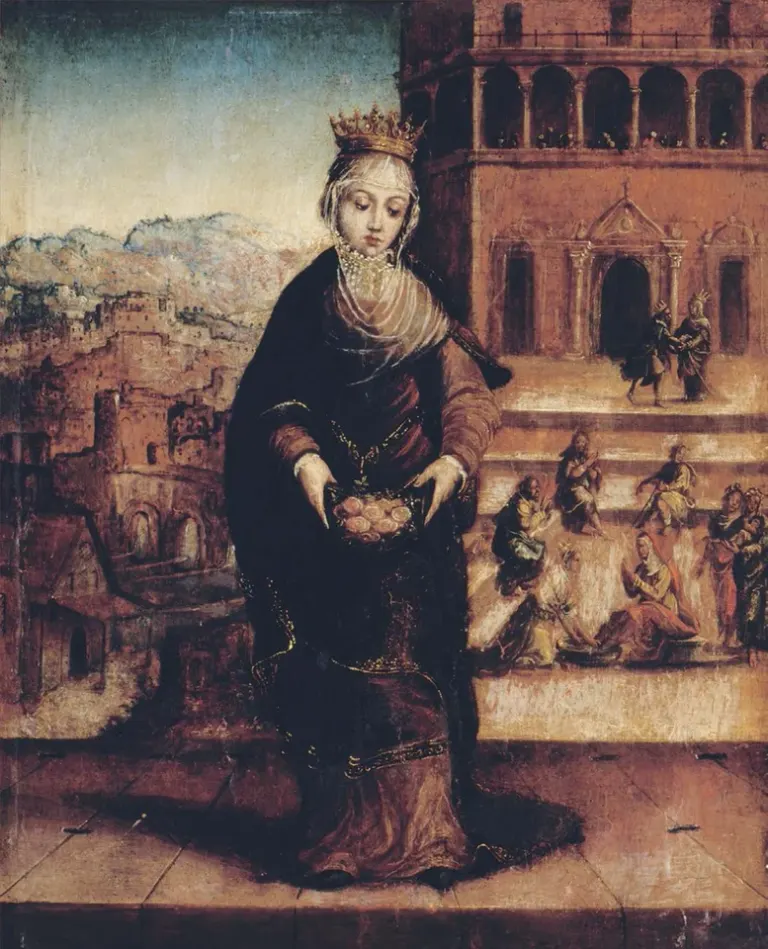
Biography
Elizabeth of Portugal, also known as Isabel, was a queen remembered for charity and mediation in conflicts within her royal family. Born into the house of Aragon in 1271, she married King Denis of Portugal while young.
Her religious practice continued amid a difficult court environment. She supported poor and sick people and encouraged women of the household to share in that service. The marriage produced a daughter, Constance, and a son, the future Afonso IV.
Tensions between Denis and Afonso became an armed conflict. Elizabeth repeatedly sought reconciliation, using the access her family position provided. Her reputation as a peacemaker is rooted in these concrete dynastic disputes, not simply in a general description of her temperament.
After Denis's death in 1325, she adopted the Franciscan tertiary habit and lived near the Poor Clares at Coimbra while retaining resources for charity. A final journey sought to prevent another conflict, involving her son and grandson. She died at Estremoz in 1336. Her Roman feast falls on July 4, observed on July 5 in the United States. She is distinct from her earlier relative Elizabeth of Hungary.
Context & contribution
The family structure of a political conflict
The dispute between Denis and Afonso involved the king's favor toward his illegitimate sons. Naming this issue clarifies the stakes behind Elizabeth's mediation: succession, family loyalty, and royal authority were intertwined. Her position connected her personally to both sides of a conflict that had consequences for people outside the court.
Her later intervention likewise arose through a marriage alliance between Portugal and Castile. Medieval royal kinship could create diplomatic access while also generating grievances. Elizabeth's peace-making is best understood against that structure, rather than as an unexplained ability to stop wars by personal charm.
Explore the sources for this section
AI-assisted source comparison updated 2026-09-26. Editorial approach
From the Saint Discovery blog
Keep exploring your faith
Practical guides to prayer, the saints, and living the Catholic faith.
Why Do Catholics Pray to Saints? Intercession Explained
Why do Catholics pray to saints? Learn how intercession differs from worship, how it relates to Jesus, and a simple way to ask a saint to pray for you.
A next step with your saintRead the article Living the seasonsHow to Celebrate Your Patron Saint's Feast Day at Home
Celebrate your patron saint's feast day with prayer, a short biography, and an act of kindness. A practical plan for families, sponsors, and individuals.
A next step with your saintRead the articleFrom reading to reflection
What will you carry with you?
After reading about St. Elizabeth of Portugal, take a moment to consider:
- Draw the family relationships behind one of Elizabeth's interventions, then mark where private grievance became a public political danger.
These are reflection prompts from Saint Discovery, not quotations from the saint.
Sources and further reading
Biography source comparison recorded on . This is an AI-assisted comparison, not independent human or ecclesiastical approval.
What the recorded review covers
AI-assisted expansion checked against cited sources; historical traditions distinguished from documented evidence; not ecclesiastical approval
A source list helps you check an account; it does not establish that every claim is certain. Follow the biography’s qualifications about historical evidence, traditions and feast calendars.
Suggest a correction to this biography
How we research these pages and handle corrections · Directory corrections log
More lives to explore
Suggestions based on the site’s quiz themes, not a historical relationship or a measure of holiness.