Catholic saint biography
St. Joan of Arc
- Commemoration:
- May 30
- Lived:
- 1412–1431 — Domrémy, France
Traditional commemoration on her death date.
Why dates and liturgical observances can differ
Read the sources for this biography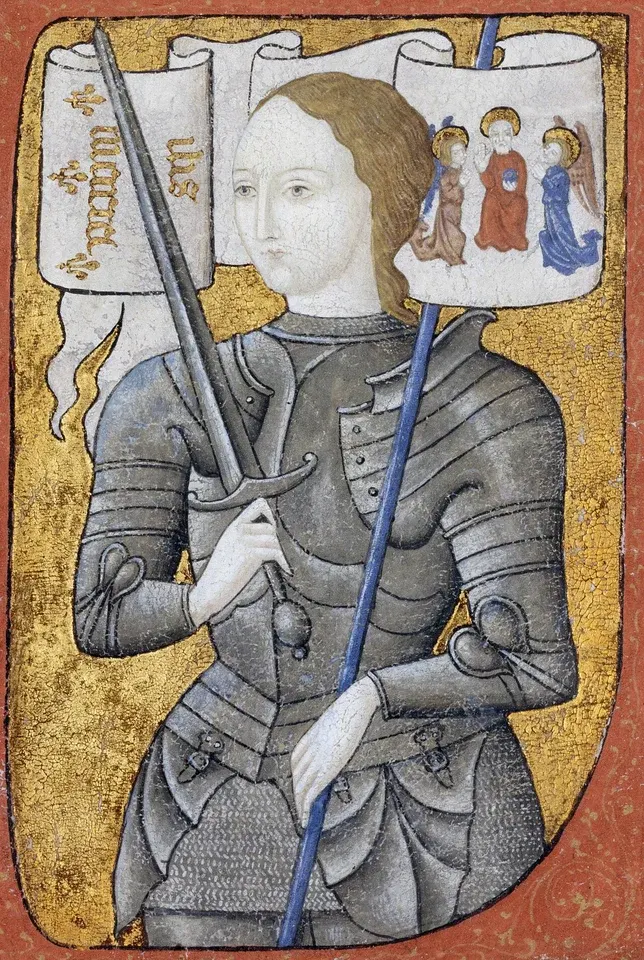
Biography
Saint Joan of Arc was a young French laywoman whose sense of religious calling drew her into the Hundred Years' War. Her brief public life helped change the fortunes of Charles VII before ending in imprisonment and execution.
Raised at Domremy, Joan described religious experiences beginning in adolescence. In 1429 she persuaded royal authorities to hear her case. She accompanied the campaign that relieved Orléans and helped bring Charles to his coronation at Reims, linking her mission with the restoration of his kingship.
The memory preserved at Orléans places her in the dangerous fighting around the Tourelles, where she was wounded during the effort to break the siege. The city's cathedral also remembers her thanksgiving after its relief. These episodes connect the familiar image of a banner-bearing heroine with physical vulnerability and public prayer; her role was inseparable from the soldiers, townspeople, and political circumstances around her.
Captured in 1430, she was taken to Rouen and subjected to an ecclesiastical trial deeply entangled with political interests. Its records preserve her answers under sustained questioning. Condemned as a heretic, she was burned in May 1431, about nineteen years old.
Joan's answers about grace and conscience show how difficult it was to force her experience into the categories chosen by her interrogators. She resisted attempts to make her claim absolute certainty about her own spiritual condition. Later religious art, including the narrative windows at Orléans, drew on these exchanges, but such works belong to the history of her remembrance and should not be mistaken for contemporary portraits.
A later investigation heard extensive testimony and annulled the condemnation in 1456. Joan was canonized in 1920. The two trials make her unusually well documented for a medieval woman, while also requiring careful reading of hostile questioning and later testimony. Her religious convictions, military role, and treatment by church authorities should be examined together rather than reduced to a simple national legend.
Context & contribution
A dictated letter before the relief of Orléans
On March 22, 1429, Joan dictated a letter to the English king and the forces besieging Orléans. Benedict XVI discusses it as an appeal concerning peace and justice between two Christian peoples. The letter places her religious language within an explicit political address, before the city's relief in May.
Her later reception reached a very different setting in Thérèse of Lisieux's cloister. Benedict notes Thérèse's closeness to Joan's example and the Church's association of both women with French patronage. That connection is a history of interpretation, not evidence that their lives followed the same pattern. A military participant's remembered fidelity could become meaningful to a woman whose vocation unfolded within a monastery.
Explore the sources for this section
AI-assisted source comparison updated 2026-09-26. Editorial approach
From the Saint Discovery blog
Keep exploring your faith
Practical guides to prayer, the saints, and living the Catholic faith.
Why Do Catholics Pray to Saints? Intercession Explained
Why do Catholics pray to saints? Learn how intercession differs from worship, how it relates to Jesus, and a simple way to ask a saint to pray for you.
A next step with your saintRead the article Living the seasonsHow to Celebrate Your Patron Saint's Feast Day at Home
Celebrate your patron saint's feast day with prayer, a short biography, and an act of kindness. A practical plan for families, sponsors, and individuals.
A next step with your saintRead the articleFrom reading to reflection
What will you carry with you?
After reading about St. Joan of Arc, take a moment to consider:
- Compare the audience and purpose of Joan's 1429 letter with Thérèse's later interest in her. Discuss which elements of a life can be received across very different vocations.
These are reflection prompts from Saint Discovery, not quotations from the saint.
Sources and further reading
Biography source comparison recorded on . This is an AI-assisted comparison, not independent human or ecclesiastical approval.
What the recorded review covers
AI-assisted expansion checked against cited sources; historical traditions distinguished from documented evidence; not ecclesiastical approval
A source list helps you check an account; it does not establish that every claim is certain. Follow the biography’s qualifications about historical evidence, traditions and feast calendars.
Suggest a correction to this biography
How we research these pages and handle corrections · Directory corrections log
More lives to explore
Suggestions based on the site’s quiz themes, not a historical relationship or a measure of holiness.