Catholic saint biography
St. Irenaeus of Lyon
- Commemoration:
- June 28
- Lived:
- About 135–about 202 — Probably Smyrna, Asia Minor
Roman memorial.
Why dates and liturgical observances can differ
Read the sources for this biography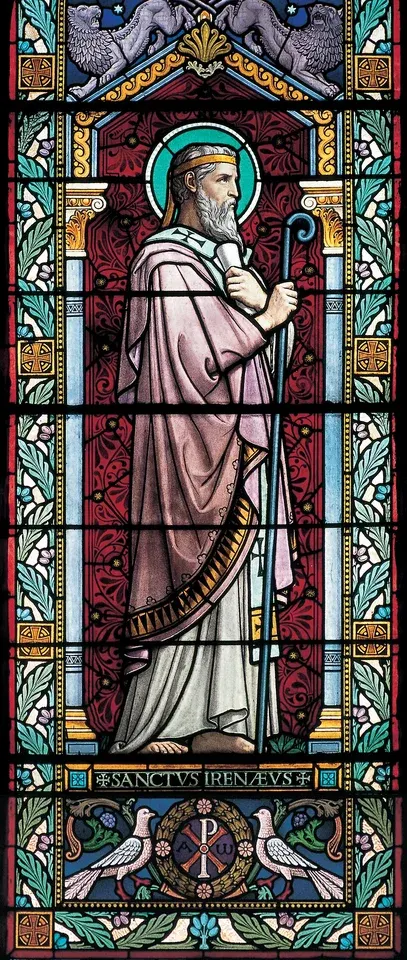
Biography
Saint Irenaeus of Lyon was a second-century bishop and theologian who defended the public, apostolic character of Christian faith. His writings link the churches of Asia Minor with the developing Christian community in Roman Gaul.
As a young man he heard Polycarp, a bishop connected with the apostolic generation. Later a priest at Lyon, Irenaeus carried a letter to Rome in 177. His absence spared him the persecution in which Lyon's elderly bishop died; afterward he became bishop himself.
His major surviving works, Against Heresies and Demonstration of the Apostolic Teaching, address both controversy and instruction. Against claims that salvation depended on secret knowledge available only to an elite, he appealed to the faith openly taught in the churches and handed down through their apostolic succession.
Irenaeus emphasized the unity of God's saving work and the reality of Christ's humanity. His theology makes the goodness of creation and the salvation of human beings central rather than treating material existence as a mistake. The circumstances of his death remain uncertain, but his writings continue to illuminate how early Christians understood Scripture, tradition, and the Church.
Context & contribution
A teacher of unity across East and West
On January 21, 2022, Pope Francis declared Irenaeus a Doctor of the Church with the title Doctor unitatis, or Doctor of Unity. The decree emphasizes the geographical shape of his life: a Christian formed in the East exercised episcopal ministry in the West. That movement made him a useful figure for reflecting on a shared Christian inheritance.
The document also connects his name with peace and expresses the hope that his teaching will support the search for full communion among Christians. This is a modern reception of Irenaeus's work, not an additional event in his ancient biography. It shows how a second-century author's concern for common faith can acquire fresh significance within later divisions.
Explore the sources for this section
AI-assisted source comparison updated 2026-09-26. Editorial approach
From the Saint Discovery blog
Keep exploring your faith
Practical guides to prayer, the saints, and living the Catholic faith.
Why Do Catholics Pray to Saints? Intercession Explained
Why do Catholics pray to saints? Learn how intercession differs from worship, how it relates to Jesus, and a simple way to ask a saint to pray for you.
A next step with your saintRead the article Living the seasonsHow to Celebrate Your Patron Saint's Feast Day at Home
Celebrate your patron saint's feast day with prayer, a short biography, and an act of kindness. A practical plan for families, sponsors, and individuals.
A next step with your saintRead the articleFrom reading to reflection
What will you carry with you?
After reading about St. Irenaeus of Lyon, take a moment to consider:
- Read the short 2022 decree and identify why it emphasizes Irenaeus's East–West journey. Compare that purpose with the concerns of his own second-century writings.
These are reflection prompts from Saint Discovery, not quotations from the saint.
Sources and further reading
Biography source comparison recorded on . This is an AI-assisted comparison, not independent human or ecclesiastical approval.
What the recorded review covers
AI-assisted expansion checked against cited sources; historical traditions distinguished from documented evidence; not ecclesiastical approval
A source list helps you check an account; it does not establish that every claim is certain. Follow the biography’s qualifications about historical evidence, traditions and feast calendars.
Suggest a correction to this biography
How we research these pages and handle corrections · Directory corrections log
More lives to explore
Suggestions based on the site’s quiz themes, not a historical relationship or a measure of holiness.