Catholic saint biography
St. Hilda of Whitby
- Commemoration:
- November 17
- Lived:
- 614–680 — Northumbria, England
Traditional commemoration on November 17.
Why dates and liturgical observances can differ
Read the sources for this biography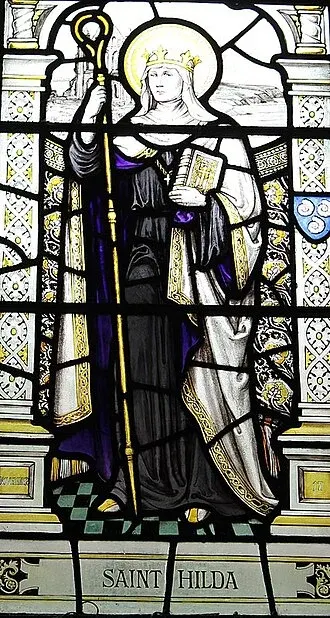
Biography
Hilda was an abbess in seventh-century Northumbria whose monastery at Whitby became a center of learning and church leadership. She governed a community that included both women and men.
Born into a noble family, she received Christian formation connected with Paulinus and Aidan. She initially considered religious life abroad, but remained in Northumbria and led a community at Hartlepool before developing Whitby.
Bede's account emphasizes Scripture study and the education of men who later became bishops. Hilda also recognized the gifts of Cædmon, encouraging his religious poetry within the community. Her counsel was sought by rulers and church leaders, giving her authority beyond the monastery.
Whitby hosted the synod of 664, which addressed Easter calculation and related ecclesiastical practices. Hilda's role belongs within that wider effort to order the Northumbrian Church. She continued to guide her community through years of illness before dying in 680. Later miraculous stories surround her remembrance, but Bede supplies the principal narrative basis. Her legacy is particularly clear in the relationship between women's religious leadership, biblical education, poetry, and public counsel.
Context & contribution
The evidence of an early calendar
Hilda's name appears in the calendar associated with Willibrord from the beginning of the eighth century. That is a different kind of witness from Bede's narrative: it shows an early practice of remembrance without supplying another full account of her life. Liturgical evidence can therefore strengthen the history of her cult while remaining modest about personal detail.
Later claims about the destination of her relics are less secure. The Catholic Encyclopedia distinguishes a Glastonbury claim from a competing Gloucester account rather than treating both as established journeys. This contrast between early calendar evidence and much later institutional claims is useful when tracing how a Northumbrian abbess came to be remembered far beyond her own community.
Explore the sources for this section
AI-assisted source comparison updated 2026-09-26. Editorial approach
From the Saint Discovery blog
Keep exploring your faith
Practical guides to prayer, the saints, and living the Catholic faith.
Why Do Catholics Pray to Saints? Intercession Explained
Why do Catholics pray to saints? Learn how intercession differs from worship, how it relates to Jesus, and a simple way to ask a saint to pray for you.
A next step with your saintRead the article Living the seasonsHow to Celebrate Your Patron Saint's Feast Day at Home
Celebrate your patron saint's feast day with prayer, a short biography, and an act of kindness. A practical plan for families, sponsors, and individuals.
A next step with your saintRead the articleFrom reading to reflection
What will you carry with you?
After reading about St. Hilda of Whitby, take a moment to consider:
- Build an evidence timeline with Hilda's lifetime, Willibrord's calendar, and later relic traditions. Note what each source can establish about remembrance.
These are reflection prompts from Saint Discovery, not quotations from the saint.
Sources and further reading
Biography source comparison recorded on . This is an AI-assisted comparison, not independent human or ecclesiastical approval.
What the recorded review covers
AI-assisted expansion checked against cited sources; historical traditions distinguished from documented evidence; not ecclesiastical approval
A source list helps you check an account; it does not establish that every claim is certain. Follow the biography’s qualifications about historical evidence, traditions and feast calendars.
Suggest a correction to this biography
How we research these pages and handle corrections · Directory corrections log
More lives to explore
Suggestions based on the site’s quiz themes, not a historical relationship or a measure of holiness.