Catholic saint biography
St. Ignatius of Loyola
- Commemoration:
- July 31
- Lived:
- 1491–1556 — Loyola, Basque country, Spain
Roman memorial.
Why dates and liturgical observances can differ
Read the sources for this biography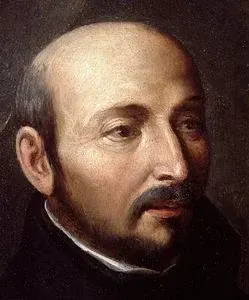
Biography
Saint Ignatius of Loyola founded the Society of Jesus and developed the Spiritual Exercises, a practical approach to prayer and discernment. His transformation began when a battlefield injury interrupted ambitions for military distinction.
Born into a Basque noble family, Iñigo was wounded at Pamplona in 1521. During his recovery he read about Jesus and the saints. He noticed a difference between dreams of worldly success and thoughts of following Christ: their immediate appeal mattered less than the lasting spiritual effects they produced.
After laying aside his former ambitions at Montserrat, he spent a demanding period of prayer and poverty at Manresa. His reflections there contributed to the Spiritual Exercises. They emerged from experience that included distress and confusion as well as consolation, rather than an effortless conversion.
The journey toward ministry also required an unusual return to school. After a brief stay in the Holy Land, he began learning elementary Latin in Barcelona alongside much younger pupils. Encounters with the Inquisition exposed the difficulties of offering spiritual instruction without formal qualifications. Education became a way to serve responsibly, not simply a credential added after his conversion.
In Paris he completed years of study and received a Master of Arts degree. Francis Xavier and Peter Faber became his close companions. In 1534, Ignatius and six friends made vows together. They hoped to go to the Holy Land; if that proved impossible, they would offer themselves to the pope for service. Their common commitment gradually developed into the Society of Jesus.
His companions elected him to lead the new community. From Rome, Ignatius directed Jesuits whose missions took them across Europe and beyond, while education became an important part of their work. Leadership gave his earlier search a different shape: he now helped others undertake the journeys he no longer made himself. He remained the Society's first superior general until his death on July 31, 1556.
Context & contribution
A manual for guiding another person's prayer
The Spiritual Exercises were designed as directions for the person accompanying a retreatant, rather than simply a book to read straight through alone. The Jesuit Conference describes four periods moving through sin and mercy, Christ's life and call, his suffering and death, and resurrection and mission. Their sequence gives structure to discernment through sustained prayer.
The full retreat is commonly made over thirty days, but the tradition also includes the Exercises in Daily Life, known as the nineteenth-annotation retreat, and shorter adaptations. These forms show the difference between a spiritual method and one fixed timetable. Ignatius's legacy includes a practice that requires attention to the person receiving it and the circumstances in which prayer is possible.
Explore the sources for this section
AI-assisted source comparison updated 2026-09-26. Editorial approach
Read, discuss, apply
Notice what follows an ambition
Read the recovery episode in the Jesuit Conference's account of Ignatius. Pay attention to the different aftereffects of his daydreams, and then follow the account into his pilgrimage and studies rather than treating one feeling as the whole story.
Read the Jesuit Conference's account of Ignatius ↗
Try this with the text
Draw a short sequence of the changes the biography describes. Beside each, note what Ignatius noticed and what he did next, leaving a blank when the source does not say. Then write one question you would want to discuss with a trusted spiritual guide about a decision of your own. This reading exercise is not the Spiritual Exercises or a test that reveals God's will.
An original study activity from Saint Discovery, for personal reading, a class, or a Confirmation group.
Find printable reflection resources →From the Saint Discovery blog
Keep exploring your faith
Practical guides to prayer, the saints, and living the Catholic faith.
How to Pray the Daily Examen: Five Steps with an Example
Learn how to pray the daily Examen with five steps, an everyday example, and clear guidance on feelings, forgiveness, and preparing for confession.
Connected to this saintRead the article Meet the saintsWhat Is the Domestic Church? John Paul II on Faith at Home
What Catholics mean by the domestic church, how John Paul II explained family life, and practical ways to begin with prayer, forgiveness and welcome.
Bring reflection into prayerRead the articleFrom reading to reflection
What will you carry with you?
After reading about St. Ignatius of Loyola, take a moment to consider:
- How does looking at the effects of a choice over time differ from following your first reaction?
- Which part of Ignatius's journey involved learning from another person?
- What information or counsel would help you examine a decision more patiently?
- Compare a residential thirty-day retreat with the Exercises in Daily Life. Identify the different arrangements each requires for prayer, accompaniment, and ordinary responsibilities.
These are reflection prompts from Saint Discovery, not quotations from the saint.
Frequently Asked Questions
- Are the Spiritual Exercises a book to read straight through?
- The Office of Ignatian Spirituality describes them as a handbook for a guided process of prayer, rather than ordinary continuous reading. Retreat formats include a concentrated 30-day retreat and an extended retreat alongside daily responsibilities, with guidance from a spiritual director.
Sources and further reading
The Jesuit Conference provides a modern institutional overview of its founder. The Office of Ignatian Spirituality explains how the Spiritual Exercises are used today. These introductions help orient a reader; neither replaces Ignatius's own text or an accompanied retreat.
Biography source comparison recorded on . This is an AI-assisted comparison, not independent human or ecclesiastical approval.
What the recorded review covers
AI-assisted expansion checked against cited sources; historical traditions distinguished from documented evidence; not ecclesiastical approval
A source list helps you check an account; it does not establish that every claim is certain. Follow the biography’s qualifications about historical evidence, traditions and feast calendars.
Suggest a correction to this biography
How we research these pages and handle corrections · Directory corrections log
Explore this saint in everyday life
More lives to explore
Suggestions based on the site’s quiz themes, not a historical relationship or a measure of holiness.