Catholic saint biography
St. Ignatius of Antioch
- Commemoration:
- October 17
- Lived:
- First–early second century — Antioch, Roman Syria
Current Roman memorial.
Why dates and liturgical observances can differ
Read the sources for this biography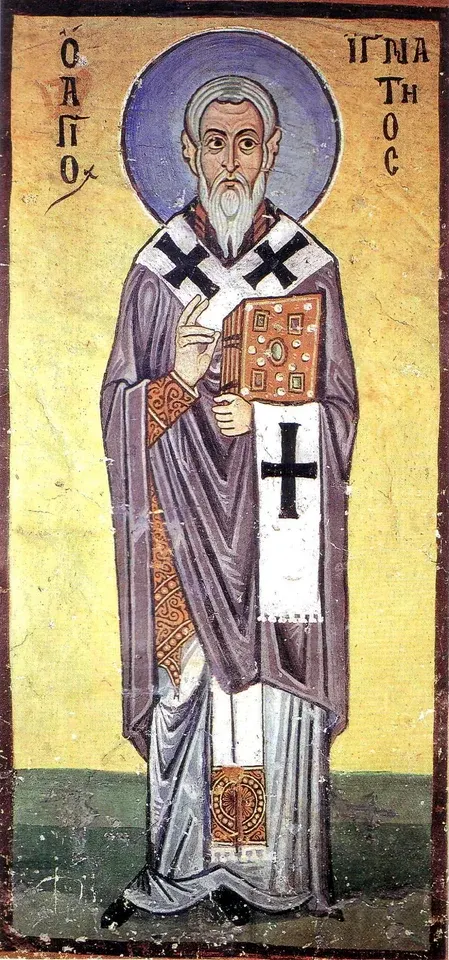
Biography
Saint Ignatius of Antioch was an early Christian bishop whose letters preserve an unusually personal witness to faith, worship, and church leadership shortly after the apostolic age. He died a martyr after being taken under guard to Rome.
Almost everything securely known about his final journey comes from seven letters addressed to Christian communities and to Bishop Polycarp. Written as a prisoner, they combine encouragement with urgent concern for unity. The usual dating places his death under Emperor Trajan, though an exact year cannot be established confidently.
Ignatius insisted that Jesus truly became human and truly suffered, opposing teachings that reduced the Incarnation to an appearance. He connected this conviction with the Eucharist and with the visible community gathered around its bishop, priests, and deacons. His letters contain an early surviving use of the expression Catholic Church.
In his letter to the Romans, Ignatius asked that efforts to rescue him not prevent his witness to Christ. The intensity of that language belongs to a condemned prisoner's situation. His lasting importance rests both in his courage and in the evidence his writings provide for the belief and shared life of the early Church.
Context & contribution
The people carrying the letters
The closing chapters of Ignatius's letter to the Smyrnaeans reveal the human network around a prisoner. He thanks the community for receiving Philo and Rheus Agathopus and names Burrhus as a companion through whom he writes from Troas. Such acknowledgments show that his letters depended on travelers, hospitality, and assistance.
He also asks the Smyrnaeans to choose a delegate to visit the church in Syria, now reported to be at peace. The request turns sympathy into a concrete act of interchurch communication. Read beside his better-known theological passages, these practical details reveal how unity was maintained through people willing to carry news, letters, and encouragement across distances.
Explore the sources for this section
AI-assisted source comparison updated 2026-09-26. Editorial approach
From the Saint Discovery blog
Keep exploring your faith
Practical guides to prayer, the saints, and living the Catholic faith.
Saint Ignatius of Antioch and the Eucharist: A Reading Guide
Explore what Saint Ignatius of Antioch wrote about the Eucharist, with key passages, historical context, and a simple reading plan.
Connected to this saintRead the article Prayer & reflectionWhy Do Catholics Pray to Saints? Intercession Explained
Why do Catholics pray to saints? Learn how intercession differs from worship, how it relates to Jesus, and a simple way to ask a saint to pray for you.
A next step with your saintRead the articleFrom reading to reflection
What will you carry with you?
After reading about St. Ignatius of Antioch, take a moment to consider:
- List the named helpers in chapters 10–12 of the Smyrnaeans letter and reconstruct their different roles in sustaining communication.
These are reflection prompts from Saint Discovery, not quotations from the saint.
Sources and further reading
Biography source comparison recorded on . This is an AI-assisted comparison, not independent human or ecclesiastical approval.
What the recorded review covers
AI-assisted expansion checked against cited sources; historical traditions distinguished from documented evidence; not ecclesiastical approval
A source list helps you check an account; it does not establish that every claim is certain. Follow the biography’s qualifications about historical evidence, traditions and feast calendars.
Suggest a correction to this biography
How we research these pages and handle corrections · Directory corrections log
More lives to explore
Suggestions based on the site’s quiz themes, not a historical relationship or a measure of holiness.