Catholic saint biography
St. Longinus
- Commemoration:
- March 15
- Lived:
- Traditionally first century; personal chronology unverified — Associated by tradition with Judea and Cappadocia
Western traditional commemoration March 15; Eastern churches commemorate him October 16.
Why dates and liturgical observances can differ
Read the sources for this biography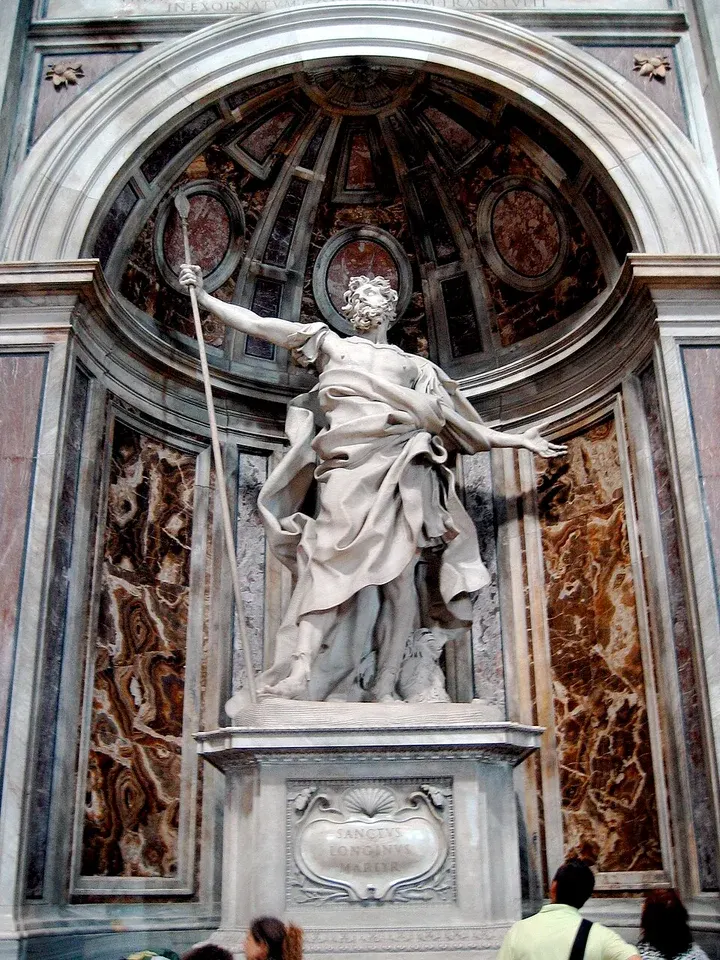
Biography
Longinus is the name Christian tradition gives to the soldier associated with piercing Jesus' side at the crucifixion. Tradition also identifies him with the centurion who acknowledges Jesus at his death. The canonical Gospels do not supply this name or establish that the soldier and the centurion were the same person.
The distinction between the Gospel passages is important. John describes the piercing of Jesus' side, while the Synoptic accounts describe a centurion's response to his death. Later devotion combines these scenes into a single personal story. The name Longinus consequently identifies a figure of Christian tradition rather than a soldier named by an evangelist.
Later accounts describe his conversion, departure from military service, preaching in Cappadocia, and martyrdom. Stories of miraculous healing and relics developed around his cult, but they cannot supply a securely documented personal biography. He is venerated in both Western and Eastern Christianity on different dates. His figure in Christian art and devotion expresses recognition of Christ arising in the very setting of the crucifixion.
The lance often identifies him in art, including monumental representations of the Passion. Accounts of restored eyesight turn physical sight into a symbol of recognition and conversion. Those stories explain the imagery but do not establish the soldier's age, medical condition, or later itinerary as historical facts.
Context & contribution
A traditional figure in the artistic program of Saint Peter's
The Fabric of Saint Peter includes Bernini's statue of Longinus in its interpretation of the basilica's major Baroque works. The sculpture provides a securely identifiable chapter in the figure's reception, even though Longinus's personal biography cannot be recovered from the Gospels.
The basilica presents the work within a program of art expressing the theological meaning of sacred space. This is a useful distinction for studying the saint: an artistic monument can be documented through its maker, setting, and function without proving the later life-story represented by its subject. Longinus's prominence in Christian visual culture is therefore firmer ground than a detailed itinerary after the crucifixion.
Explore the sources for this section
AI-assisted source comparison updated 2026-09-26. Editorial approach
From the Saint Discovery blog
Keep exploring your faith
Practical guides to prayer, the saints, and living the Catholic faith.
Why Is Saint Luke's Symbol an Ox? Meaning and Biblical Roots
Discover why Saint Luke's symbol is a winged ox, its biblical roots, and how the image connects his Gospel with priesthood and sacrifice.
Go deeper into ScriptureRead the article Prayer & reflectionHow to Pray the Jesus Prayer: A Catholic Beginner's Guide
Learn the Jesus Prayer, its Eastern Christian roots and biblical meaning, with a simple Catholic practice focused on Christ and mercy.
Go deeper into ScriptureRead the articleFrom reading to reflection
What will you carry with you?
After reading about St. Longinus, take a moment to consider:
- Compare a Gospel description of the crucifixion with Bernini's Longinus; identify which elements come from the text and which belong to later artistic interpretation.
These are reflection prompts from Saint Discovery, not quotations from the saint.
Sources and further reading
Biography source comparison recorded on . This is an AI-assisted comparison, not independent human or ecclesiastical approval.
What the recorded review covers
AI-assisted expansion of the existing source-reviewed biography with comparison to retrieved cited sources; not ecclesiastical approval
A source list helps you check an account; it does not establish that every claim is certain. Follow the biography’s qualifications about historical evidence, traditions and feast calendars.
Suggest a correction to this biography
How we research these pages and handle corrections · Directory corrections log
More lives to explore
Suggestions based on the site’s quiz themes, not a historical relationship or a measure of holiness.