Catholic saint biography
St. Gudula
- Commemoration:
- January 8
- Patron Saint of:
- Brussels
- Lived:
- Seventh–early eighth century — Brabant, present-day Belgium
Brussels observance; the Catholic Encyclopedia also records January 19 at Ghent.
Why dates and liturgical observances can differ
Read the sources for this biography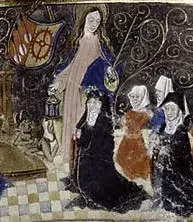
Biography
Gudula was a Christian woman of Brabant whose veneration became closely connected with Brussels. Her personal history is preserved in medieval accounts, while the later movement of her relics provides a clearer record of her cult.
Tradition places her in the family of Witger and Amalberga and describes a household with several members later honored as saints. Gudula is remembered for prayer, good works, and frequent visits to the church at Moorsel.
After burial at Ham, her remains were transferred to Moorsel and later to Brussels. They eventually came to the church of Saint Michael, linking her name with one of the city's principal religious landmarks. These translations helped turn a local devotion into an urban patronage.
Her familiar lantern refers to a legend in which a demon extinguishes her light on the way to worship and prayer restores it. The image conveys the meaning of her devotion without establishing the episode as contemporary history. Brussels celebrates her on January 8, while other local observances have existed. Her legacy illustrates how a saint's remembered habits, relics, and artistic symbols can shape a city's religious identity.
Context & contribution
A city's patron in seals and buildings
A seal of Gudula's church dated 1446 depicts the saint with a candle and a lamp threatened by a demon. This is a dated witness to how the lantern legend was used by a religious institution to identify itself. It establishes the image's medieval reception without proving that the event it depicts happened during Gudula's lifetime.
Her memory also entered the material history of the Brussels church. The Catholic Encyclopedia records indulgences in 1330 for people helping complete and decorate the building, followed by the dispersal of her relics during its sack in 1579. Construction, visual identity, and religious conflict all left marks on the public history of her cult.
Explore the sources for this section
AI-assisted source comparison updated 2026-09-26. Editorial approach
From the Saint Discovery blog
Keep exploring your faith
Practical guides to prayer, the saints, and living the Catholic faith.
Why Do Catholics Pray to Saints? Intercession Explained
Why do Catholics pray to saints? Learn how intercession differs from worship, how it relates to Jesus, and a simple way to ask a saint to pray for you.
A next step with your saintRead the article Living the seasonsHow to Celebrate Your Patron Saint's Feast Day at Home
Celebrate your patron saint's feast day with prayer, a short biography, and an act of kindness. A practical plan for families, sponsors, and individuals.
A next step with your saintRead the articleFrom reading to reflection
What will you carry with you?
After reading about St. Gudula, take a moment to consider:
- Compare a church seal with a written life of Gudula. State one historical question each could answer and one that neither could settle alone.
These are reflection prompts from Saint Discovery, not quotations from the saint.
Sources and further reading
Biography source comparison recorded on . This is an AI-assisted comparison, not independent human or ecclesiastical approval.
What the recorded review covers
AI-assisted expansion checked against cited sources; historical traditions distinguished from documented evidence; not ecclesiastical approval
A source list helps you check an account; it does not establish that every claim is certain. Follow the biography’s qualifications about historical evidence, traditions and feast calendars.
Suggest a correction to this biography
How we research these pages and handle corrections · Directory corrections log
More lives to explore
Suggestions based on the site’s quiz themes, not a historical relationship or a measure of holiness.