Catholic saint biography
St. Narcisa de Jesús Martillo Morán
- Commemoration:
- December 8
- Lived:
- 1832–1869 — Nobol, Ecuador; later Lima, Peru
Local commemoration; August 30 is not supported by the cited sources.
Why dates and liturgical observances can differ
Read the sources for this biography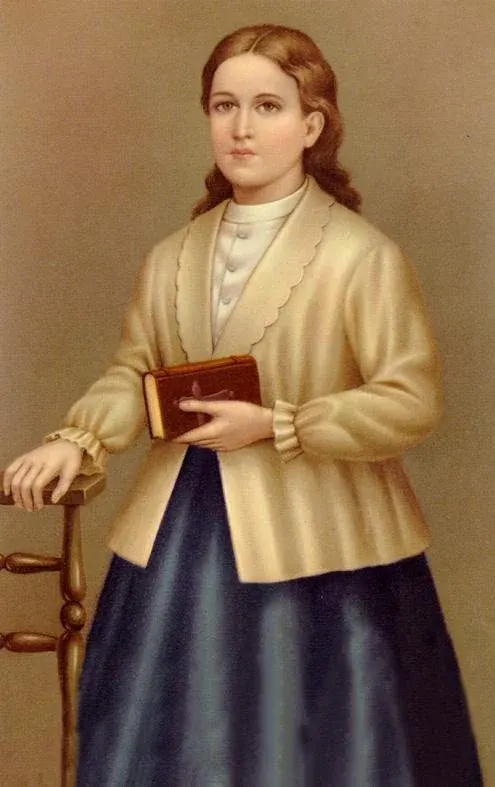
Biography
Narcisa de Jesús Martillo Morán was an Ecuadorian laywoman who supported herself through sewing and devoted herself to prayer, catechesis, and assistance to poor people. Family responsibilities shaped her youth, and she later lived in Guayaquil while seeking spiritual guidance.
After her mother's death she learned domestic skills, literacy, and music with help from an older sister and a teacher. Sewing later provided the means to support her chosen way of life. These skills connect her prayer with the economic and household responsibilities of an ordinary laywoman.
In 1868 she moved to Lima, where she lived in a religious residence while retaining her lay vocation. Accounts emphasize her penitential practices and reported mystical experiences; these should be understood within her religious setting rather than expanded into unsourced claims. She died in 1869 and was canonized by Benedict XVI in 2008. Her commemoration is December 8, the date of her death.
Her father's death preceded the move to Guayaquil, where she lived for many years before going to Peru. Spiritual guidance and changing residences formed part of her search for a suitable life of prayer. The religious setting of her final home did not make her a professed nun; that distinction is central to her lay vocation.
Context & contribution
Friendship and the return of her remains
Narcisa's search for a lay life of prayer included friendship with Mercedes of Jesus Molina, with whom she shared spiritual aims and sometimes a home. This named relationship corrects an overly solitary picture of her vocation. Spiritual directors, companions, and religious communities all helped provide settings in which she could pursue it.
After her death, the Dominican sisters at Patrocinio preserved her memory and tomb until her remains were transferred to Guayaquil in 1955. A shrine at Nobol was dedicated in 1998. These later events trace how a woman who died in Peru became a continuing focus of devotion in her Ecuadorian homeland, through the work of communities that transmitted her memory.
Explore the sources for this section
AI-assisted source comparison updated 2026-09-26. Editorial approach
From the Saint Discovery blog
Keep exploring your faith
Practical guides to prayer, the saints, and living the Catholic faith.
What Is the Domestic Church? John Paul II on Faith at Home
What Catholics mean by the domestic church, how John Paul II explained family life, and practical ways to begin with prayer, forgiveness and welcome.
Bring reflection into prayerRead the article Prayer & reflectionHow to Make a Spiritual Communion When You Cannot Receive
Learn how to make a spiritual communion, with a short original prayer and clear guidance on Mass, Confession, and times when you cannot receive.
Bring reflection into prayerRead the articleFrom reading to reflection
What will you carry with you?
After reading about St. Narcisa de Jesús Martillo Morán, take a moment to consider:
- Map Narcisa's connections with Mercedes Molina, the Patrocinio sisters, Guayaquil, and Nobol; distinguish relationships during her life from institutions preserving her memory afterward.
These are reflection prompts from Saint Discovery, not quotations from the saint.
Sources and further reading
- press.vatican.va: Narcisa de Jesús Martillo Morán ↗
- nominis.cef.fr: Narcisa de Jesús Martillo Morán ↗
Biography source comparison recorded on . This is an AI-assisted comparison, not independent human or ecclesiastical approval.
What the recorded review covers
AI-assisted expansion of the existing source-reviewed biography with comparison to retrieved cited sources; not ecclesiastical approval
A source list helps you check an account; it does not establish that every claim is certain. Follow the biography’s qualifications about historical evidence, traditions and feast calendars.
Suggest a correction to this biography
How we research these pages and handle corrections · Directory corrections log
More lives to explore
Suggestions based on the site’s quiz themes, not a historical relationship or a measure of holiness.