Catholic saint biography
St. Gregory the Illuminator
- Commemoration:
- September 30
- Patron Saint of:
- Armenia
- Lived:
- Third–fourth centuries; exact dates uncertain — Armenia
Traditional Eastern commemoration; older Roman local observances also used October 1.
Why dates and liturgical observances can differ
Read the sources for this biography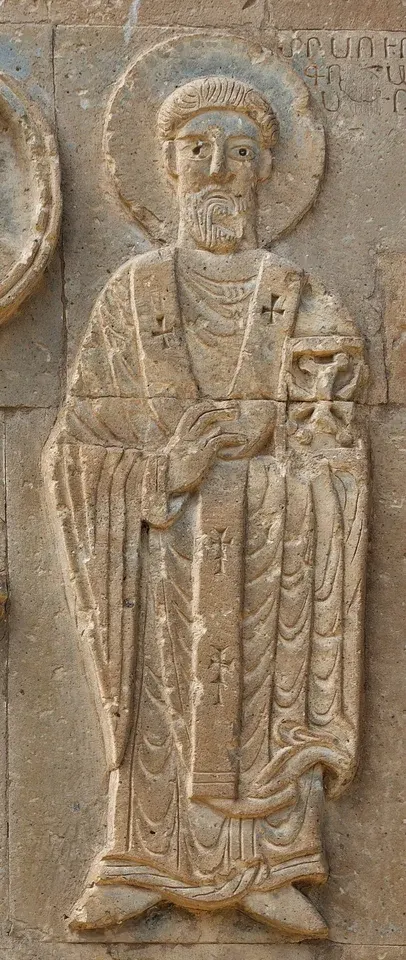
Biography
Gregory the Illuminator was a foundational leader of the Armenian Church. His importance lies in the public establishment and organization of Christianity in Armenia, where Christian communities already existed before his ministry.
Raised as a Christian in Cappadocia, he returned to Armenia and became associated with King Tiridates. The traditional account describes royal persecution followed by the king's conversion. Gregory's long imprisonment in a pit is among its most familiar episodes.
That narrative combines historical memories with elaborate miracles and dramatic transformations. The conversion of the court and the subsequent development of churches and clergy provide the central historical outline; precise dates and every detail of the prison story remain less secure.
Gregory traveled to Caesarea for episcopal consecration and returned to lead the Armenian community. His son Aristakes later succeeded him, linking the foundation with a continuing family line of leadership. His title Illuminator expresses the Armenian Church's understanding of his mission. His legacy should not erase earlier Christians or the many people involved in Armenia's religious transformation, but it does mark his decisive place in that history.
Context & contribution
Armenia's links with the wider Church
Gregory's episcopal consecration at Caesarea established a relationship that outlasted his own leadership. The Catholic Encyclopedia describes later Armenian primates going there for consecration, while Gregory organized bishops within Armenia. These connections qualify any picture of national conversion as an isolated event: local institutions developed through relationships across political and linguistic boundaries.
His son and successor Aristakes attended the Council of Nicaea in 325. That participation provides a concrete example of the Armenian Church entering wider Christian deliberation soon after Gregory's foundational work. The council connection is distinct from the elaborate speeches placed in Gregory's mouth by later biography, whose theological vocabulary can reveal the concerns of later authors.
Explore the sources for this section
AI-assisted source comparison updated 2026-09-26. Editorial approach
From the Saint Discovery blog
Keep exploring your faith
Practical guides to prayer, the saints, and living the Catholic faith.
Why Do Catholics Pray to Saints? Intercession Explained
Why do Catholics pray to saints? Learn how intercession differs from worship, how it relates to Jesus, and a simple way to ask a saint to pray for you.
A next step with your saintRead the article Living the seasonsHow to Celebrate Your Patron Saint's Feast Day at Home
Celebrate your patron saint's feast day with prayer, a short biography, and an act of kindness. A practical plan for families, sponsors, and individuals.
A next step with your saintRead the articleFrom reading to reflection
What will you carry with you?
After reading about St. Gregory the Illuminator, take a moment to consider:
- Locate Caesarea, Armenia, and Nicaea on a map. Explain what ordination, local episcopal organization, and council attendance each contributed to an emerging church.
These are reflection prompts from Saint Discovery, not quotations from the saint.
Sources and further reading
Biography source comparison recorded on . This is an AI-assisted comparison, not independent human or ecclesiastical approval.
What the recorded review covers
AI-assisted expansion checked against cited sources; historical traditions distinguished from documented evidence; not ecclesiastical approval
A source list helps you check an account; it does not establish that every claim is certain. Follow the biography’s qualifications about historical evidence, traditions and feast calendars.
Suggest a correction to this biography
How we research these pages and handle corrections · Directory corrections log
More lives to explore
Suggestions based on the site’s quiz themes, not a historical relationship or a measure of holiness.