Catholic saint biography
St. Gabriel of Our Lady of Sorrows
- Commemoration:
- February 27
- Lived:
- 1838–1862 — Assisi, Italy
February 27, particularly in the Passionist calendar.
Why dates and liturgical observances can differ
Read the sources for this biography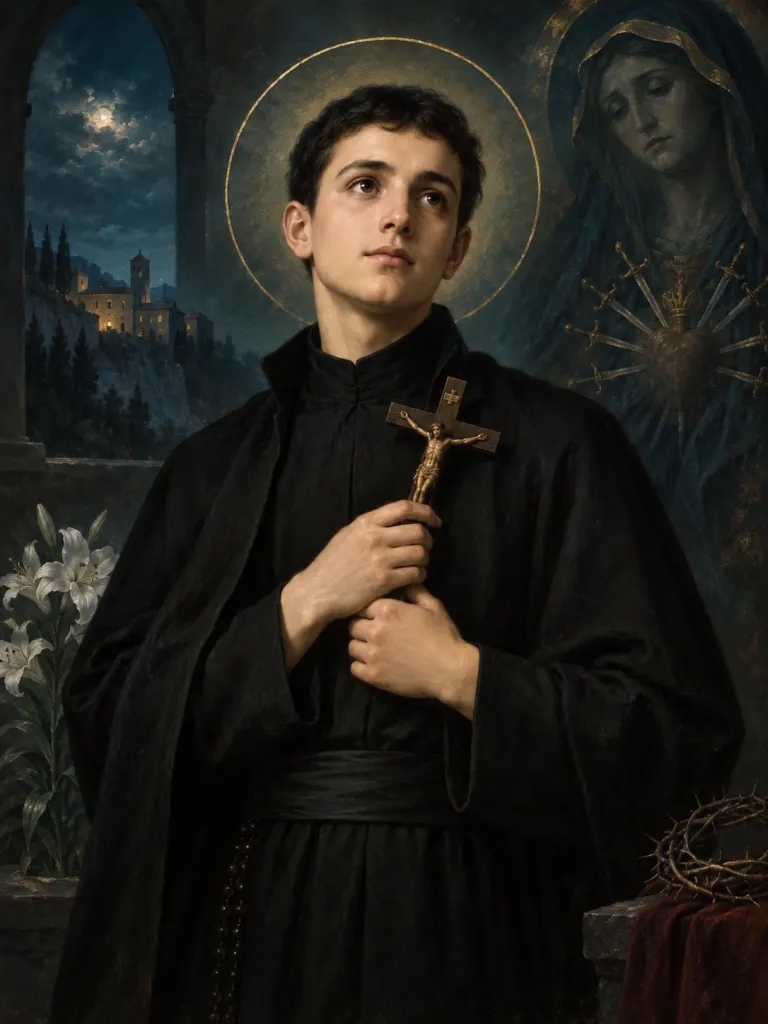
Biography
Gabriel of Our Lady of Sorrows was a young Passionist whose brief religious life became especially influential among young people. Born Francesco Possenti in 1838, he died before completing preparation for the priesthood.
His family moved with his father's work before settling at Spoleto. A sociable young man, he enjoyed music, theater, and companionship. Family bereavements, including the loss of his mother and a sister, formed part of the setting in which he reconsidered his future.
He entered the Passionists and took a name expressing devotion to Mary in her sorrow. Community life, study, prayer, and attention to Christ's Passion gave shape to his vocation. His reputation arose within those daily responsibilities rather than through a long career of preaching or institutional leadership.
Tuberculosis interrupted his studies, and he died in 1862. Canonized in 1920, he became associated with encouragement for young people discerning their own lives. His shrine near the Gran Sasso preserves that devotion. His February 27 remembrance should not turn him into an ordained priest or assign him public ministries he did not live long enough to undertake.
Context & contribution
A centenary addressed to a new generation
In the 2021 jubilee associated with Gabriel's canonization centenary, Pope Francis addressed the Diocese of Teramo-Atri and the Passionist community. His message interpreted the young religious's desire for fulfillment as a point of contact with contemporary young people.
The letter also linked remembrance with concrete care amid the pandemic's social and economic fragility. This belongs to the later reception of Gabriel, not to his nineteenth-century biography. It shows how a shrine anniversary can invite service in a new setting rather than function only as a commemoration of the past.
Explore the sources for this section
AI-assisted source comparison updated 2026-09-26. Editorial approach
From the Saint Discovery blog
Keep exploring your faith
Practical guides to prayer, the saints, and living the Catholic faith.
Why Do Catholics Pray to Saints? Intercession Explained
Why do Catholics pray to saints? Learn how intercession differs from worship, how it relates to Jesus, and a simple way to ask a saint to pray for you.
A next step with your saintRead the article Living the seasonsHow to Celebrate Your Patron Saint's Feast Day at Home
Celebrate your patron saint's feast day with prayer, a short biography, and an act of kindness. A practical plan for families, sponsors, and individuals.
A next step with your saintRead the articleFrom reading to reflection
What will you carry with you?
After reading about St. Gabriel of Our Lady of Sorrows, take a moment to consider:
- Distinguish Gabriel's lifetime circumstances from the needs named in the 2021 jubilee letter. Propose one anniversary activity that would connect remembrance with service.
These are reflection prompts from Saint Discovery, not quotations from the saint.
Sources and further reading
Biography source comparison recorded on . This is an AI-assisted comparison, not independent human or ecclesiastical approval.
What the recorded review covers
AI-assisted expansion checked against cited sources; historical traditions distinguished from documented evidence; not ecclesiastical approval
A source list helps you check an account; it does not establish that every claim is certain. Follow the biography’s qualifications about historical evidence, traditions and feast calendars.
Suggest a correction to this biography
How we research these pages and handle corrections · Directory corrections log
More lives to explore
Suggestions based on the site’s quiz themes, not a historical relationship or a measure of holiness.