Catholic saint biography
St. Frumentius
- Commemoration:
- October 27
- Lived:
- Fourth century — Tyre; Aksum, present-day Ethiopia
October 27 in the Latin tradition; Eastern and Ethiopian calendars preserve other dates.
Why dates and liturgical observances can differ
Read the sources for this biography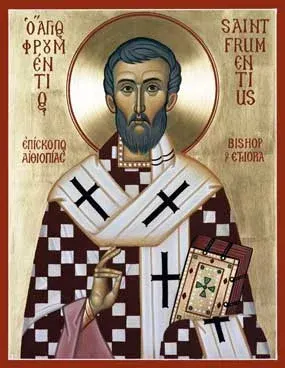
Biography
Frumentius was a fourth-century bishop who played a foundational role in Christianity at Aksum. Remembered in Ethiopian tradition as Abba Salama, he connected the royal court with the Church of Alexandria.
The historian Rufinus recounts that Frumentius and Edesius, young travelers from Tyre, survived an attack that killed their companions. Taken into royal service, they gained responsibilities at court. After receiving freedom, they remained to assist the widowed queen and the young ruler.
Frumentius encouraged Christian merchants to gather for worship and supported the development of a local Christian community. He later traveled to Alexandria to ask Athanasius for clergy. Athanasius chose Frumentius himself, consecrating him bishop and sending him back.
This connection places his work firmly within the fourth-century Church, although precise dates vary among sources. Later traditions add achievements such as biblical translation that require separate caution. His legacy is the establishment and strengthening of Christian life at Aksum, not a claim that one foreign missionary alone created the region's entire Christian culture. October 27 is his traditional Western commemoration.
Context & contribution
The companion who returned home
Edesius followed a different path from Frumentius: after their court service, he returned to Tyre and became a priest. Keeping both men in view helps explain the transmission of the story and prevents the journey from becoming a tale with only one participant.
Frumentius's request to Alexandria also shows that an emerging community sought a bishop within an existing ecclesiastical relationship. Merchants, a royal household, a traveler who stayed, and a bishop in another city all appear in the account. His mission was thus mediated through several networks rather than conducted in isolation.
Explore the sources for this section
AI-assisted source comparison updated 2026-09-26. Editorial approach
From the Saint Discovery blog
Keep exploring your faith
Practical guides to prayer, the saints, and living the Catholic faith.
Why Do Catholics Pray to Saints? Intercession Explained
Why do Catholics pray to saints? Learn how intercession differs from worship, how it relates to Jesus, and a simple way to ask a saint to pray for you.
A next step with your saintRead the article Living the seasonsHow to Celebrate Your Patron Saint's Feast Day at Home
Celebrate your patron saint's feast day with prayer, a short biography, and an act of kindness. A practical plan for families, sponsors, and individuals.
A next step with your saintRead the articleFrom reading to reflection
What will you carry with you?
After reading about St. Frumentius, take a moment to consider:
- Draw the relationships among Edesius, Frumentius, Christian merchants, the Aksum court, and Alexandria. Mark the distinct contribution of each to the narrative.
These are reflection prompts from Saint Discovery, not quotations from the saint.
Sources and further reading
Biography source comparison recorded on . This is an AI-assisted comparison, not independent human or ecclesiastical approval.
What the recorded review covers
AI-assisted expansion checked against cited sources; historical traditions distinguished from documented evidence; not ecclesiastical approval
A source list helps you check an account; it does not establish that every claim is certain. Follow the biography’s qualifications about historical evidence, traditions and feast calendars.
Suggest a correction to this biography
How we research these pages and handle corrections · Directory corrections log
More lives to explore
Suggestions based on the site’s quiz themes, not a historical relationship or a measure of holiness.