Catholic saint biography
St. David of Wales
- Commemoration:
- March 1
- Patron Saint of:
- Wales
- Lived:
- Sixth century; death date uncertain — Wales
Why dates and liturgical observances can differ
Read the sources for this biography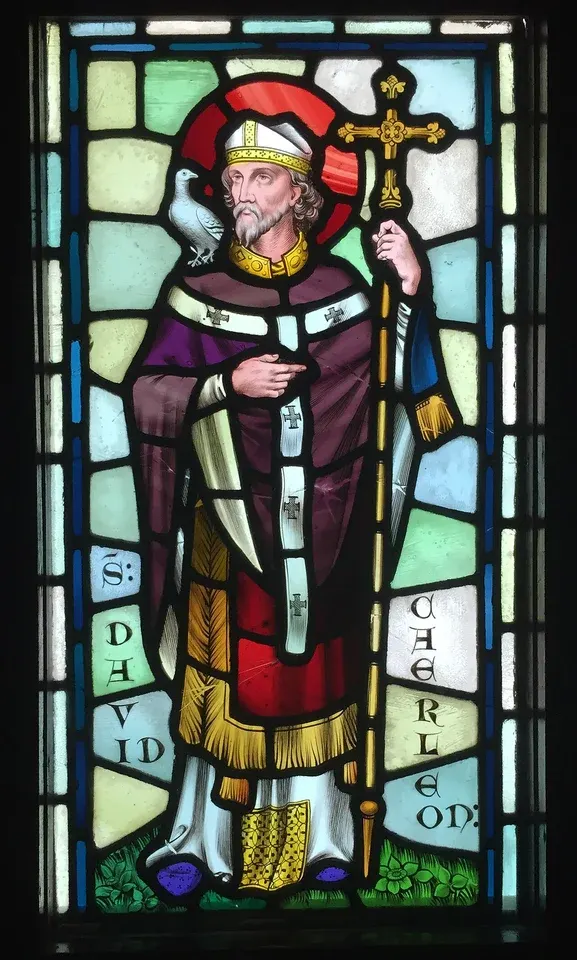
Biography
David, known in Welsh as Dewi, was a bishop and monastic founder associated with the community that became St Davids. He is Wales's patron saint, remembered on March 1, although the details of his sixth-century life are difficult to reconstruct.
The Welsh Church developed through communities of worship, study, and religious discipline. David's traditional life presents him as an austere teacher whose monks combined prayer with hard manual labor. His association with Menevia, in present-day Pembrokeshire, became central to the identity of the later cathedral.
The best-known episode describes a hill rising beneath him as he preached at Llanddewi Brefi, with a dove appearing on his shoulder. These details explain familiar artistic symbols, but they come through hagiographic tradition rather than contemporary reporting.
Rhygyfarch wrote the surviving Life centuries after David's lifetime, in a setting where Welsh ecclesiastical independence was contested. Later writers expanded its stories, making precise chronology particularly uncertain. David's enduring historical legacy is clearer in the shrine, pilgrimage, and national devotion that grew around his name than in a recoverable sequence of personal events.
Context & contribution
Reading the layers of a national memory
One useful distinction in David's sources is between an annal and a saint's Life. The Annales Cambriae preserves a brief death notice, while Rhygyfarch supplies an elaborate narrative. The two kinds of writing answer different questions: a date in a chronicle cannot independently confirm every episode told centuries later.
Even apparently familiar national symbols have their own histories. The leek tradition is associated with identifying Welsh fighters in battle, whereas the hill and dove concern preaching. These motifs explain how later communities represented their patron, without supplying a recoverable diary of David's activities.
Explore the sources for this section
AI-assisted source comparison updated 2026-09-26. Editorial approach
From the Saint Discovery blog
Keep exploring your faith
Practical guides to prayer, the saints, and living the Catholic faith.
What Is the Domestic Church? John Paul II on Faith at Home
What Catholics mean by the domestic church, how John Paul II explained family life, and practical ways to begin with prayer, forgiveness and welcome.
Bring reflection into prayerRead the article Prayer & reflectionHow to Make a Spiritual Communion When You Cannot Receive
Learn how to make a spiritual communion, with a short original prayer and clear guidance on Mass, Confession, and times when you cannot receive.
Bring reflection into prayerRead the articleFrom reading to reflection
What will you carry with you?
After reading about St. David of Wales, take a moment to consider:
- Compare the leek, hill, and dove as symbols: write one sentence on the community value each expresses, distinguishing symbolism from evidence of an event.
These are reflection prompts from Saint Discovery, not quotations from the saint.
Sources and further reading
Biography source comparison recorded on . This is an AI-assisted comparison, not independent human or ecclesiastical approval.
What the recorded review covers
AI-assisted expansion checked against cited sources; historical traditions distinguished from documented evidence; not ecclesiastical approval
A source list helps you check an account; it does not establish that every claim is certain. Follow the biography’s qualifications about historical evidence, traditions and feast calendars.
Suggest a correction to this biography
How we research these pages and handle corrections · Directory corrections log
More lives to explore
Suggestions based on the site’s quiz themes, not a historical relationship or a measure of holiness.