Catholic saint biography
St. Maron
- Commemoration:
- February 9
- Lived:
- Died in the early fifth century — Syria
Maronite feast; February 14 in Byzantine calendars.
Why dates and liturgical observances can differ
Read the sources for this biography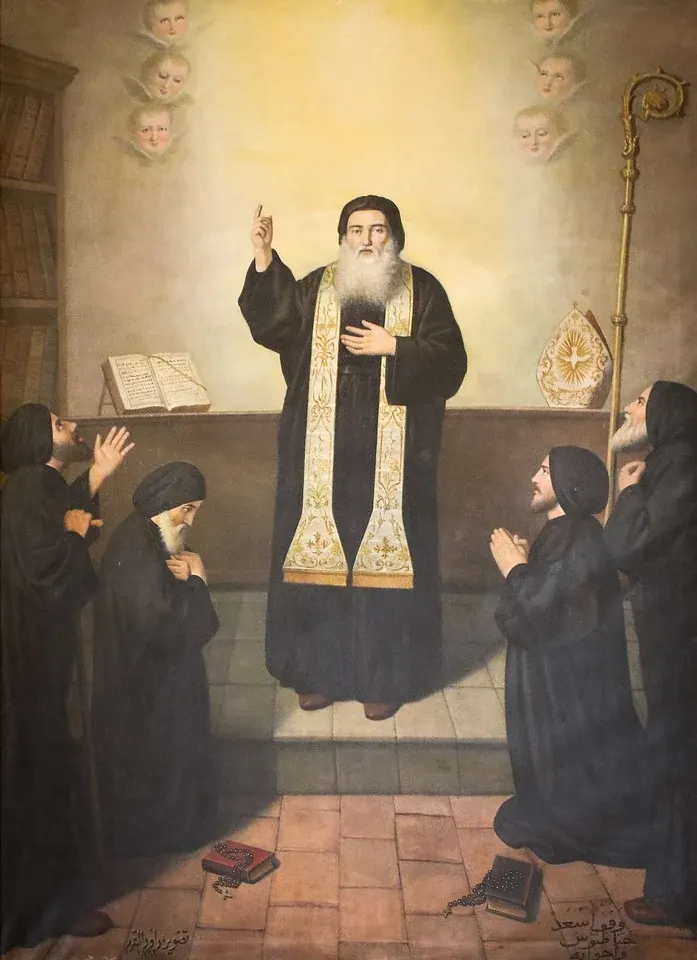
Biography
Maron, also spelled Maroun, was a Syrian ascetic whose reputation for prayer drew disciples and visitors. Theodoret of Cyrrhus preserves an early account of his life, describing a form of monastic discipline practiced largely in the open air. His followers carried his spiritual influence beyond his own place of solitude.
Theodoret's account is valuable because it belongs to the early Syrian monastic world rather than a much later medieval retelling. It describes an ascetic whose solitude nevertheless attracted people seeking help. His influence spread through disciples, making withdrawal from settled comfort compatible with a lasting role in community life.
The community that developed around his memory became an important source of Maronite Christian identity. He should be distinguished from later Maronite patriarchs with similar names: his role was that of an early monk and spiritual teacher. The Maronite Church celebrates him on February 9, while Byzantine tradition remembers him on February 14.
The Maronite name expresses this spiritual inheritance, but the Church's later institutional development should not all be assigned to Maron's own lifetime. He did not occupy the offices held by later patriarchs. Remembering the original ascetic separately from those later leaders clarifies both his personal vocation and his place in Maronite identity.
Context & contribution
A solitary monk within a network of relationships
The Maronite account identifies a link in the transmission of Maron's memory: Theodoret did not know him personally but knew his disciple James. That distinction makes the early testimony more intelligible. An author close to the region and its monastic communities could preserve valuable information without being an eyewitness to every event he narrated.
The same tradition associates Maron with a letter from the exiled John Chrysostom requesting his prayers. Its description of distance and scarce travelers evokes the practical difficulty of maintaining friendships across the ancient Mediterranean. Solitude did not imply complete isolation: correspondence, disciples, and visitors connected an ascetic to wider Christian communities.
Explore the sources for this section
AI-assisted source comparison updated 2026-09-26. Editorial approach
From the Saint Discovery blog
Keep exploring your faith
Practical guides to prayer, the saints, and living the Catholic faith.
What Is the Domestic Church? John Paul II on Faith at Home
What Catholics mean by the domestic church, how John Paul II explained family life, and practical ways to begin with prayer, forgiveness and welcome.
Bring reflection into prayerRead the article Prayer & reflectionHow to Make a Spiritual Communion When You Cannot Receive
Learn how to make a spiritual communion, with a short original prayer and clear guidance on Mass, Confession, and times when you cannot receive.
Bring reflection into prayerRead the articleFrom reading to reflection
What will you carry with you?
After reading about St. Maron, take a moment to consider:
- Draw a source map linking Maron, James, Theodoret, and Chrysostom, marking separately personal contact, transmitted testimony, and correspondence.
These are reflection prompts from Saint Discovery, not quotations from the saint.
Sources and further reading
Biography source comparison recorded on . This is an AI-assisted comparison, not independent human or ecclesiastical approval.
What the recorded review covers
AI-assisted expansion of the existing source-reviewed biography with comparison to retrieved cited sources; not ecclesiastical approval
A source list helps you check an account; it does not establish that every claim is certain. Follow the biography’s qualifications about historical evidence, traditions and feast calendars.
Suggest a correction to this biography
How we research these pages and handle corrections · Directory corrections log
More lives to explore
Suggestions based on the site’s quiz themes, not a historical relationship or a measure of holiness.