Catholic saint biography
St. Frances Xavier Cabrini
- Commemoration:
- November 13
- Patron Saint of:
- immigrants
- Lived:
- 1850–1917 — Sant'Angelo Lodigiano, Italy
November 13 in the United States and the cited congregational observance.
Why dates and liturgical observances can differ
Read the sources for this biography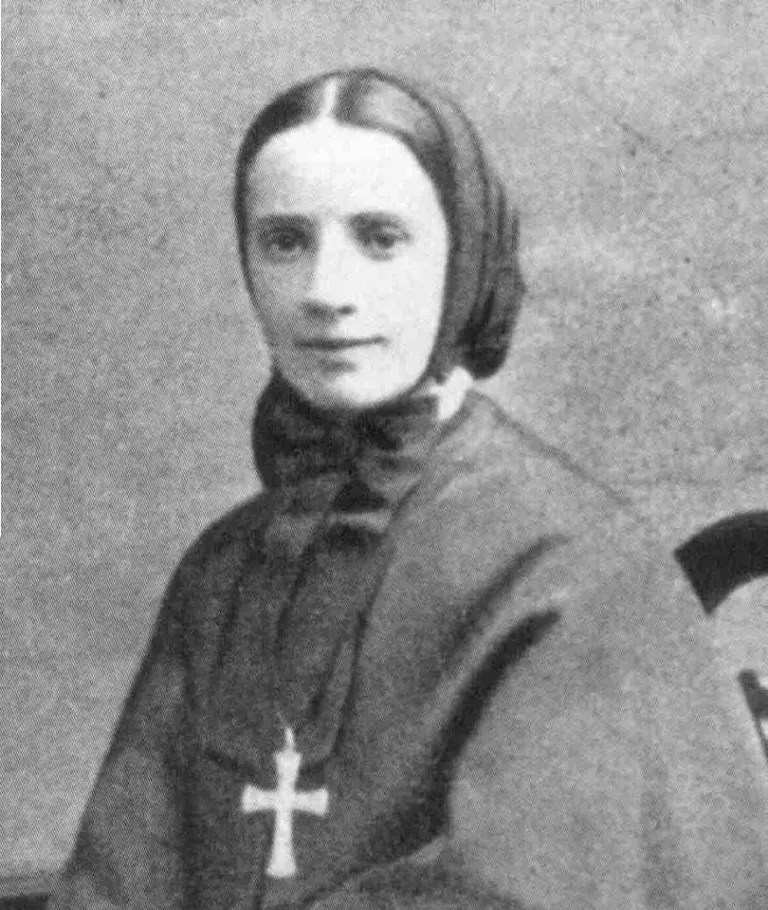
Biography
Frances Xavier Cabrini was a religious founder who developed schools, hospitals, and other services for migrants. Her Missionary Sisters of the Sacred Heart of Jesus made practical assistance part of an international religious mission.
The congregation's work responded to needs that migration often intensified: unfamiliar languages, insecure employment, limited education, and difficulty obtaining medical care. Institutions such as schools and orphanages gave that response continuity beyond a single visit or donation.
Cabrini's role required organization as well as personal devotion. Establishing communities across borders meant finding collaborators, sustaining resources, and preparing sisters for demanding local responsibilities. The congregation understood this activity through a spirituality centered on the love of Christ.
She died in Chicago in 1917 and was canonized in 1946, becoming the first United States citizen declared a saint. That distinction differs from Elizabeth Ann Seton's status as the first person born in the United States to be canonized. In 1950 Cabrini was named patron of immigrants. Her legacy continues in a religious family whose history makes the dignity and needs of migrant communities central to its work.
Context & contribution
What an institutional legacy looks like
A Cabrini congregation report describes the continuing New York mission through legal counsel, food assistance, social services, and leadership programs for immigrant families. These concrete activities show how the foundress's concern has been translated into needs that extend beyond the institutions familiar from her own period.
The same report describes education and health care in African communities and contact with refugees in Uganda. Such work belongs to her successors, and should be credited to them. It nevertheless helps explain how a founding religious purpose can guide different services across places and generations without freezing the mission in its original form.
Explore the sources for this section
AI-assisted source comparison updated 2026-09-26. Editorial approach
From the Saint Discovery blog
Keep exploring your faith
Practical guides to prayer, the saints, and living the Catholic faith.
Why Is St. Thérèse the Patron Saint of Missions?
Why is St. Thérèse patron saint of missions? Discover her support for missionaries and practical ways to participate in the Church's mission from home.
Sharing the faithRead the article Everyday faithWhat Is Evangelization? A Catholic Guide to Sharing the Faith
What is evangelization? Learn the Catholic meaning, the new evangelization, and practical ways to share your faith with respect, confidence, and love.
Sharing the faithRead the articleFrom reading to reflection
What will you carry with you?
After reading about St. Frances Xavier Cabrini, take a moment to consider:
- Choose one modern Cabrini service and compare it with a need in her lifetime. Identify the continuing purpose and the changed practical response.
These are reflection prompts from Saint Discovery, not quotations from the saint.
Sources and further reading
Biography source comparison recorded on . This is an AI-assisted comparison, not independent human or ecclesiastical approval.
What the recorded review covers
AI-assisted expansion checked against cited sources; historical traditions distinguished from documented evidence; not ecclesiastical approval
A source list helps you check an account; it does not establish that every claim is certain. Follow the biography’s qualifications about historical evidence, traditions and feast calendars.
Suggest a correction to this biography
How we research these pages and handle corrections · Directory corrections log
More lives to explore
Suggestions based on the site’s quiz themes, not a historical relationship or a measure of holiness.