Catholic saint biography
St. Felicity of Carthage
- Commemoration:
- March 7
- Lived:
- Died 203 — Carthage, Roman North Africa
Memorial with Perpetua on March 7.
Why dates and liturgical observances can differ
Read the sources for this biography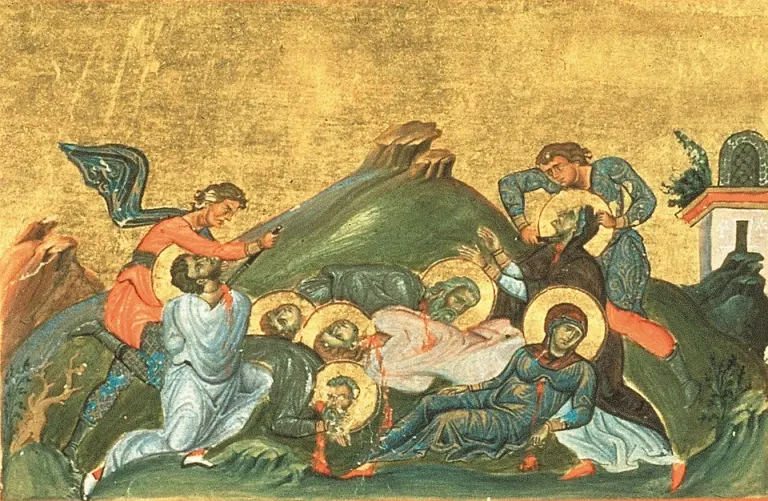
Biography
Felicity was an enslaved Christian catechumen killed at Carthage in 203 with Perpetua and their companions. Their surviving Passion offers a rare, vivid account of imprisonment, family relationships, and martyrdom in early Christianity.
She was pregnant when arrested. Because the execution of a pregnant woman was prohibited, she feared being separated from her companions at their death. The narrative describes her giving birth in prison shortly before the group entered the arena.
Her daughter was entrusted to another Christian woman. This detail is important to Felicity's individual story: her motherhood, enslavement, and reliance on the community remain visible beside the better-known first-person narrative associated with Perpetua.
Felicity and Perpetua were exposed to violence in the arena and eventually killed. Their text contains both material presented as Perpetua's prison recollections and an editor's description of the final events. Its religious interpretation accompanies its historical testimony. No reliable basis establishes that Felicity was Perpetua's personal slave, so that common assumption should be avoided. Their March 7 memorial honors distinct women joined by a common imprisonment and faith.
Context & contribution
The arena as a contested public meaning
The Passion describes attempts to dress the condemned Christians in the garments of pagan cult personnel before the arena spectacle. Their refusal shows that the punishment involved public religious meaning as well as bodily violence. They sought to retain their own identity within a performance organized by others.
The text also remembers Perpetua helping Felicity rise after the attack in the arena. This small gesture gives a concrete expression to their companionship without collapsing the two women into one biography. It is preserved by the narrator of the final events, whose theological interpretation accompanies the account.
Explore the sources for this section
AI-assisted source comparison updated 2026-09-26. Editorial approach
From the Saint Discovery blog
Keep exploring your faith
Practical guides to prayer, the saints, and living the Catholic faith.
Why Do Catholics Pray to Saints? Intercession Explained
Why do Catholics pray to saints? Learn how intercession differs from worship, how it relates to Jesus, and a simple way to ask a saint to pray for you.
A next step with your saintRead the article Living the seasonsHow to Celebrate Your Patron Saint's Feast Day at Home
Celebrate your patron saint's feast day with prayer, a short biography, and an act of kindness. A practical plan for families, sponsors, and individuals.
A next step with your saintRead the articleFrom reading to reflection
What will you carry with you?
After reading about St. Felicity of Carthage, take a moment to consider:
- Read the clothing dispute and the gesture of helping Felicity stand. Explain how each episode preserves agency within an overwhelmingly coercive setting.
These are reflection prompts from Saint Discovery, not quotations from the saint.
Sources and further reading
Biography source comparison recorded on . This is an AI-assisted comparison, not independent human or ecclesiastical approval.
What the recorded review covers
AI-assisted expansion checked against cited sources; historical traditions distinguished from documented evidence; not ecclesiastical approval
A source list helps you check an account; it does not establish that every claim is certain. Follow the biography’s qualifications about historical evidence, traditions and feast calendars.
Suggest a correction to this biography
How we research these pages and handle corrections · Directory corrections log
More lives to explore
Suggestions based on the site’s quiz themes, not a historical relationship or a measure of holiness.