Catholic saint biography
St. Agatha
- Commemoration:
- February 5
- Patron Saint of:
- Catania
- Lived:
- Died about 251 — Sicily
February 5.
Why dates and liturgical observances can differ
Read the sources for this biography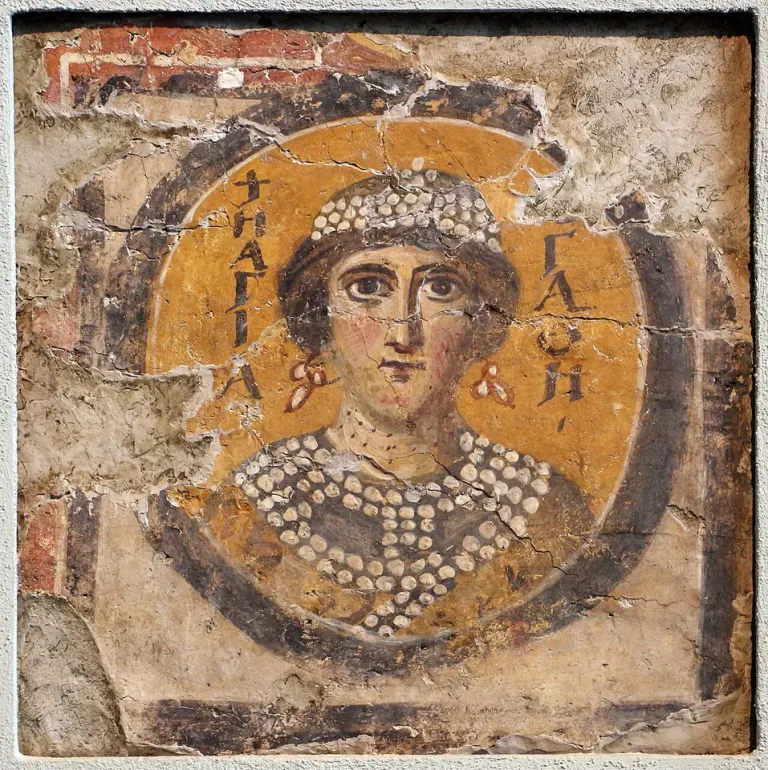
Biography
Agatha is a virgin martyr of Sicily and the patron saint of Catania. Her traditional story places her suffering during the persecution associated with Emperor Decius and dates her death to February 5, 251. Much of the personal narrative comes from her later passion.
In that account, Agatha is a young Christian determined to maintain her dedication to Christ. A powerful official, Quintian, attempts to force her submission. Neither threats nor efforts to undermine her religious commitment succeed, and she is imprisoned and tortured.
The narrative includes severe injuries, a miraculous healing, and further suffering before her death. These episodes explain many of the symbols found in her art, but their detailed dialogue and sequence should not be treated as contemporary documentation. The tradition also contains competing claims about whether she was born in Catania or Palermo.
Her memory became especially associated with Catania and the dangers of Mount Etna. Stories of protection from volcanic eruptions belong to the history of her local devotion. Her feast and relics continue to connect the city's religious life with the martyr whose refusal to surrender her faith forms the central theme of her story.
Context & contribution
Reading the imagery of a Sicilian martyr
Agatha's religious art can be read as a visual shorthand for her passion. The injuries described in that narrative explain symbols that otherwise seem obscure to a modern visitor. Identifying the source of an image does not require treating every episode in the passion as independently verified history.
Catania's devotion also connects martyrdom with the vulnerability of a city near Etna. The community's memory of danger and protection gave Agatha a civic as well as a liturgical presence. Her legacy therefore includes the ways a city expresses belonging, remembers threats, and gathers around a shared patron, alongside the personal fidelity celebrated in the martyr's story.
Explore the sources for this section
AI-assisted source comparison updated 2026-09-26. Editorial approach
From the Saint Discovery blog
Keep exploring your faith
Practical guides to prayer, the saints, and living the Catholic faith.
St. Josephine Bakhita: Hope Without Denying Suffering
Learn what St. Josephine Bakhita teaches about Christian hope, dignity, and freedom, with practical reflection prompts and an original prayer.
Faith in difficult timesRead the article Prayer & reflectionWhat Is Redemptive Suffering? A Catholic Guide
What is redemptive suffering? Learn what Catholics mean by offering it up, how to unite suffering to Christ, and why seeking help belongs with faith.
Faith in difficult timesRead the articleFrom reading to reflection
What will you carry with you?
After reading about St. Agatha, take a moment to consider:
- Choose an image of Agatha and identify one symbol from her passion and one feature of local devotion. Keep visual interpretation separate from historical proof.
These are reflection prompts from Saint Discovery, not quotations from the saint.
Sources and further reading
Biography source comparison recorded on . This is an AI-assisted comparison, not independent human or ecclesiastical approval.
What the recorded review covers
AI-assisted expansion checked against retrieved historical and institutional sources; traditions distinguished from documented history; not ecclesiastical approval
A source list helps you check an account; it does not establish that every claim is certain. Follow the biography’s qualifications about historical evidence, traditions and feast calendars.
Suggest a correction to this biography
How we research these pages and handle corrections · Directory corrections log
More lives to explore
Suggestions based on the site’s quiz themes, not a historical relationship or a measure of holiness.