Catholic saint biography
St. Apollonia of Alexandria
- Commemoration:
- February 9
- Lived:
- Died about 249 — Alexandria, Egypt
Why dates and liturgical observances can differ
Read the sources for this biography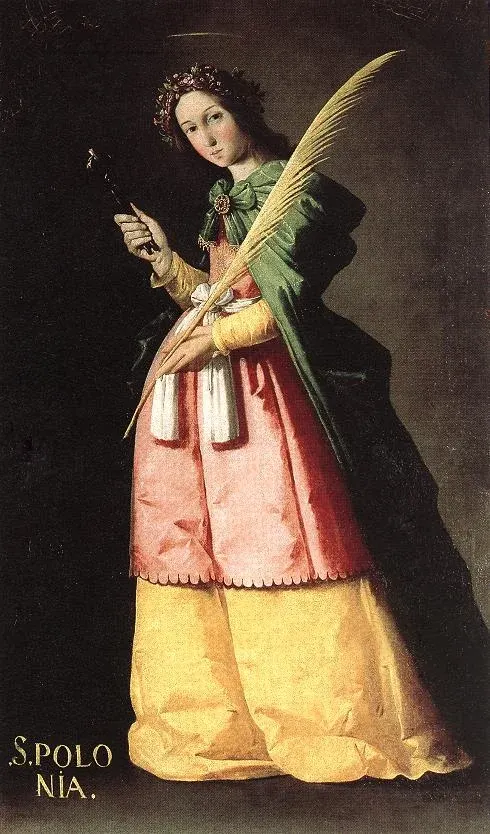
Biography
Apollonia was killed during anti-Christian violence in Alexandria shortly before the persecution of Decius. Unlike many early martyr stories, an account of her suffering survives through a letter by the local bishop, Dionysius, preserved in Eusebius’s Church History.
Dionysius described a wider outbreak in which Christians were attacked and their houses plundered. Apollonia was therefore one person within a suffering community, not the subject of an isolated confrontation. The letter’s preservation by a later historian provides a traceable route through which her memory survives.
The account identifies threats intended to make her speak against her faith. Its description of her death raises questions different from the later legends surrounding many martyrs. Her traditional association with dental suffering developed from the injuries recorded in this early testimony; it does not establish a medical profession.
That account describes a respected Christian woman whose teeth were broken by a mob before she died in the fire prepared for her. Later devotion connected her suffering with prayers for relief from toothache. Her story belongs to the history of Alexandria’s persecuted Christian community; later versions placing her martyrdom elsewhere should not be confused with this earlier testimony.
Context & contribution
Patronage grew from a remembered injury
Apollonia's association with dental suffering illustrates how a detail in a martyr's account could shape later devotion. The early narrative remembers violence against her teeth; subsequent worshippers connected that suffering with their own pain. Such a development explains patronage without inventing a career as a dentist.
Her source also shows that persecution could involve mob violence before a new imperial policy, with homes pillaged and local authorities failing to protect Christians. That context matters because it changes the historical question from a single courtroom verdict to the vulnerability of a minority community. The letter's addressee in Antioch further shows news of the violence moving between churches.
Explore the sources for this section
AI-assisted source comparison updated 2026-09-26. Editorial approach
From the Saint Discovery blog
Keep exploring your faith
Practical guides to prayer, the saints, and living the Catholic faith.
St. Josephine Bakhita: Hope Without Denying Suffering
Learn what St. Josephine Bakhita teaches about Christian hope, dignity, and freedom, with practical reflection prompts and an original prayer.
Faith in difficult timesRead the article Prayer & reflectionWhat Is Redemptive Suffering? A Catholic Guide
What is redemptive suffering? Learn what Catholics mean by offering it up, how to unite suffering to Christ, and why seeking help belongs with faith.
Faith in difficult timesRead the articleFrom reading to reflection
What will you carry with you?
After reading about St. Apollonia of Alexandria, take a moment to consider:
- Trace the steps from Apollonia's recorded injury to later dental patronage. Which step concerns her life, and which concerns the needs of later worshippers?
These are reflection prompts from Saint Discovery, not quotations from the saint.
Sources and further reading
Biography source comparison recorded on . This is an AI-assisted comparison, not independent human or ecclesiastical approval.
What the recorded review covers
AI-assisted expansion checked against retrieved historical and institutional sources; traditions distinguished from documented history; not ecclesiastical approval
A source list helps you check an account; it does not establish that every claim is certain. Follow the biography’s qualifications about historical evidence, traditions and feast calendars.
Suggest a correction to this biography
How we research these pages and handle corrections · Directory corrections log
More lives to explore
Suggestions based on the site’s quiz themes, not a historical relationship or a measure of holiness.