Catholic saint biography
St. Ephrem the Syrian
- Commemoration:
- June 9
- Lived:
- About 306–373 — Nisibis and Edessa, northern Mesopotamia
June 9 Roman memorial; Eastern calendars have other commemorations.
Why dates and liturgical observances can differ
Read the sources for this biography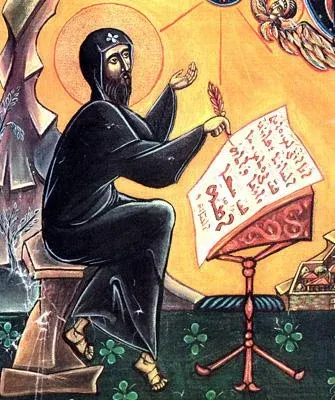
Biography
Ephrem was a fourth-century Syriac-speaking deacon, teacher, and poet whose hymns made theology part of communal worship. Associated with Nisibis and later Edessa, he represents Christianity's early development beyond the Greek and Latin worlds.
Born around 306, he grew up under the influence of Bishop James of Nisibis and worked in the city's Christian community. When Nisibis passed to Persian control in 363, he moved to Edessa, carrying his teaching and literary activity into a new setting.
His writings include prose commentary, verse homilies, and hymns. He used images of light, fire, food, gardens, and precious stones to explore creation, Christ's incarnation, Mary, and the Eucharist. These were not simply ornaments added to arguments: poetry itself became a way of teaching.
Ephrem remained a deacon rather than becoming a priest or bishop. He died in 373; church tradition associates his final illness with service to sick people. Known as the Harp of the Holy Spirit, he is honored in Eastern Christianity and as a Catholic Doctor of the Church. His work shows how music and biblical interpretation shaped the understanding of entire communities.
Context & contribution
How a biblical image becomes theology
Ephrem's treatment of the Eucharist draws on Isaiah's encounter with the burning coal. He develops the difference between the prophet's lips being touched and the Christian receiving Christ as food. The movement from one biblical scene to another is an argument expressed through an image.
His Nativity hymns similarly place divine greatness beside infant vulnerability. The contrasts ask listeners to hold together realities that ordinary descriptions tend to separate. Reading his poetry attentively therefore requires following how images work, rather than extracting a line as if it were a detached doctrinal definition.
Explore the sources for this section
AI-assisted source comparison updated 2026-09-26. Editorial approach
From the Saint Discovery blog
Keep exploring your faith
Practical guides to prayer, the saints, and living the Catholic faith.
Why Do Catholics Pray to Saints? Intercession Explained
Why do Catholics pray to saints? Learn how intercession differs from worship, how it relates to Jesus, and a simple way to ask a saint to pray for you.
A next step with your saintRead the article Living the seasonsHow to Celebrate Your Patron Saint's Feast Day at Home
Celebrate your patron saint's feast day with prayer, a short biography, and an act of kindness. A practical plan for families, sponsors, and individuals.
A next step with your saintRead the articleFrom reading to reflection
What will you carry with you?
After reading about St. Ephrem the Syrian, take a moment to consider:
- Compare Isaiah's coal with Ephrem's Eucharistic use of it. Identify what stays the same in the image and what changes in its application.
These are reflection prompts from Saint Discovery, not quotations from the saint.
Sources and further reading
Biography source comparison recorded on . This is an AI-assisted comparison, not independent human or ecclesiastical approval.
What the recorded review covers
AI-assisted expansion checked against cited sources; historical traditions distinguished from documented evidence; not ecclesiastical approval
A source list helps you check an account; it does not establish that every claim is certain. Follow the biography’s qualifications about historical evidence, traditions and feast calendars.
Suggest a correction to this biography
How we research these pages and handle corrections · Directory corrections log
More lives to explore
Suggestions based on the site’s quiz themes, not a historical relationship or a measure of holiness.