Catholic saint biography
St. Elizabeth of Hungary
- Commemoration:
- November 17
- Patron Saint of:
- Secular Franciscan Order; Third Order Regular of Saint Francis
- Lived:
- 1207–1231 — Hungary; life in Thuringia, Germany
November 17 current Roman memorial; November 19 in older Roman calendars.
Why dates and liturgical observances can differ
Read the sources for this biography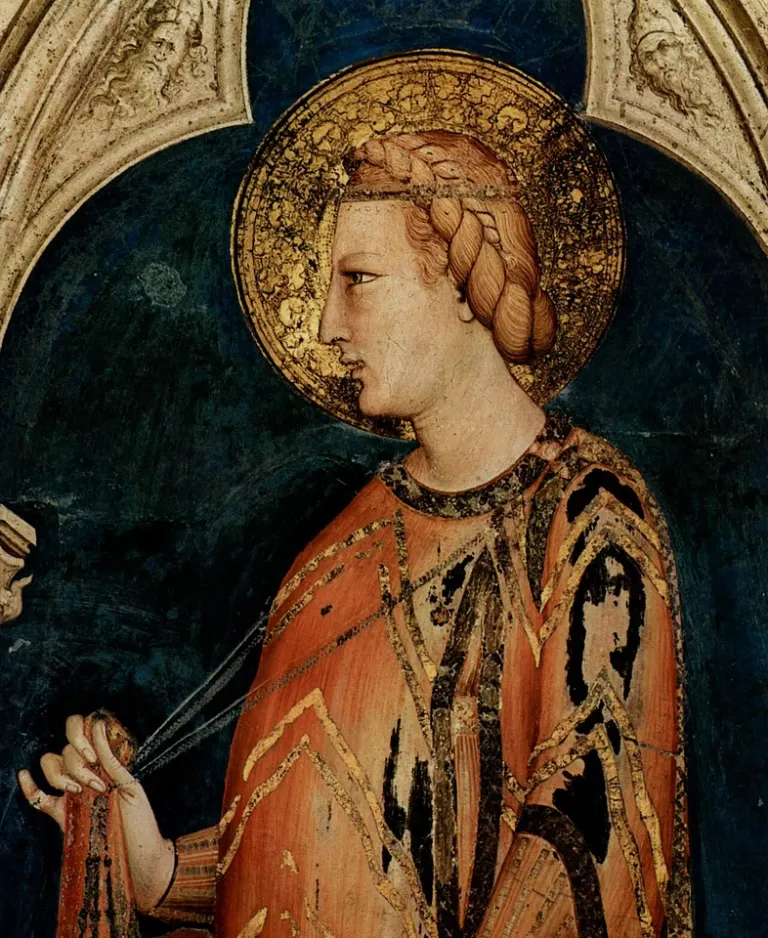
Biography
Elizabeth of Hungary was a royal daughter, wife, and young widow whose direct care for poor and sick people became central to her reputation. She lived from 1207 to 1231 and is also known as Elizabeth of Thuringia.
Sent away from Hungary as a child for a dynastic marriage, she grew up in the Thuringian court. She married Ludwig and had three children. The household's wealth and authority gave her opportunities to distribute relief, but her religious choices also provoked criticism within courtly society.
Influenced by Franciscan ideals, Elizabeth sought simplicity and personal service rather than leaving charity entirely to officials. Ludwig's death during the preparations for crusade left her vulnerable to family disputes. Her later life was also shaped by the demanding direction of Conrad of Marburg.
At Marburg she established a hospital and personally cared for patients. She died at twenty-four and was canonized only four years later. Accounts of her life include testimony from women who knew her, giving firmer foundations for her charitable work than for the famous later legend of bread turning into roses. That distinction helps preserve her practical achievements beneath a familiar artistic symbol.
Context & contribution
Charity and the origins of wealth
Testimony cited by Benedict XVI describes Elizabeth asking whether food came from legitimately held resources and seeking compensation for people harmed by violence. Her concern was therefore not confined to distributing what the household possessed: it extended to how that wealth had been obtained.
This complicates an image of aristocratic charity as generosity alone. Giving and justice could make different demands on the same household. Her support for a Franciscan house at Halberstadt likewise made relief and religious patronage part of a wider network rather than isolated personal acts.
Explore the sources for this section
AI-assisted source comparison updated 2026-09-26. Editorial approach
From the Saint Discovery blog
Keep exploring your faith
Practical guides to prayer, the saints, and living the Catholic faith.
St. Josephine Bakhita: Hope Without Denying Suffering
Learn what St. Josephine Bakhita teaches about Christian hope, dignity, and freedom, with practical reflection prompts and an original prayer.
Faith in difficult timesRead the article Prayer & reflectionWhat Is Redemptive Suffering? A Catholic Guide
What is redemptive suffering? Learn what Catholics mean by offering it up, how to unite suffering to Christ, and why seeking help belongs with faith.
Faith in difficult timesRead the articleFrom reading to reflection
What will you carry with you?
After reading about St. Elizabeth of Hungary, take a moment to consider:
- Consider a donation made from unjust gains. Using Elizabeth's reported concern for legitimate resources, distinguish generosity from restitution.
These are reflection prompts from Saint Discovery, not quotations from the saint.
Sources and further reading
Biography source comparison recorded on . This is an AI-assisted comparison, not independent human or ecclesiastical approval.
What the recorded review covers
AI-assisted expansion checked against cited sources; historical traditions distinguished from documented evidence; not ecclesiastical approval
A source list helps you check an account; it does not establish that every claim is certain. Follow the biography’s qualifications about historical evidence, traditions and feast calendars.
Suggest a correction to this biography
How we research these pages and handle corrections · Directory corrections log
More lives to explore
Suggestions based on the site’s quiz themes, not a historical relationship or a measure of holiness.