Catholic saint biography
St. Camillus de Lellis
- Commemoration:
- July 14
- Lived:
- 1550–1614 — Italy
Why dates and liturgical observances can differ
Read the sources for this biography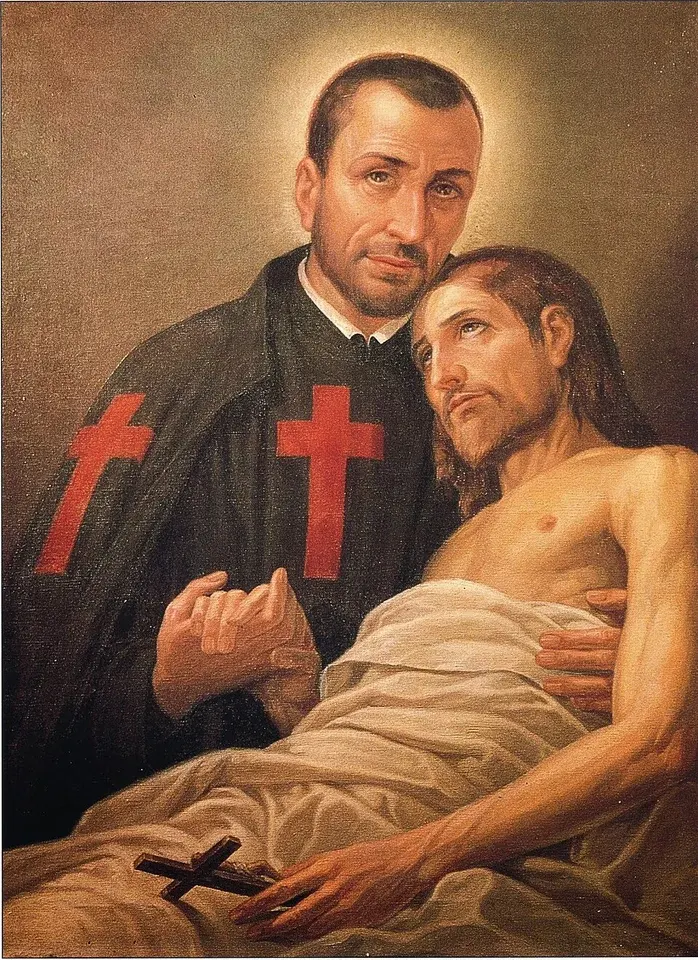
Biography
Camillus served as a soldier before turning toward religious life. A persistent leg wound prevented his attempts to remain with the Capuchins and brought him into contact with hospital care in Rome. His experience helped direct his vocation toward people who were sick.
The hospital of Saint James in Rome was important to his change of direction. Knowing sickness as a patient gave him direct experience of the conditions in which care was delivered. His earlier military life supplied organizational habits that he redirected toward sustained assistance.
The additional commitment to serving the sick gave the new community a clear practical purpose. Caring for a person included attentive presence and religious support as well as bodily needs. The red cross therefore identified a vocation of service, rather than functioning only as a decorative emblem.
He founded the community known as the Camillians, whose commitment included service to the sick alongside the usual religious vows. Their red cross on the habit became a sign of that dedication. Camillus emphasized personal attention, compassion, and care for spiritual as well as physical needs. He died in Rome on July 14, 1614.
Context & contribution
Home visits without abandoning hospital patients
Camillus allowed his companions to assist sick people in private homes as well as hospitals. The Camillian historical account preserves conditions for that work: brothers should go together, attend to bodily and spiritual needs, and avoid neglecting poor patients already entrusted to them in hospitals. Expanding the mission required limits as well as willingness.
This is a practical contribution to the organization of charity. A new request can be urgent and worthy without canceling existing responsibilities. Camillus's provision makes the tension visible and gives it a rule, rather than leaving each caregiver to improvise alone. His legacy includes this attention to continuity: a service should be judged partly by whether the people already depending on it remain cared for.
Explore the sources for this section
AI-assisted source comparison updated 2026-09-26. Editorial approach
From the Saint Discovery blog
Keep exploring your faith
Practical guides to prayer, the saints, and living the Catholic faith.
St. Josephine Bakhita: Hope Without Denying Suffering
Learn what St. Josephine Bakhita teaches about Christian hope, dignity, and freedom, with practical reflection prompts and an original prayer.
Faith in difficult timesRead the article Prayer & reflectionWhat Is Redemptive Suffering? A Catholic Guide
What is redemptive suffering? Learn what Catholics mean by offering it up, how to unite suffering to Christ, and why seeking help belongs with faith.
Faith in difficult timesRead the articleFrom reading to reflection
What will you carry with you?
After reading about St. Camillus de Lellis, take a moment to consider:
- Using Camillus's conditions for home visits, discuss how a care team could accept a new request while ensuring its current patients are not forgotten.
These are reflection prompts from Saint Discovery, not quotations from the saint.
Sources and further reading
Biography source comparison recorded on . This is an AI-assisted comparison, not independent human or ecclesiastical approval.
What the recorded review covers
AI-assisted expansion checked against retrieved historical and institutional sources; traditions distinguished from documented history; not ecclesiastical approval
A source list helps you check an account; it does not establish that every claim is certain. Follow the biography’s qualifications about historical evidence, traditions and feast calendars.
Suggest a correction to this biography
How we research these pages and handle corrections · Directory corrections log
Explore this saint in everyday life
More lives to explore
Suggestions based on the site’s quiz themes, not a historical relationship or a measure of holiness.