Catholic saint biography
St. Charbel Makhlouf
- Commemoration:
- July 24
- Lived:
- 1828–1898 — Lebanon
Why dates and liturgical observances can differ
Read the sources for this biography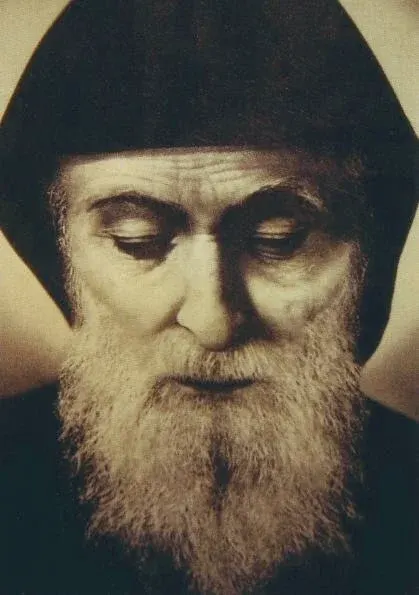
Biography
Charbel was a Maronite monk who joined the Lebanese Maronite Order in 1851, made his vows in 1853, and was ordained a priest in 1859. After years in community at Annaya, he became a hermit, devoting the remainder of his life to prayer, work, and ascetic discipline.
His hermit life followed years of ordinary monastic formation and shared worship. The Maronite setting is essential: his religious practice belonged to an Eastern Catholic tradition with its own liturgical and ascetic heritage. He did not begin as an isolated figure detached from a community.
Annaya became a pilgrimage destination through the reports associated with his tomb. The monastery describes visitors from several religious backgrounds, showing the breadth of his later reception in Lebanon. Those testimonies should be attributed as reports of intercession rather than presented as independently established medical conclusions.
He died on Christmas Eve in 1898. Reports of extraordinary events and healings associated with his tomb contributed to the growth of pilgrimage there. Paul VI beatified him in 1965 and canonized him in 1977. His Roman-calendar memorial is July 24. Charbel and Sharbel are spellings of the same name, not two different saints.
Context & contribution
A Lebanese shrine in a time of division
Charbel's modern reception extends beyond the boundaries of his own monastic community. In a November 2025 Vatican News interview, an Annaya monk described respect for him among Christians, Muslims, and Druze. The report connects that attraction with the hermit's prayer, work, and poverty, while presenting the monastery as a place where visitors bring experiences of suffering.
The interview also linked hopes for healing with Lebanon's social wounds, including division and corruption, as a papal visit approached. This is evidence of how people interpret Charbel's legacy today; it does not make him the founder of a modern interreligious organization. His shrine's public significance includes the possibility of meeting across communities in a country marked by recurrent crises.
Explore the sources for this section
AI-assisted source comparison updated 2026-09-26. Editorial approach
From the Saint Discovery blog
Keep exploring your faith
Practical guides to prayer, the saints, and living the Catholic faith.
What Is the Domestic Church? John Paul II on Faith at Home
What Catholics mean by the domestic church, how John Paul II explained family life, and practical ways to begin with prayer, forgiveness and welcome.
Bring reflection into prayerRead the article Prayer & reflectionHow to Make a Spiritual Communion When You Cannot Receive
Learn how to make a spiritual communion, with a short original prayer and clear guidance on Mass, Confession, and times when you cannot receive.
Bring reflection into prayerRead the articleFrom reading to reflection
What will you carry with you?
After reading about St. Charbel Makhlouf, take a moment to consider:
- Discuss what a shared place of pilgrimage can contribute to trust among Lebanese communities, and what work outside the shrine would still be needed.
These are reflection prompts from Saint Discovery, not quotations from the saint.
Sources and further reading
Biography source comparison recorded on . This is an AI-assisted comparison, not independent human or ecclesiastical approval.
What the recorded review covers
AI-assisted expansion checked against retrieved historical and institutional sources; traditions distinguished from documented history; not ecclesiastical approval
A source list helps you check an account; it does not establish that every claim is certain. Follow the biography’s qualifications about historical evidence, traditions and feast calendars.
Suggest a correction to this biography
How we research these pages and handle corrections · Directory corrections log
More lives to explore
Suggestions based on the site’s quiz themes, not a historical relationship or a measure of holiness.