Catholic saint biography
St. Anthony the Great
- Commemoration:
- January 17
- Lived:
- About 250–356 — Egypt
Why dates and liturgical observances can differ
Read the sources for this biography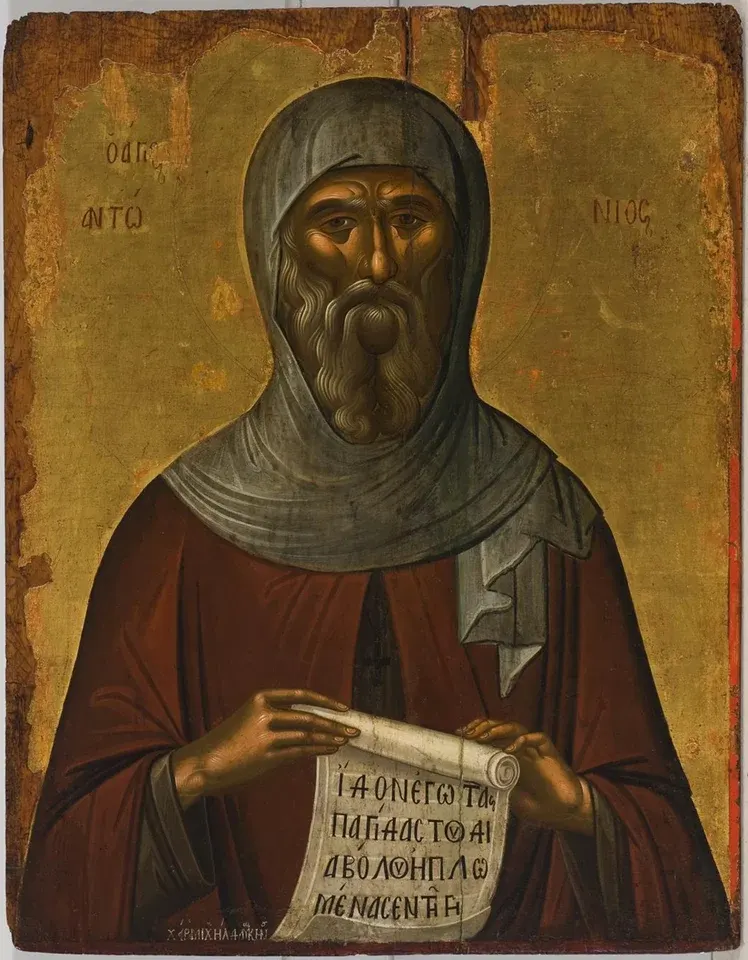
Biography
Anthony became one of the most influential figures in early Egyptian monasticism. According to the Life attributed to Athanasius, hearing Jesus’ call to sell possessions and follow him prompted Anthony to distribute his inheritance and adopt a life of prayer and self-denial.
Anthony first practiced self-denial near his home, learning from people already living ascetically. Only later did he seek more complete seclusion across the Nile. That progression is important: early monasticism developed through existing practices and relationships rather than appearing fully formed in one dramatic moment.
The Life became a powerful means of spreading his example beyond Egypt. Its narratives of temptation portray spiritual struggle in vivid form and shaped later art and literature. His January 17 memorial remembers that influence without making every dramatic episode a separately verified historical event.
He learned from other ascetics before withdrawing farther into the desert. Disciples gathered around him and sought his guidance, even as he continued to value solitude. The dramatic accounts of his temptations belong to the spiritual narrative of his Life. Although often called the father of monasticism, he was not the first Christian ascetic, and his form of life differed from Pachomius’s organized communities.
Context & contribution
Influence is different from authorship
Anthony's authority spread through his Life and through sayings attributed to him. A major spiritual influence does not mean that every later text bearing his name came from his own hand. The Catholic Encyclopedia distinguishes the early traditions from later sermons, letters, and a monastic rule transmitted under his name.
That distinction helps explain his title as a father of monasticism. He became an exemplary figure through whom later monks understood their calling, without having personally legislated every form of monastic life. The contrast with Pachomius's more organized communities is especially instructive: Christian monasticism developed through several experiments whose later family resemblance should not erase their different beginnings.
Explore the sources for this section
AI-assisted source comparison updated 2026-09-26. Editorial approach
From the Saint Discovery blog
Keep exploring your faith
Practical guides to prayer, the saints, and living the Catholic faith.
What Is the Domestic Church? John Paul II on Faith at Home
What Catholics mean by the domestic church, how John Paul II explained family life, and practical ways to begin with prayer, forgiveness and welcome.
Bring reflection into prayerRead the article Prayer & reflectionHow to Make a Spiritual Communion When You Cannot Receive
Learn how to make a spiritual communion, with a short original prayer and clear guidance on Mass, Confession, and times when you cannot receive.
Bring reflection into prayerRead the articleFrom reading to reflection
What will you carry with you?
After reading about St. Anthony the Great, take a moment to consider:
- Compare founding by personal example with founding by a written rule. How can Anthony's influence be extensive without making him the author of every later practice?
These are reflection prompts from Saint Discovery, not quotations from the saint.
Sources and further reading
Biography source comparison recorded on . This is an AI-assisted comparison, not independent human or ecclesiastical approval.
What the recorded review covers
AI-assisted expansion checked against retrieved historical and institutional sources; traditions distinguished from documented history; not ecclesiastical approval
A source list helps you check an account; it does not establish that every claim is certain. Follow the biography’s qualifications about historical evidence, traditions and feast calendars.
Suggest a correction to this biography
How we research these pages and handle corrections · Directory corrections log
More lives to explore
Suggestions based on the site’s quiz themes, not a historical relationship or a measure of holiness.