Catholic saint biography
St. Romuald
- Commemoration:
- June 19
- Lived:
- c. 950–1027 — Ravenna, Italy
Why dates and liturgical observances can differ
Read the sources for this biography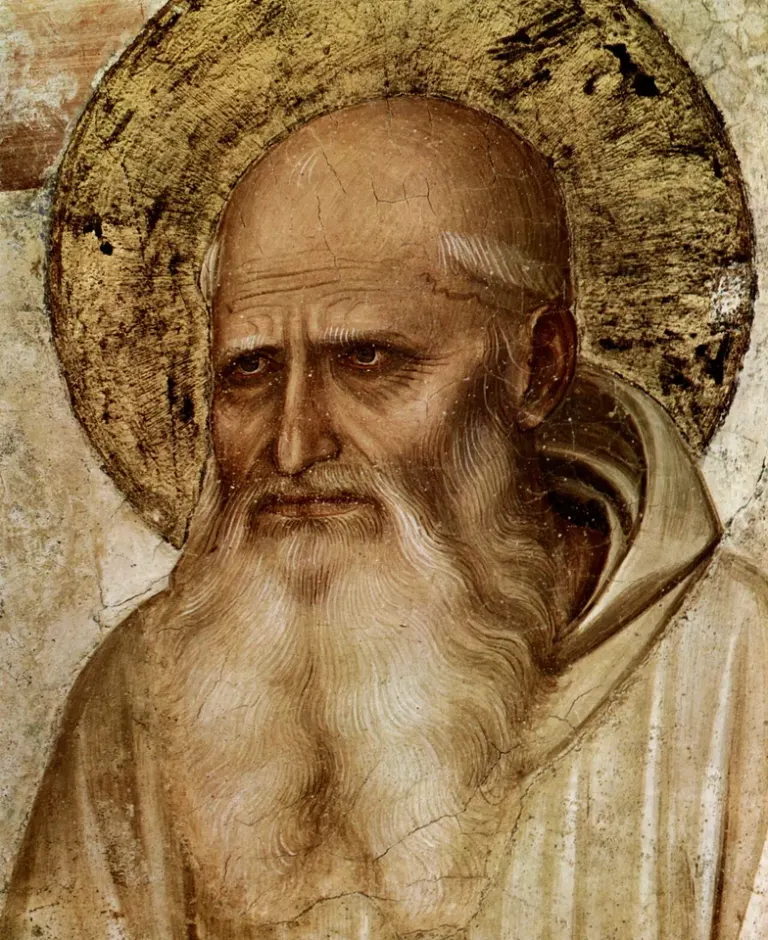
Biography
Romuald was an Italian monk who sought to renew religious life through silence, prayer, and disciplined community. After entering a monastery near Ravenna, he learned from hermits and traveled widely, founding or reforming monasteries and hermitages. His work eventually became associated with the Camaldolese tradition.
The early life links his entry into religion with horror at a killing involving his father. His subsequent search for stricter observance brought him to the hermit Marinus and to Cuxa in Catalonia. The account presents a vocation formed through repeated attempts to find a workable religious discipline.
Camaldoli united individual cells with the support of a nearby monastery. This practical arrangement helps explain the community's distinctive inheritance. Legendary explanations of its foundation and miraculous episodes can be appreciated as part of its memory without resolving every chronological uncertainty.
That tradition joins the solitude of the hermit with the support of monastic community. Early accounts include striking stories and disputed chronology, including an implausibly long lifespan, so precise details require caution. Romuald died at Val di Castro in 1027. His memorial in the current Roman calendar is June 19, replacing an older February observance.
Context & contribution
A short rule for the distracted beginner
Romuald's Brief Rule survives through Bruno of Querfurt's Lives of the Five Brothers, rather than as a manuscript written by Romuald himself. The Camaldolese presentation locates it in chapter 19 and connects its transmission with John, one of the brothers who knew him. Its compact form preserves an approach to prayer instead of a detailed administrative constitution.
The instruction centers on the Psalms and the management of attention. A beginner who cannot accomplish every intended practice is encouraged to persevere, understand what is read, and return when the mind wanders. This is a distinctive piece of practical teaching: the ideal of contemplation is accompanied by recognition that enthusiasm and sustained concentration are different things.
Explore the sources for this section
AI-assisted source comparison updated 2026-09-26. Editorial approach
From the Saint Discovery blog
Keep exploring your faith
Practical guides to prayer, the saints, and living the Catholic faith.
What Is the Domestic Church? John Paul II on Faith at Home
What Catholics mean by the domestic church, how John Paul II explained family life, and practical ways to begin with prayer, forgiveness and welcome.
Bring reflection into prayerRead the article Prayer & reflectionHow to Make a Spiritual Communion When You Cannot Receive
Learn how to make a spiritual communion, with a short original prayer and clear guidance on Mass, Confession, and times when you cannot receive.
Bring reflection into prayerRead the articleFrom reading to reflection
What will you carry with you?
After reading about St. Romuald, take a moment to consider:
- Read the Brief Rule and identify its response to distraction; compare that response with the expectations an enthusiastic beginner might place on themselves.
These are reflection prompts from Saint Discovery, not quotations from the saint.
Sources and further reading
Biography source comparison recorded on . This is an AI-assisted comparison, not independent human or ecclesiastical approval.
What the recorded review covers
AI-assisted expansion using the linked historical and ecclesiastical sources; devotional traditions distinguished from documented history.
A source list helps you check an account; it does not establish that every claim is certain. Follow the biography’s qualifications about historical evidence, traditions and feast calendars.
Suggest a correction to this biography
How we research these pages and handle corrections · Directory corrections log
More lives to explore
Suggestions based on the site’s quiz themes, not a historical relationship or a measure of holiness.