Catholic saint biography
St. Bernard of Clairvaux
- Commemoration:
- August 20
- Lived:
- 1090–1153 — Burgundy, France
Why dates and liturgical observances can differ
Read the sources for this biography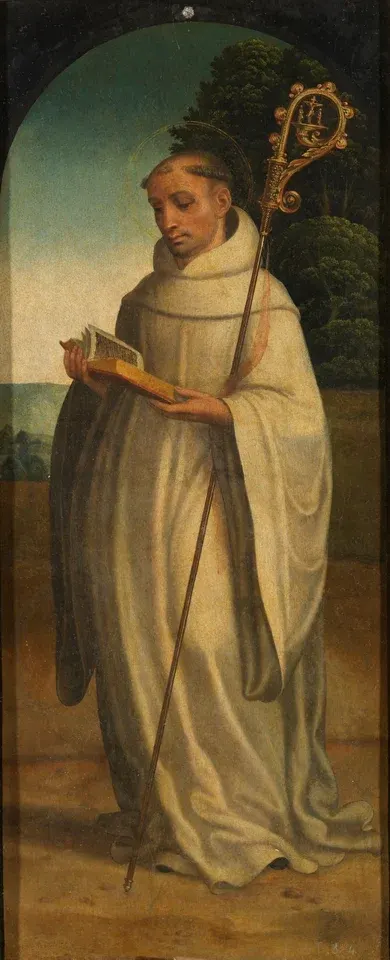
Biography
Bernard entered the Cistercian monastery at Cîteaux and went on to lead the foundation at Clairvaux. His preaching and writings helped make the Cistercian reform influential across Europe. His spiritual teaching emphasized love of Christ, contemplation, and the relationship between prayer and monastic life.
Born near Dijon in 1090, Bernard joined a young reform movement that sought a more demanding monastic life. Relatives and companions followed him. Clairvaux then became the center of a growing network, making his responsibilities extend well beyond the care of one monastery.
His writing on the love of God explores the transformation of human desire rather than offering only rules for conduct. He also promoted Marian devotion as a way toward Christ. These themes belong alongside, rather than in place of, an honest account of his political and crusading involvement.
His influence also extended into disputed church elections and political affairs. He supported Innocent II during a papal schism and preached the Second Crusade, an important and difficult part of his historical legacy. A balanced account therefore includes both the contemplative writer and the public churchman involved in the conflicts of his century.
Context & contribution
Advice to a pope about the use of attention
Bernard's Book of Consideration was addressed to Pope Eugenius III, who had belonged to the Cistercian world. The work shows a monk speaking to someone burdened by the highest office in the Western Church. Its central concern is that administration can consume the attention needed for prayer, judgment, and personal reform.
This is a distinctive contribution to Christian writing about leadership. Bernard did not assume that gaining authority completed spiritual formation; authority made self-examination more necessary. His counsel can be read alongside the pressures of his own very public life, which repeatedly drew him away from the monastery. The resulting tension gives the text weight: it asks how someone responsible for many urgent affairs can avoid losing sight of the purpose those affairs should serve.
Explore the sources for this section
AI-assisted source comparison updated 2026-09-26. Editorial approach
From the Saint Discovery blog
Keep exploring your faith
Practical guides to prayer, the saints, and living the Catholic faith.
What Is the Domestic Church? John Paul II on Faith at Home
What Catholics mean by the domestic church, how John Paul II explained family life, and practical ways to begin with prayer, forgiveness and welcome.
Bring reflection into prayerRead the article Prayer & reflectionHow to Make a Spiritual Communion When You Cannot Receive
Learn how to make a spiritual communion, with a short original prayer and clear guidance on Mass, Confession, and times when you cannot receive.
Bring reflection into prayerRead the articleFrom reading to reflection
What will you carry with you?
After reading about St. Bernard of Clairvaux, take a moment to consider:
- Use Bernard's advice to Eugenius as a prompt: which urgent responsibilities in a leader's schedule might crowd out the reflection needed to discharge them well?
These are reflection prompts from Saint Discovery, not quotations from the saint.
Sources and further reading
Biography source comparison recorded on . This is an AI-assisted comparison, not independent human or ecclesiastical approval.
What the recorded review covers
AI-assisted expansion checked against retrieved historical and institutional sources; traditions distinguished from documented history; not ecclesiastical approval
A source list helps you check an account; it does not establish that every claim is certain. Follow the biography’s qualifications about historical evidence, traditions and feast calendars.
Suggest a correction to this biography
How we research these pages and handle corrections · Directory corrections log
More lives to explore
Suggestions based on the site’s quiz themes, not a historical relationship or a measure of holiness.