Catholic saint biography
St. Wenceslaus
- Commemoration:
- September 28
- Lived:
- Tenth century — Bohemia, present-day Czech Republic
Why dates and liturgical observances can differ
Read the sources for this biography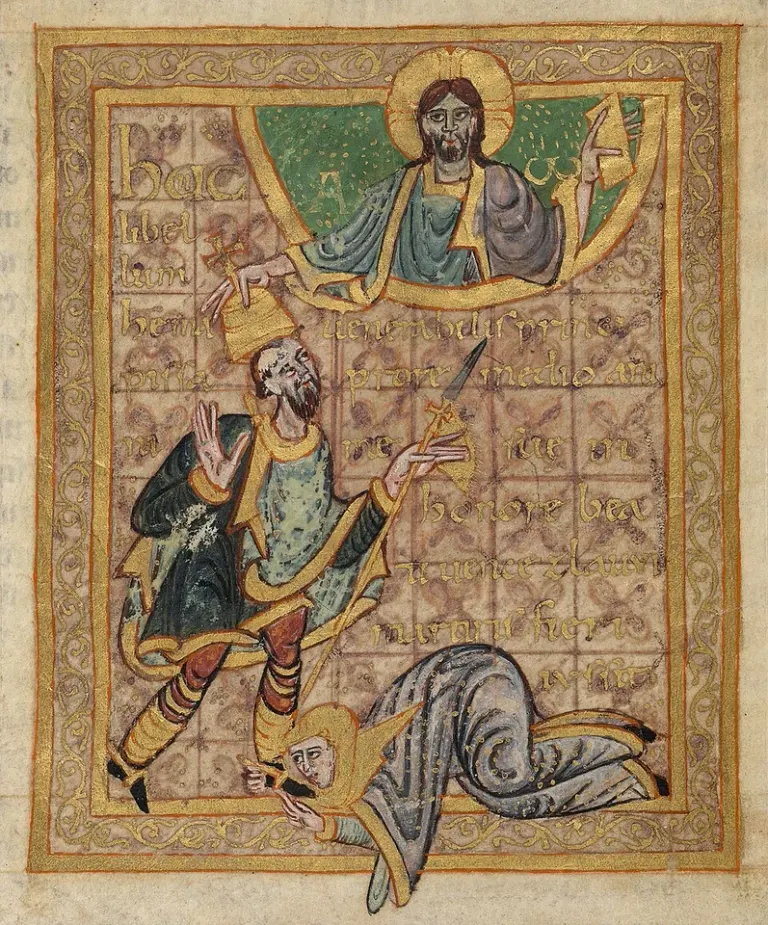
Biography
Wenceslaus was a duke of Bohemia whose rule became closely associated with the growth of Christianity in his land. His religious commitments developed in a setting where family rivalry, political authority, and competing influences shaped the direction of the duchy. Christian tradition remembers his concern for peace and his commitment to the faith.
Benedict XVI recalled the influence of his grandmother Ludmila on his Christian formation. Early devotional accounts praise his assistance to the poor, hospitality to travelers, and support for churches. They portray rulership as a responsibility toward vulnerable people as well as the defense of territory.
His memory therefore became a way of asking what makes authority worthy of respect. The tradition honors fidelity to the Gospel amid political conflict, not simply the possession of a crown. Pilgrimage at Stará Boleslav connects that memory with the place of his death, where Benedict XVI venerated relics in 2009.
He was killed through the actions of his brother, who sought power in his place, and came to be venerated as a martyr. His later reputation extended far beyond Bohemia. The Church commemorates him on September 28, honoring a ruler whose memory became central to Czech Christian identity.
Context & contribution
A ruler remembered through his treatment of others
In his 2009 homily at Stará Boleslav, Benedict XVI drew on the early Slavonic narrative of Wenceslaus to emphasize care for poor people, widows, and pilgrims. The point was not simply that a ruler sponsored churches. His use of authority was to be measured by his concern for people who could not repay or protect him.
The homily also contrasts possession of a throne with an enduring moral inheritance: later rulers bore a crown associated with Wenceslaus, although his brother had taken power. This is a reflection on how his memory developed, not a claim that political success always follows goodness. It directs readers toward the common good rather than treating sainthood as a reward for winning.
Explore the sources for this section
AI-assisted source comparison updated 2026-09-26. Editorial approach
From the Saint Discovery blog
Keep exploring your faith
Practical guides to prayer, the saints, and living the Catholic faith.
Good King Wenceslas: The Saint Behind the Christmas Carol
Was Good King Wenceslas real? Meet Saint Wenceslaus, distinguish history from the carol, and explore his September 28 memorial with a family activity.
Connected to this saintRead the article Prayer & reflectionWhy Do Catholics Pray to Saints? Intercession Explained
Why do Catholics pray to saints? Learn how intercession differs from worship, how it relates to Jesus, and a simple way to ask a saint to pray for you.
A next step with your saintRead the articleFrom reading to reflection
What will you carry with you?
After reading about St. Wenceslaus, take a moment to consider:
- Think of a responsibility you hold. Whose needs are easiest to overlook because they cannot influence your success?
These are reflection prompts from Saint Discovery, not quotations from the saint.
Sources and further reading
Biography source comparison recorded on . This is an AI-assisted comparison, not independent human or ecclesiastical approval.
What the recorded review covers
AI-assisted expansion using the linked historical and ecclesiastical sources; devotional traditions distinguished from documented history.
A source list helps you check an account; it does not establish that every claim is certain. Follow the biography’s qualifications about historical evidence, traditions and feast calendars.
Suggest a correction to this biography
How we research these pages and handle corrections · Directory corrections log
More lives to explore
Suggestions based on the site’s quiz themes, not a historical relationship or a measure of holiness.