Catholics make the Sign of the Cross to profess faith in the Father, Son, and Holy Spirit and to remember the saving Cross of Jesus. It is a prayer expressed through words and the body. When made attentively, this familiar gesture helps us begin prayer with an awareness of whom we are addressing and to whom we belong.
The Catechism, paragraph 2157, places the gesture at the beginning of the Christian's day, prayers, and activities. Whether you are learning it for the first time or have made it for decades, slowing down can help its meaning become clearer.
What words do Catholics say?
The traditional English prayer is: “In the name of the Father, and of the Son, and of the Holy Spirit. Amen.”
Those words name the Holy Trinity. They do not describe three separate gods. The Catechism's explanation of the Trinity, paragraphs 232–234, connects this language with Baptism and faith in the one God: Father, Son, and Holy Spirit.
You do not have to solve every theological question before praying. But knowing whom the words name keeps them from becoming a rushed introduction that barely registers. Try saying the prayer at a pace that lets you hear it.
How do you make the Sign of the Cross?
In the customary Roman Catholic form, use your right hand to touch your forehead, your chest, your left shoulder, and then your right shoulder while saying the prayer. The Diocese of Gary's explanation describes this sequence.
Touch the forehead as you name the Father, the chest as you name the Son, and move across the shoulders as you name the Holy Spirit. Finish with Amen. This describes the familiar Latin Catholic practice; it is not an attempt to prescribe every gesture used across Christian traditions.
If you are teaching a child, stand beside them so that your movement is easier to follow. Demonstrate once, then pray together slowly. Explain that this is prayer, not a test of coordination. A calm example will usually teach more than repeated corrections delivered in a hurry.
Why trace a cross while naming the Trinity?
The shape recalls Christ's death and Resurrection; the words profess the Trinity. Together, they bring central Christian beliefs into a brief act of prayer. The USCCB's Praying with Body, Mind, and Voice explains how the gesture physically recalls the Paschal Mystery.
Our bodies are involved in many ways of expressing love and commitment. We stand to welcome someone, hold a hand in reassurance, or bow in respect. In prayer, a deliberate gesture can likewise express what we mean and help us attend to it.
That does not make outward movement a substitute for inward attention. It gives attention somewhere to begin. Before a meal, for example, pause long enough to remember that thanksgiving concerns real gifts and real people, rather than treating the gesture as the signal to start eating.
What does it have to do with Baptism and holy water?
In his April 18, 2018 audience on Baptism, Pope Francis explained the cross traced on those preparing to receive Baptism as a sign of belonging to Christ and his redemption. He also encouraged parents and godparents to teach children the gesture.
Making the Sign of the Cross with holy water recalls Baptism. Francis described this practice both when entering a church and in the home. The water and gesture direct memory toward a relationship with God, rather than functioning as a decorative custom.
If you have wondered why a holy-water font stands near a church entrance, that baptismal connection offers a useful way to understand what people are doing. For a wider introduction, see our guide to the seven sacraments.
Why are there three little crosses before the Gospel?
Before the Gospel at Mass, you may see people trace small crosses on their forehead, lips, and chest. This is a distinct gesture from the larger Sign of the Cross. The General Instruction of the Roman Missal, paragraph 134, describes the signing of forehead, mouth, and breast at the Gospel's announcement.
The USCCB's explanation of liturgical gestures connects this with receiving God's word in our thoughts, speech, and hearts. It can help you listen with a purpose: understanding what is proclaimed, speaking faithfully, and allowing the Gospel to shape the way you live.
An everyday response might be to remember one phrase from the reading during a difficult conversation later that day. The gesture points beyond itself toward listening and action.
Is the Sign of the Cross a good-luck gesture?
It should not be treated as one. Prayer asks for God's help; it does not purchase a predictable outcome through a movement performed correctly. The Catechism, paragraph 2111, warns against attributing a magical effect to the merely external performance of prayer.
Before an exam, you can make the Sign of the Cross and ask for calm and honesty while also preparing carefully. Before travel, you can pray and still take ordinary precautions. If the result is difficult, that does not establish that your prayer was defective.
The point is to place your activity before God. It is not to make God responsible for fulfilling a private bargain.
A simple way to pray it more attentively this week
Choose one moment you already have: waking up, sitting down to pray, or preparing for bed. Pause, make the Sign of the Cross slowly, and name one responsibility or concern you want to bring to God. Then continue with your prayer.
If the gesture has become automatic, you do not need to invent something elaborate. Recover its meaning through attention. If you are new to Catholic prayer, begin with this small practice and our guide to a daily prayer routine.
When you next make the Sign of the Cross at Mass or at home, let the words and movement belong together. You are remembering Christ's Cross and turning toward the Father, Son, and Holy Spirit.
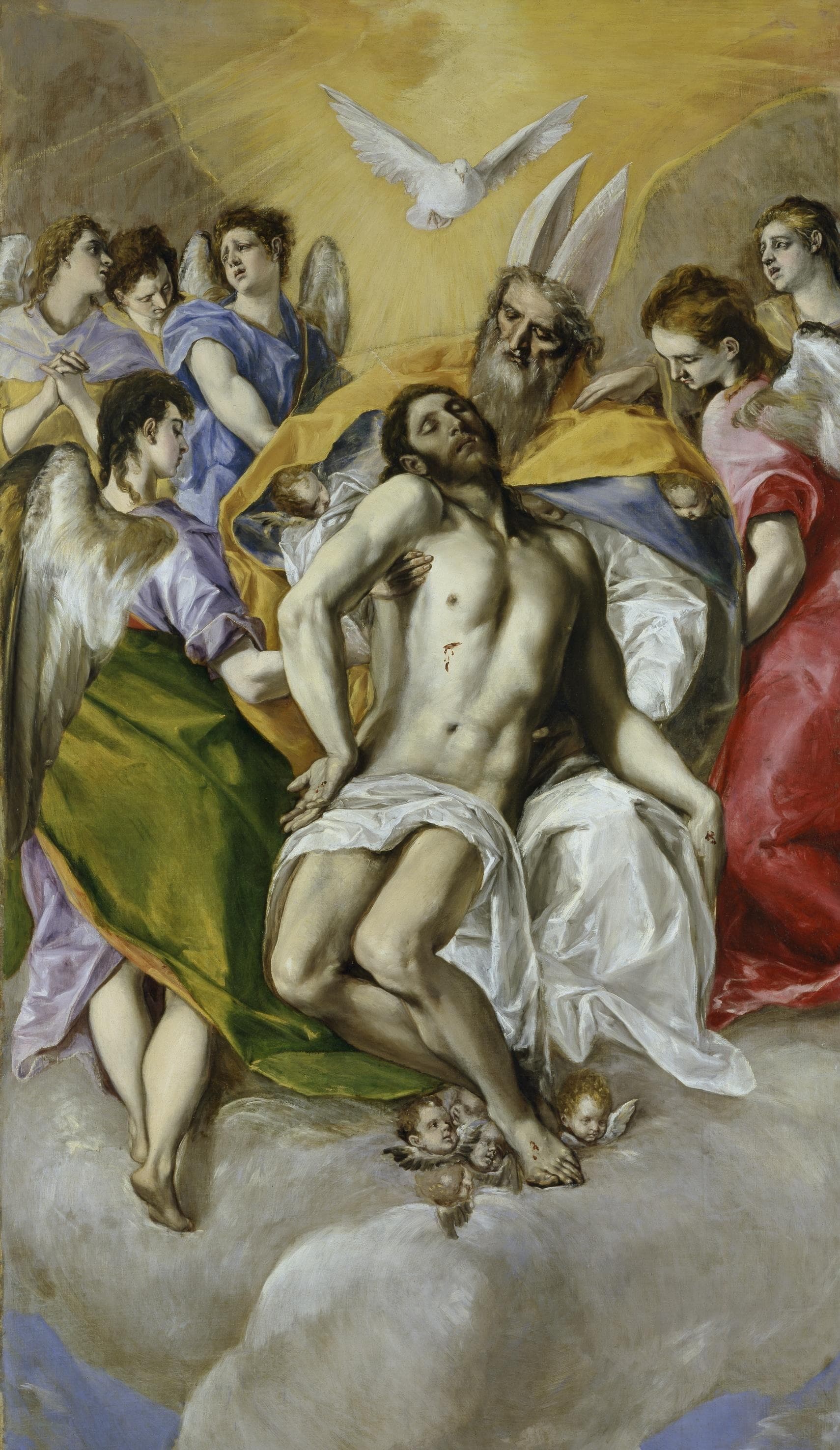
Cover artwork: El Greco, The Holy Trinity, 1577–1579, Museo del Prado, Madrid. This public-domain devotional painting brings together the Trinity and Christ's death; see its source and licensing record.
