You open the Bible, read a few lines, and wonder what to do next. Should you study every detail, look for a message, or simply keep reading? Lectio divina offers a way to turn attentive Scripture reading into prayer. You do not need to be a scholar or have an extraordinary spiritual experience to begin.
For Catholics, lectio divina means prayerfully receiving God's word and responding to him. This beginner's guide explains the practice, then walks through a short Gospel passage you can use today.
What is lectio divina?
Lectio divina is often translated as “divine reading.” It is a prayerful encounter with Scripture, traditionally described through reading, meditation, prayer, and contemplation. The USCCB's introduction to meditation recommends beginning with a short Gospel passage and attending carefully to its words.
Bible study asks valuable questions about context, language, and meaning. Lectio divina draws on that understanding while making room for a personal response to God. It is not a technique for extracting predictions or treating a random verse as an instruction to make a major decision. Read the passage as part of Scripture and the Church's faith.
How to pray lectio divina: four movements
In Verbum Domini, paragraphs 86–87, Pope Benedict XVI describes these movements and emphasizes that prayerful reading should bear fruit in charity. The following brief outline follows that teaching.
1. Read: what does the passage say?
Read slowly. Notice the people, actions, and setting before asking how the passage applies to you. A second reading may reveal something you rushed past. Begin with the text's meaning rather than an idea you hope it will confirm.
2. Meditate: what does it say to me?
Consider how the passage meets your life. What does it reveal about God? What attitude or habit does it invite you to examine? Stay with one thought rather than trying to produce many insights.
3. Pray: how will I respond?
Speak to God about what you have read. Your response might be gratitude, repentance, a request for help, or praise. Simple, honest words are enough.
4. Contemplate: remain with God
Allow space for quiet attention. You do not need to generate another thought. Contemplation is God's gift, not an experience you can force. Then consider one concrete way to live what you have received.
Try it with Martha and Mary
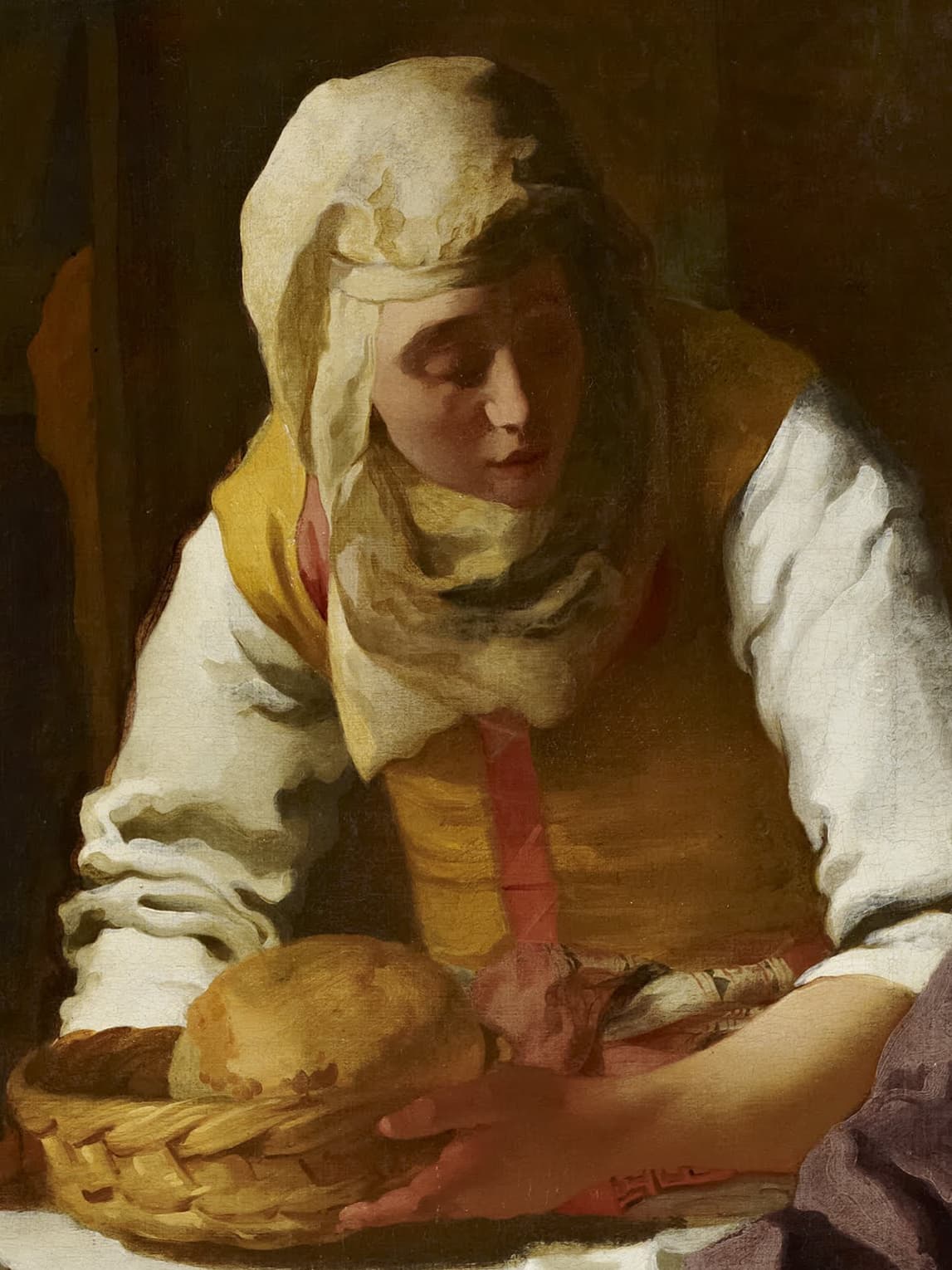
For a first attempt, read Luke 10:38–42. Martha welcomes Jesus into her home. Mary listens at his feet, while Martha becomes burdened with serving. Martha asks Jesus to have Mary help her, and he addresses Martha's anxiety while affirming Mary's attention to him.
The following exercise is a suggested personal reflection, not a claim that everyone must receive the same insight from the passage.
First, read the whole scene twice. Notice that Martha has welcomed Jesus. Notice Mary's listening and Martha's complaint. Resist immediately assigning yourself a role: “I am always Martha” can become a label that prevents you from hearing anything new.
Next, consider one question: when does my desire to serve become mixed with resentment? Perhaps you recognize a moment when you wanted help but did not ask clearly. Perhaps the passage invites you to listen before beginning the day's work. Do not turn this scene into a verdict that practical service is bad; attend to the particular conversation Jesus has with Martha.
Then answer Jesus in your own words. You might acknowledge that you feel overlooked, thank him for welcoming your attention, or ask for help receiving another person's needs without keeping score. Name something real rather than searching for impressive religious language.
Finally, sit quietly for a little while. When you finish, choose a modest response: listen without interrupting at dinner, ask kindly for help with a task, or spend a few attentive minutes with Scripture before checking your phone. These are possible applications, not commands hidden in the passage.
You can also explore Saint Martha's life and place in the Gospels to continue reflecting on hospitality, service, and friendship with Jesus.
How do I distinguish the passage from my own idea?
Keep three things separate: what the text says, what it helps you notice, and what you choose to do. In the Martha and Mary scene, the text describes hospitality, listening, service, and Jesus' response. “I resent doing everything at home” may be an honest observation about yourself. “I will ask my family to share the work” is a possible response. Those three sentences do not carry the same authority.
This distinction is especially helpful when a thought feels urgent. A strong impression during prayer does not, by itself, establish that God is commanding a particular decision. Test an application against the passage's context, Catholic teaching, and your real responsibilities. Discuss major choices with a trusted spiritual guide rather than asking a randomly selected verse to settle them.
Benedict XVI warns against making Scripture a pretext for our existing ideas in Verbum Domini 87. You can write “I wonder whether this invites me to…” instead of “God told me to…”. That wording leaves room for discernment without dismissing the possibility that prayer is challenging you.
A manageable way to begin
Try setting aside ten unhurried minutes. This is a suggested starting point, not a Church requirement. Choose your passage beforehand, silence notifications if possible, and begin by asking God to help you listen. A familiar Gospel scene is often easier than a long or difficult chapter.
Keep a notebook only if it helps. One sentence about your prayer may be more useful than a page of hurried notes. If you miss a day, simply return; you are cultivating a relationship, not protecting a streak. For help fitting prayer into family or work responsibilities, see our daily prayer routine for busy Catholics.
What if I feel distracted or understand very little?
Gently return to the passage when your attention wanders. If a practical concern keeps intruding, write a quick reminder and resume. If the text is confusing, consult its surrounding verses and a reliable Catholic Bible's notes. You can choose another passage while setting the difficult question aside for further study.
The Catechism's discussion of meditation, paragraphs 2705–2708, explains that prayer engages thought, imagination, emotion, and desire, while methods serve our relationship with Christ. A session without strong feelings is not automatically a failure. Ask whether your practice helps you listen, repent, and love more faithfully over time.
If you are still learning the vocabulary of Catholic prayer, our beginner's guide to prayer explains how Scripture meditation fits alongside other forms of prayer.
A simple format for praying with a group
Lectio divina can be shared. Verbum Domini 86 places personal reading within the Church's communal reception of Scripture. An OCIA group, family, or sponsor and candidate can use the same short Gospel passage while allowing different personal responses.
Agree beforehand that no one has to disclose private experiences. Have one person read the passage, allow quiet, and invite participants to name a detail they noticed. Read it again before inviting a brief personal reflection. Listen without correcting someone's feelings or claiming to know what God must be saying to them. Questions about the passage's meaning can be noted for discussion with the catechist afterward.
Finish with voluntary prayer and one possible act of charity. This is a suggested group format, not an official rite. A group session complements personal prayer and participation in the Church's worship; it does not require everyone to report a striking insight for the meeting to have been worthwhile.
An original prayer before reading Scripture
Jesus, help me receive your word with an honest heart. Slow my hurried thoughts, show me what I need to understand, and teach me to respond with love. Give me the courage to carry your teaching into the next ordinary moment of my day. Amen.
Artwork: detail of Martha from Johannes Vermeer's Christ in the House of Martha and Mary. Public domain; image and licensing information on Wikimedia Commons.
