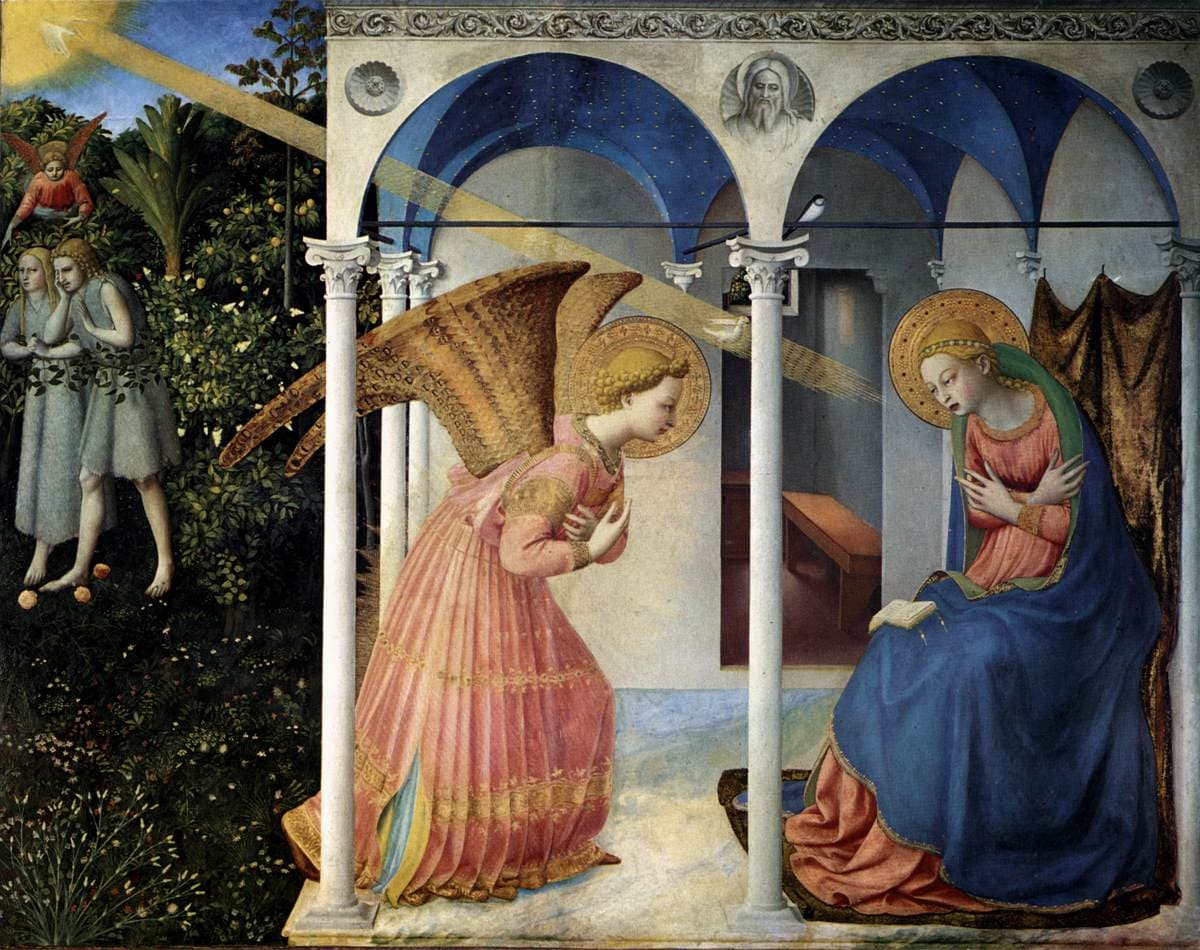
The Angelus is a short Catholic prayer that recalls Gabriel's announcement to Mary and the Incarnation of Jesus. Its traditional rhythm is morning, noon, and evening. You can pray it alone or with others, using a written text while you learn. The Vatican's Directory on Popular Piety, paragraph 195, explains this daily remembrance.
If you have heard church bells at lunchtime and wondered why people stop to pray, the Angelus offers a way to understand that pause. It brings a central Christian belief into the middle of an ordinary day: God came among us in Jesus Christ.
What does the Angelus mean?
The prayer moves through Gabriel's message, Mary's willing response, and the Son of God becoming human. Its concluding prayer connects the Incarnation with Christ's Passion and Resurrection. The Vatican News Angelus text lets you follow that movement in the prayer itself.
This matters when the day feels divided into competing demands. A brief pause can help you remember whom you serve before returning to a conversation, a classroom, or a difficult task. That is a suggested way to reflect on the devotion, rather than an additional part of its traditional text.
Saint Paul VI encouraged the Angelus in Marialis Cultus, section 41. He emphasized its biblical character and its capacity to bring prayer into different moments of daily life. He also recognized that some customs surrounding it had become harder to maintain. Its meaning remains worth attending to even when your surroundings are very different from a village marked by church bells.
How do you pray the Angelus?
Open the Common Prayers appendix in the Catechism's Compendium and find the Angelus. The same appendix includes the Hail Mary. The letters V and R identify the leader's versicle and the response. When praying alone, you say both parts.
Begin with the first versicle and response
Read the opening exchange recalling the angel's announcement and Mary's conception through the Holy Spirit. Then pray one Hail Mary. Take your time with the text instead of trying to keep up with an imagined group.
Continue through the next two exchanges
The second exchange recalls Mary's acceptance of God's word; another Hail Mary follows. The third recalls the Incarnation; pray the third Hail Mary afterward. These descriptions explain the sequence in our own words. Use the linked prayer text for the traditional wording.
Finish with the final response and prayer
After the three Hail Marys, pray the closing exchange asking Mary's intercession, then the concluding prayer to God through Christ. Reading from the page is perfectly useful while you become familiar with the pattern.
If you are leading a family or parish group, explain the responses before beginning. Give newcomers room to find their place. A calm pace makes it easier to join in without needing to memorize everything first.
When should you pray it?
Morning, midday, and evening are the traditional times. The Directory on Popular Piety describes the practice at dawn, midday, and dusk. Bells can serve as a reminder and accompany a communal celebration.
For a beginner, try learning the prayer at one dependable moment before adding others. You might keep the text beside your lunch bag or set a gentle reminder near your midday break. This is a practical suggestion for building a habit, rather than a different version of the devotion.
Let your real responsibilities shape the opportunity to pause. If someone needs immediate care when the reminder sounds, attend to them and pray when you can. A reminder should help you turn toward God, not leave you measuring your whole spiritual life against a notification.
Our daily prayer routine for busy Catholics offers ideas for finding a manageable place for prayer within work and family life.
Why ask Mary to pray for us?
The Hail Mary asks for Mary's intercession. The Catechism explains this as entrusting our needs to her prayer and joining her openness to God's will. Catechism 2677–2679 places this prayer within the Church's relationship with Christ.
You can bring a particular intention to the Angelus: someone waiting for news, a strained relationship, or a decision requiring patience. Keep the traditional prayer intact and allow that concern to be present as you pray. You do not need to add a speech explaining it.
If intercession is unfamiliar, our guide to why Catholics pray to saints explains the distinction between asking for prayer and worshiping God.
What changes during Easter?
During the Easter season, the Regina Caeli takes the Angelus's place. It rejoices with Mary in Christ's Resurrection. Vatican News explains that this seasonal practice runs from Easter Sunday through Pentecost and retains the morning, noon, and evening rhythm.
A prayer book that includes both texts is helpful. Mark the appropriate page when the season changes, especially if you lead others. The change lets the Church's celebration of the Resurrection shape even this small daily pause.
A simple way to begin today
Choose a moment when you can read the Angelus without rushing. Open the prayer text, notice its three-part movement, and pray it once. Afterward, consider one concrete response: listen patiently, do your next task honestly, or offer help you have been putting off.
You may find that a short, familiar prayer becomes a place to return when the rest of the day feels scattered. If distraction comes, our guide to starting again during prayer offers gentle ways to continue. For now, begin with the words in front of you and the people already entrusted to your care.
Cover artwork: Fra Angelico, The Annunciation, circa 1430–1432, Museo del Prado. Public-domain reproduction from the Web Gallery of Art via Wikimedia Commons.
