A Doctor of the Church is a saint recognized by the Catholic Church for teaching that offers an outstanding contribution to understanding and living the faith. Here, “doctor” refers to a teacher. It does not mean that the saint practiced medicine or earned a university doctorate.
The title helps readers recognize a spiritual teacher worth getting to know. You might encounter it in a saint’s biography, while choosing a Confirmation patron, or beside a name in a prayer book. Understanding it can turn an unfamiliar label into a useful invitation to read.
What does the title recognize?
When proclaiming Thérèse of Lisieux a Doctor in 1997, John Paul II explained that the Church points to a person whose teaching both agrees with revealed truth and helps illuminate the mysteries of faith. He also emphasized that the Church chooses saints for this recognition. Holiness and teaching belong together: the person’s relationship with Christ matters alongside the ideas expressed in their work. See his homily for Thérèse’s proclamation.
Being declared a Doctor is a particular recognition, rather than another word for being canonized. Thérèse, for example, was canonized in 1925 and declared a Doctor in 1997. The apostolic letter Divini Amoris Scientia describes the examination of her teaching and the declaration by John Paul II.
When comparing saints, therefore, keep two questions separate: what does this person’s life show about following Christ, and what distinctive teaching does the Church invite us to learn from them?
Who decides whether someone is a Doctor?
The title requires the Church's formal recognition; popularity or a successful book is not enough. Thérèse's case gives a concrete example. In Divini Amoris Scientia 12, John Paul II describes petitions, a special study by the Congregation for the Causes of Saints, and consultation with the Congregation for the Doctrine of the Faith about her teaching. The pope then proclaimed her a Doctor. These were the offices' names at the time of the 1997 declaration.
That process explains why the title is useful to readers: it identifies a contribution the Church has examined and commended. It is not a ranking of how much God loves different saints, and you need not choose a Doctor in preference to every other spiritual writer.
Do Doctors of the Church have to be scholars or priests?
No. Thérèse had no specialized theological training, yet the Church recognized the depth of her understanding of Christian faith. In Divini Amoris Scientia, John Paul II describes her teaching as a union of spiritual experience, Catholic belief, and a path toward holiness. Her example shows why a doctorate from a university is not the measure of this title.
Women are Doctors of the Church, too. Teresa of Ávila was proclaimed a Doctor by Paul VI in 1970, and Thérèse by John Paul II in 1997. Teresa’s recognition and her contribution to Christian prayer are described in Benedict XVI’s audience on her life and teaching. Neither woman was a priest.
Academic study and lived spiritual wisdom need not compete. Different readers may find a careful theological argument, a letter, or a reflection on prayer especially helpful at different moments.
Four Doctors of the Church to explore
These examples are starting points, not an exhaustive list. Each offers a different way into the same Christian faith.
Saint Jerome: reading Scripture attentively
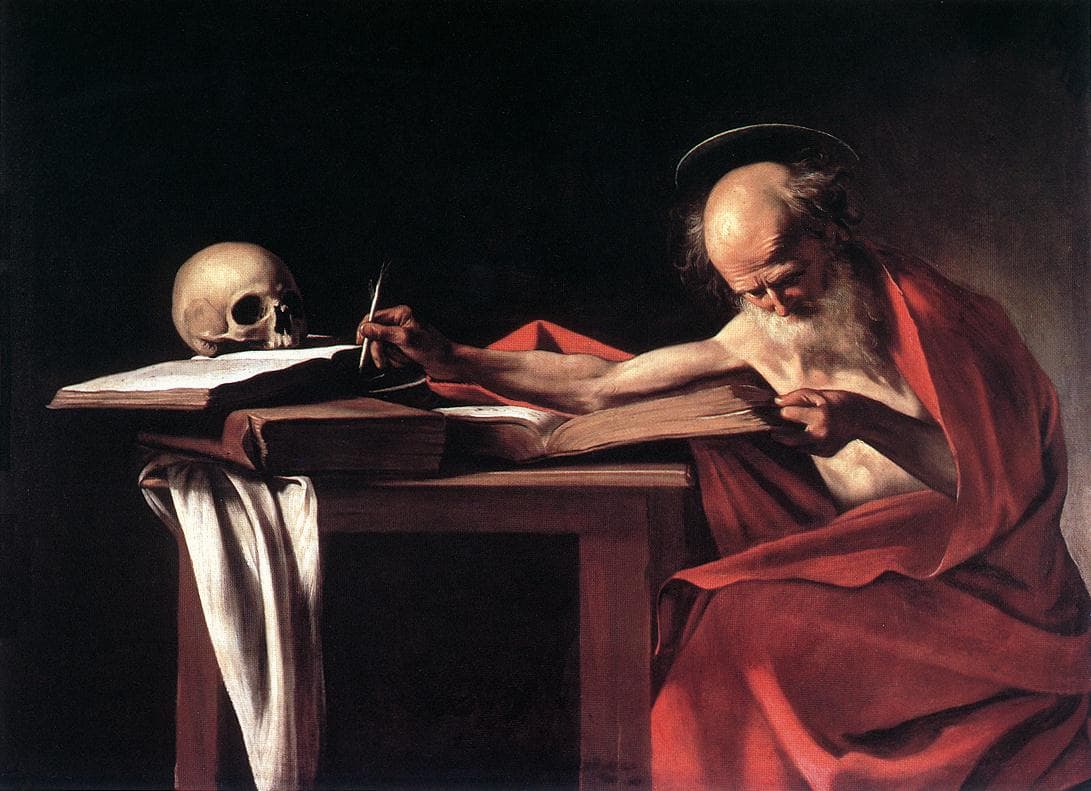
Saint Jerome devoted himself to translating and explaining the Bible. Benedict XVI’s 2007 audience on Jerome connects that work with the need for Christians to encounter God’s word personally, rather than leaving Scripture as a subject for specialists alone.
A useful question to bring to Jerome is: how can I become a more attentive reader of Scripture? Begin with the papal introduction, then choose a short biblical passage to read in context. Our lectio divina guide offers a separate practical introduction to prayerful reading.
Saint Thomas Aquinas: thinking carefully about faith
Saint Thomas Aquinas is associated with systematic theology and the relationship between faith and reason. In his audience of June 2, 2010, Benedict XVI explains Thomas’s engagement with Aristotle and his conviction that Christian faith and sound reasoning are harmonious.
If your questions begin with “How can that be true?”, Thomas may be a fruitful teacher to explore. Start with an introduction and one clearly defined question. There is no need to read a major theological work from beginning to end before you are allowed to learn from it.
Saint Teresa of Ávila: understanding prayer as a relationship
Saint Teresa of Ávila wrote works including The Way of Perfection and The Interior Castle. Benedict XVI’s audience describes her emphasis on prayer, humility, love of neighbor, and friendship with God. Her teaching concerns a Christian life shaped by prayer, not simply an unusual experience during prayer.
Consider beginning with this question: what would it mean to give God regular, honest attention? Read a short, introduced selection rather than using Teresa’s descriptions of spiritual growth to assign yourself a rank.
Saint Thérèse of Lisieux: learning trust in ordinary life
Saint Thérèse of Lisieux offers teaching about trust in God’s merciful love and spiritual childhood. Her writing can be approachable without being shallow. The Church’s recognition concerns the depth of that teaching, not the complexity of its vocabulary.
If you want to connect spiritual reading with ordinary responsibilities, explore our guide to Thérèse’s Little Way. Then return to her own writing with a question about a real relationship or task in your life.
A worked example: how to read a page of Thomas Aquinas
Open the first question of the Summa Theologiae. Article 1 asks whether revealed teaching is needed in addition to philosophy. Its opening objections argue against the position Thomas will defend. They are not his final answer. The short contrary statement introduces a counterpoint; the main response explains his conclusion; replies return to the objections individually.
For a first reading, identify the question and read the main response before returning to the objections. Then ask whether each reply actually addresses the difficulty raised. This is more fruitful than collecting an isolated sentence that appears to support your view.
Article 8 also distinguishes Scripture's authority from arguments based on other Christian teachers. A Doctor's writing helps explain the faith; it does not become another biblical book. Read the whole argument and seek help with disputed or unfamiliar claims rather than treating every sentence as a standalone definition.
A simple way to begin reading a Doctor of the Church
Try this original reading exercise over three short sessions. It is a study suggestion, not a devotional requirement or a method attributed to one of the saints.
In the first session, read the saint’s biography and a reliable introduction. Note when the person lived, whom they were addressing, and what question their work was meant to answer. A letter to a particular community and a theological textbook ask different things of a reader.
In the second session, choose one short passage from a trustworthy edition. Write its main point in your own words. Keep a separate note of anything you do not understand. Before sharing a striking quotation, check that you can identify its source and explain its context.
In the third session, bring one question to a catechist, sponsor, reading group, or knowledgeable guide. Choose a modest response: return to a Scripture passage, make time for prayer, or examine an assumption. You are learning from a teacher, not trying to master centuries of Christian thought in one sitting.
Can a Doctor of the Church be my Confirmation saint?
A recognized Doctor can be someone you explore as a possible patron; follow your parish’s requirements when selecting a Confirmation name. Read about the person’s life as well as their teaching, and discuss your interest with your sponsor. Our Confirmation saint guide can help you make that conversation specific.
Rather than choosing the most impressive title, consider which saint’s example invites you to grow. A good next step is small: read one reliable page, ask one honest question, and return to it tomorrow.
Cover artwork: Caravaggio, Saint Jerome Writing, circa 1606, Galleria Borghese. Public-domain artwork and reproduction, via Web Gallery of Art and Wikimedia Commons, with source and rights information.
