Catholic saint biography
St. Thomas Aquinas
- Commemoration:
- January 28
- Patron Saint of:
- Catholic schools
- Lived:
- c. 1225–1274 — Roccasecca, Italy
Why dates and liturgical observances can differ
Read the sources for this biography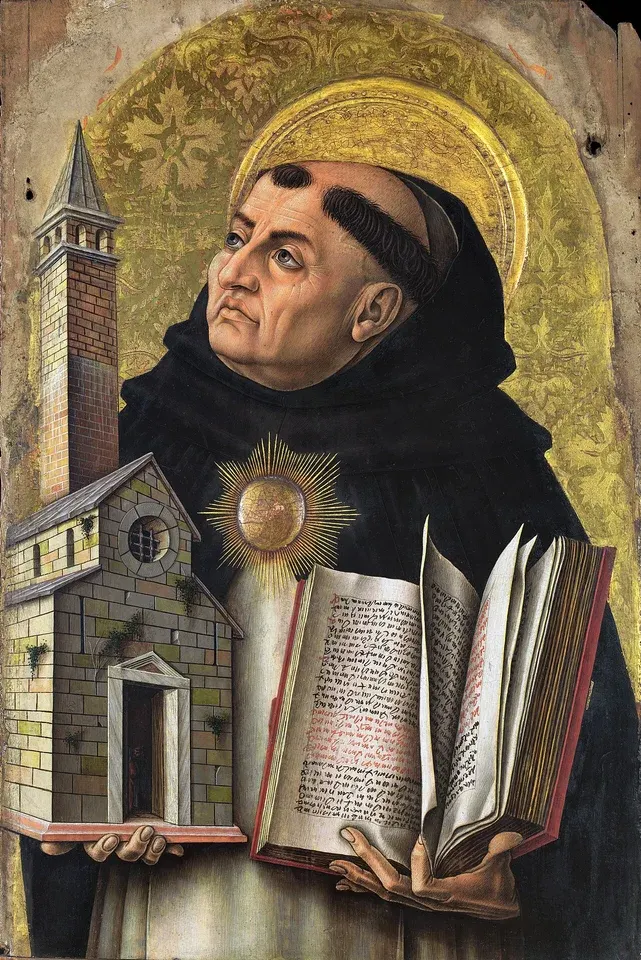
Biography
Thomas Aquinas was a Dominican friar whose study and teaching profoundly influenced Christian theology. After education at Monte Cassino and Naples, he joined the Dominicans despite family opposition. He studied with Albert the Great and later taught in Paris and worked in several Italian centers.
At Naples he encountered Aristotle’s philosophy, which was reshaping medieval intellectual life. Thomas neither accepted every argument uncritically nor rejected the philosopher because he was not Christian. He studied the texts closely and asked which conclusions reason could establish and how they related to revelation.
His vocation developed through teaching, friendship, and collaboration. Albert the Great helped form him, while fellow Dominicans and secretaries assisted his later work. The enormous body of writing therefore grew within communities of study and worship, rather than from the isolated effort of a scholar detached from religious life.
A central feature of his method is distinguishing questions that reason can investigate from truths received through revelation, while allowing the two forms of inquiry to illuminate one another. This gave Christian thinkers a way to engage serious philosophy without treating every philosophical claim as doctrine. His lasting influence rests partly on that disciplined method, not only on the conclusions later readers adopted.
His account of grace likewise treats human nature as something healed and brought toward fulfillment, rather than erased. In moral reflection, this leaves room for shared reasoning about human goods and responsibilities. Benedict XVI’s discussion of Thomas connects these themes with the dignity of the person and the common good. The relevance of his work therefore extends beyond medieval disputes to questions about education, ethical judgment, and what people owe one another.
His writings include biblical commentaries, philosophical works, and the Summa Theologiae. He examined how reason and faith can cooperate while retaining their distinct methods. His intellectual work was joined to prayer and Eucharistic devotion, including liturgical poetry. Honored as a Doctor of the Church, he remains an important figure for theological study and Catholic education.
Context & contribution
A teacher in the classroom and the pulpit
The structure of the Summa Theologiae follows a theological movement: God and creation, human life directed toward God, and Christ with the sacraments. It is not simply a storehouse of unrelated answers. Seeing that architecture helps a beginner understand why a particular question appears where it does.
Benedict XVI also recalls Thomas’s preaching in Naples during Lent in 1273 on central prayers and beliefs. The university theologian addressed ordinary hearers as well as academic disputes. His contribution includes both demanding argument and the work of explaining the Creed, the commandments, and prayer in a pastoral setting.
Explore the sources for this section
AI-assisted source comparison updated 2026-09-26. Editorial approach
From the Saint Discovery blog
Keep exploring your faith
Practical guides to prayer, the saints, and living the Catholic faith.
Why Do Catholics Pray to Saints? Intercession Explained
Why do Catholics pray to saints? Learn how intercession differs from worship, how it relates to Jesus, and a simple way to ask a saint to pray for you.
A next step with your saintRead the article Living the seasonsHow to Celebrate Your Patron Saint's Feast Day at Home
Celebrate your patron saint's feast day with prayer, a short biography, and an act of kindness. A practical plan for families, sponsors, and individuals.
A next step with your saintRead the articleFrom reading to reflection
What will you carry with you?
After reading about St. Thomas Aquinas, take a moment to consider:
- Before reading one article of the Summa, identify its larger part and question. How does that context change your understanding?
These are reflection prompts from Saint Discovery, not quotations from the saint.
Sources and further reading
- Benedict XVI: Thomas Aquinas ↗
- Vatican News: Calendar ↗
- Benedict XVI: Thomas Aquinas, faith, reason, and grace ↗
Biography source comparison recorded on . This is an AI-assisted comparison, not independent human or ecclesiastical approval.
What the recorded review covers
AI-assisted expansion using the linked historical and ecclesiastical sources; devotional traditions distinguished from documented history.
A source list helps you check an account; it does not establish that every claim is certain. Follow the biography’s qualifications about historical evidence, traditions and feast calendars.
Suggest a correction to this biography
How we research these pages and handle corrections · Directory corrections log
Explore this saint in everyday life
More lives to explore
Suggestions based on the site’s quiz themes, not a historical relationship or a measure of holiness.