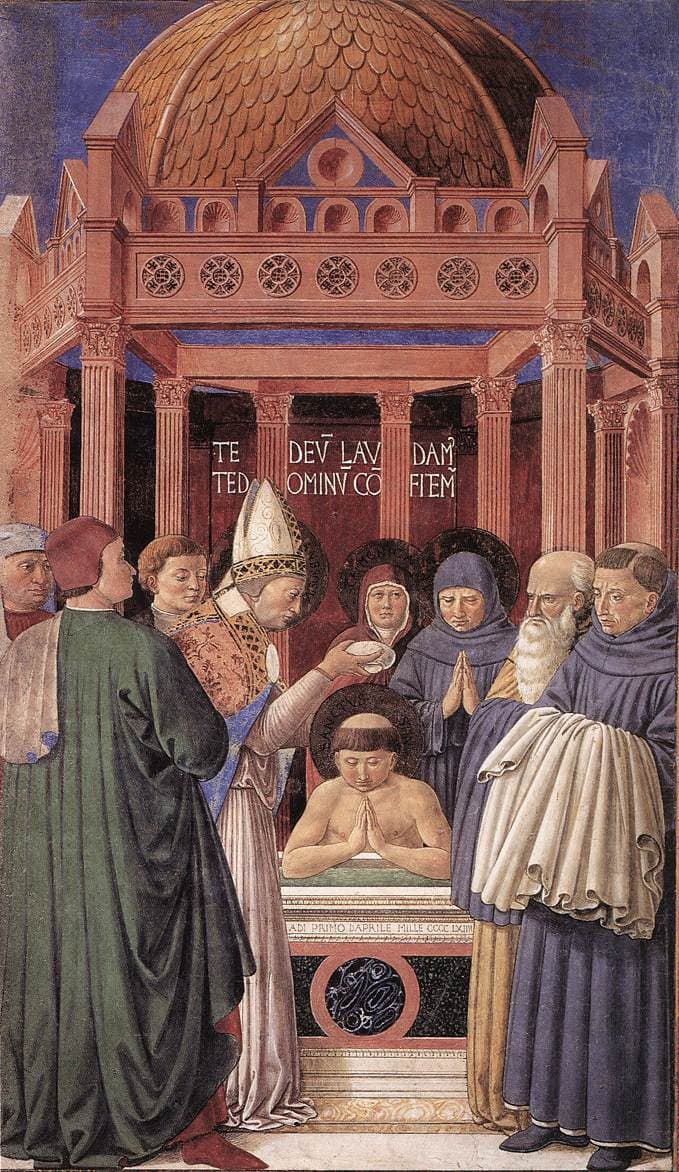
If you already believe in Jesus and feel drawn to the Catholic Church, being told that preparation could take a year or longer can feel discouraging. Why does it take so long to become Catholic when you are ready to begin now?
The short answer: becoming Catholic involves learning the faith, practicing Christian life, and preparing for the sacraments with a parish community. The timeline also depends on whether you have already been baptized. There is no single waiting period that applies to everyone. This guide focuses on adults in the Latin Church in the United States; your parish can explain the path that applies to you.
What is OCIA, and is it different from RCIA?
OCIA stands for the Order of Christian Initiation of Adults. You may still hear the older name, RCIA, or Rite of Christian Initiation of Adults. The revised English ritual became mandatory in U.S. dioceses on March 5, 2025. If a parish website still says RCIA, ask its office about adult initiation rather than assuming you have found the wrong program. Source: USCCB implementation announcement.
The name can sound like a course registration, but the purpose is broader. The Catechism describes the catechumenate as preparation for a Christian way of life, joining learning to a growing relationship with Christ. Baptism, Confirmation, and the Eucharist are the sacraments of initiation. See the Catechism, paragraphs 1212 and 1248.
How long does it take to become Catholic?
Your starting point matters more than someone else's graduation date. Before comparing schedules, tell the parish about any baptism, previous religious instruction, and sacramental history.
If you have never been baptized
In the United States, the current national statutes ordinarily envision the catechumenate extending from at least one Easter season to the beginning of the next, preferably starting before Lent in the earlier year. An initial period of inquiry comes before entry into the catechumenate, so the entire journey can be longer than a year. This is ordinary guidance for catechumens, not a universal twelve-month countdown for every adult seeking to become Catholic. Source: National Statutes for the Christian Initiation of Adults, Norms 1–4.
If you were baptized in another Christian community
A validly baptized Christian prepares for reception into full communion, with formation that recognizes existing Christian faith and experience. Reception can occur on a Sunday during the year, depending on readiness and pastoral circumstances. Source: USCCB, Christian Initiation of Adults.
If you were baptized Catholic but missed later sacraments
You are already Catholic. Ask about preparation for the sacraments you have not received, such as Confirmation or First Communion. The USCCB addresses this situation in its initiation guide.
Why does the preparation take time?
1. You deserve to understand the commitment
Adult baptism calls for a freely expressed intention, sufficient understanding of the faith and its responsibilities, and preparation through the catechumenate. These are requirements identified in canon 865, not an expectation that you become a theologian. Read canons 851 and 865.
Use the time to ask the questions you might otherwise avoid: What do Catholics believe happens at Mass? Why confess sins? What will change in my daily life? A question you bring honestly to your priest or catechist is more useful than an answer you memorize without understanding.
2. Faith needs room to become a daily practice
The Catechism places conversion and the maturing of faith within initiation. It also explains that the journey can unfold at different speeds. Preparation is meant to help faith take root, rather than treat a finished reading list as the whole task. See paragraphs 1229 and 1247–1248.
Consider choosing one manageable habit this week: reading a short Gospel passage, praying before work, or setting aside time to serve someone. Our daily prayer routine for busy Catholics offers a starting point you can adapt while you explore the Church.
3. The Church's seasons help shape the journey
For those preparing for baptism, the usual progression includes inquiry, the catechumenate, the Rite of Election, final Lenten preparation, and initiation at the Easter Vigil. Formation continues afterward in mystagogy, a period of reflecting on the sacraments and learning to live them. See the USCCB overview of the stages.
Rather than viewing the calendar only as a delay, ask your catechist what the next season is meant to help you discover. Keep a few notes after each gathering. Over time, you may notice connections between a Scripture reading, a prayer, and a decision in your own life.
4. Personal circumstances sometimes need attention
The U.S. statutes call for an early individual conversation about circumstances that could affect initiation, including marriage questions. These deserve personal pastoral attention. See National Statutes, Norm 2.
Mention a previous marriage, missing baptismal records, work conflicts, or accessibility needs at the first meeting. Do not try to resolve a complicated situation through a comment thread. Ask who will help, what information is needed, and when you can expect the next conversation. A clear plan makes an uncertain wait easier to understand.
What does readiness look like beyond finishing classes?
Attendance matters, but a completed schedule cannot describe the whole process of conversion. For an adult seeking baptism, canon 865 brings together intention, sufficient instruction, Christian living, and sorrow for sin. Readiness is discerned with the parish; an online checklist cannot certify it.
Here is an original way to prepare for that conversation. Make three short columns: “What I understand,” “What I am learning to practice,” and “What I need help with.” Under the first, explain one belief in your own words. Under the second, describe a real practice such as Sunday worship or reconciliation with someone. Under the third, name a question, family concern, or obstacle you want to discuss privately. Bring the page to your catechist instead of trying to guess the right answers.
Who will walk with you through the process?
A baptismal sponsor has a continuing responsibility to support Christian life, not merely to stand beside someone during a ceremony. Canons 872–874 describe the role and eligibility requirements. Ask the parish how its initial accompaniment, sponsor, and godparent arrangements work; do not assume every volunteer or friend fills the same formal role.
If you do not know a suitable Catholic personally, say so early. Ask for help finding someone who can meet regularly, listen patiently, and connect questions with reliable parish guidance. One practical plan is to agree on a short conversation after a formation session, one shared parish activity, and a check-in after initiation. These suggested habits help make the time meaningful without turning friendship into another assignment.
Can you become Catholic faster?
Sometimes a different preparation plan is appropriate. The Church provides adapted forms of adult initiation for particular circumstances, including a shorter order for danger of death. These are pastoral provisions governed by the relevant norms, not an express option someone purchases or selects online. Source: USCCB explanation of the Simpler and Shorter Orders.
If the proposed timeline seems disconnected from your experience, ask for a private conversation. You might say: “I want to prepare well. What do I still need to learn or work through, and how will we decide when I am ready?” That invites a concrete answer without turning another person's experience into a rule for your own.
What can you do while preparing to become Catholic?
Start with a parish conversation now. You could write: “I am interested in becoming Catholic. I have [or have not] been baptized, and I would like to meet someone about OCIA and the next steps.” If you are unsure about your baptism, say so.
At the meeting, ask when inquiry is available, how preparation fits your circumstances, who can answer questions between sessions, and what the next milestone will be. If nobody replies, follow up by phone or contact another nearby parish for help getting started.
Build a small reading list around your actual questions. Explore our guide to why Catholics pray to saints, or use the Confirmation saint guide to begin learning about saints who interest you. Bring what you read back to your parish conversations.
Frequently asked questions about the OCIA timeline
Do I have to wait until Easter to become Catholic?
Not in every situation. Easter is central to the ordinary initiation of the unbaptized, but already baptized candidates may be received at another time. Your parish should explain which path you are following. USCCB initiation guide.
Will I need to be baptized again?
No, if your previous baptism was valid. Baptism cannot be repeated. If there is uncertainty, the Church investigates it; conditional baptism is reserved for unresolved serious doubt after inquiry. Bring whatever records you have and let the parish help. See canons 845 and 869.
What if I am seriously ill?
Contact a priest or hospital chaplain promptly. Canon 865 provides for adult baptism in danger of death under specific conditions. A normal parish schedule should not be treated as the answer to an urgent situation. Read canon 865 §2.
What if I still have questions?
Write them down and bring them to your priest or catechist. Ask which concern needs more explanation and what you could read or discuss next. You do not need to hide uncertainty to keep a conversation going.
The most helpful next step is a real conversation with a parish. Ask for a plan you can understand, take the next step available to you, and give yourself room to grow into the life you are seeking.