An Act of Contrition is a prayer expressing sorrow for sin, asking God's mercy, and resolving to turn away from sin with his help. Catholics pray it during confession and can also use it in personal prayer. Its purpose is to give words to repentance, not to test your memory.
If you learned a version as a child, you may remember the beginning and lose the rest halfway through. If you are preparing for your first confession, the name itself may sound unfamiliar. Start by understanding what you are saying. A prayer becomes easier to make your own when its words have a clear meaning.
What does contrition mean?
Contrition means sorrow for sin joined to an intention to stop sinning. The Catechism, paragraph 1451, connects repentance with a decision to change. Regretting the consequences alone is not the whole movement of returning to God.
For a practical example, imagine that you repeated a cruel story about a coworker. Begin by acknowledging your own choice without explaining it away. Then consider the person harmed and the goodness you rejected. Bring that truth into prayer instead of stopping at embarrassment about being caught.
Where can I find the prayer?
The U.S. bishops' guide to the Sacrament of Penance includes a suggested Act of Contrition on its second page. It also explains the sequence: confess your sins, receive the priest's guidance and assigned penance, express contrition, and receive absolution.
Read the prayer slowly before your visit. Notice how it addresses God, acknowledges wrongdoing, expresses love, asks for help, and looks toward a changed life. Try pausing after each thought rather than racing to the final word.
Keep a printed copy with your prayer book or bring the parish's confession guide. When the priest invites you to pray, use the text you have prepared. If your mind goes blank, ask for help. The bishops' guide explicitly encourages asking the priest when you are unsure what to say.
For the wider practical preparation, see our guide to confession after a long time away.
Do I have to feel deeply emotional?
Do not make tears the goal of prayer. In his March 8, 2024 reflection on the Act of Contrition, Pope Francis describes repentance in relation to God's love and mercy, alongside trust and a sincere resolve to change.
You can approach the prayer by asking a concrete question: Do I want to turn away from this sin and accept God's help? That question gives you something more useful to consider than whether you feel as moved as another person appears to feel.
If you find yourself analyzing your emotions instead of praying, tell the priest plainly. You do not need to deliver an impressive account of your inner life. Bring the difficulty into the conversation and receive guidance.
What are perfect and imperfect contrition?
These terms describe the motive for repentance. Perfect contrition arises from loving God above everything. Imperfect contrition can begin with recognizing sin's ugliness or fearing its consequences; it too is a gift of God and prepares a person for forgiveness in the sacrament. See Catechism 1452–1453.
The same passage teaches that perfect contrition forgives venial sins and obtains forgiveness of mortal sins when it includes a firm intention to receive sacramental confession as soon as possible. Imperfect contrition by itself does not forgive grave sins.
An Act of Contrition therefore does not provide a reason to avoid confession. If confession is temporarily unavailable, repent now and arrange to receive the sacrament. Ask a priest about your particular circumstances rather than trying to certify your own spiritual condition.
How can I promise not to sin again?
A sincere resolution is a present intention, not a prediction that you will never struggle again. Pope Francis makes this distinction in the reflection linked above: forgiveness does not require a guarantee of future sinlessness, but an honest resolve made with reliance on God's grace.
Make your resolution specific enough to act on. If a group conversation repeatedly becomes gossip, plan how you will change the subject or leave it. If anger grows while you write messages, wait before pressing send. Choose a step connected to the actual behavior you confessed.
Repair matters too. The Catechism, paragraph 1459, explains that absolution does not remove every consequence of sin and that we should repair harm where possible. Ask the priest for guidance if making amends is complicated.
An original prayer for personal reflection
The following prayer is original to Saint Discovery, offered for personal reflection. For sacramental confession, prepare with the bishops' suggested text or the prayer provided by your parish, and follow the priest's guidance.
Merciful Father, I am sorry for the sins I have chosen and the good I have neglected. You are worthy of all my love. Forgive me through Jesus Christ. With your grace, I resolve to turn away from sin, avoid what leads me toward it, and repair the harm I can. Help me seek your mercy in confession and begin again with an honest heart. Amen.
You might use this prayer after a brief daily Examen. Name one choice honestly, ask for mercy, and identify the next faithful action. Then allow the prayer to end instead of repeatedly rewriting it in your mind.
A saint's image to accompany reflection
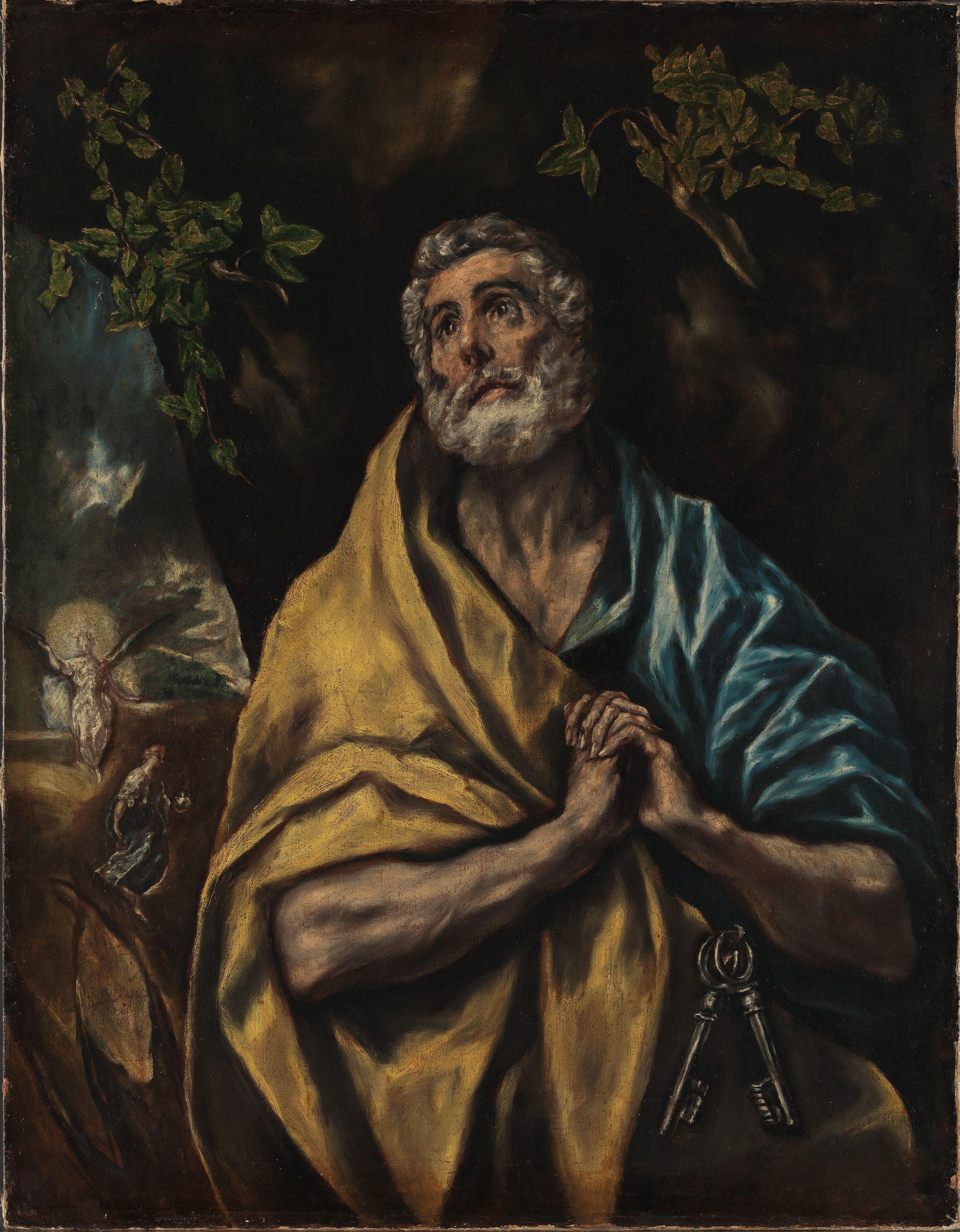
The cover shows El Greco's Tears of St. Peter, dated to the 1590s by the National Museum in Oslo. Peter's clasped hands and upward gaze offer a visual prompt for prayer. You could sit with the image briefly and consider what it means to bring regret before God with hope.
Artwork: El Greco, Tears of St. Peter, National Museum, Oslo, NG.M.01346. Public-domain painting; digital reproduction from the museum via Wikimedia Commons, licensed CC BY 4.0. No editorial alterations; the cover display may crop the image.
