Catholic spiritual direction is a conversation with a spiritual guide that helps you attend to your relationship with God. You bring your experience of prayer and ordinary life; the director listens, asks questions, and helps you reflect on your response to God. The purpose is to grow closer to Christ.
You might seek direction because prayer has become difficult, a decision needs careful reflection, or you want to live your faith more attentively. A first step is to ask your parish or a Catholic retreat center about experienced directors and arrange an introductory conversation.
What a spiritual director actually does
Spiritual direction is also called spiritual accompaniment. In his January 4, 2023 catechesis, Pope Francis explained that an accompanier walks beside the person, helps them notice what they might overlook, and supports discernment without taking over their decisions.
For example, you might describe feeling restless whenever you sit down to pray. A director could help you explore what you bring to that time, what you expect from prayer, and where you have noticed gratitude or resistance during the week. The conversation gives you something concrete to consider, rather than an instant explanation for every feeling.
The Jesuits in Britain's introduction to spiritual direction emphasizes awareness of God's presence and activity in everyday life. That includes work, family relationships, service, and choices as well as time spent in church.
Is spiritual direction the same as Confession?
Spiritual direction and sacramental Confession have different purposes. Confession belongs to the sacrament of Penance and includes the confession of sins to a priest; the Catechism, paragraph 1456, explains that sacramental setting. A conversation about your prayer life does not by itself become Confession.
Your spiritual director need not be a priest. Pope Francis's catechesis explicitly includes lay people among those who can offer accompaniment. If your director is a priest and you also want to receive the sacrament, make that request clearly rather than assuming every appointment includes it.
Spiritual direction is also distinct from counseling. The Jesuits' explanation identifies its central concern as finding and responding to God, rather than making problem-solving its primary purpose. Recognizing these differences helps you ask for the kind of support you actually need.
How to find a Catholic spiritual director
Begin locally. Ask a parish priest, diocesan office, or Catholic retreat house whether they can recommend someone offering spiritual direction. Say that you are looking for accompaniment rooted in Catholic faith, and briefly explain what draws you to it.
An established ministry can also help with introductions. The Office of Ignatian Spirituality's directory service, a ministry of the USA East Jesuit Province, connects seekers with trained directors in its region. Its service is currently limited to the eastern United States; readers elsewhere should look for local referrals.
An introductory meeting lets you discuss the director's approach and decide whether to continue. You can explain your own circumstances without trying to present a complete account of your life in the first message.
Questions to ask before you begin
Ask about the person's formation and experience in spiritual direction, the spiritual tradition that shapes their work, and how they accompany Catholics with circumstances like yours. The Office of Ignatian Spirituality recommends discussing training, fees, logistics, and expectations at the outset.
Clarify how often you would meet and how appointments are arranged. That ministry describes meetings commonly taking place about once a month for around an hour, with some directors offering virtual meetings. This is a useful example of a rhythm, not a rule every director follows.
Ask whether there is a fee, suggested donation, or other arrangement. Practices vary, and an early conversation about cost helps both people make a realistic commitment.
Discuss how privacy is handled, what the director's role includes, and how to raise a concern or change arrangements. Clear expectations leave more room for an honest conversation about faith.
What to bring to your first meeting
Prepare a few brief notes about why you are seeking direction now. Describe how you currently pray, what has been encouraging, and what you find difficult. Include your ordinary responsibilities, since a suggestion that fits a retreat may need adapting to life with children or a demanding work schedule.
Bring one recent example. Perhaps you felt grateful after helping a neighbor but resentful when asked to help again. Perhaps a familiar prayer has begun to feel rushed. Specific experiences give the conversation a place to start.
You do not need to arrive with extraordinary experiences or a polished spiritual vocabulary. Explain what happened in your own words. If you do not understand a question or suggestion, ask the director to explain it.
Between meetings, you might keep short notes about prayer and daily life. Our guide to the daily Examen offers one way to notice gratitude, struggle, and choices; discuss whether that practice fits your situation.
Saint Francis de Sales and gentle guidance
Saint Francis de Sales is a helpful saint to learn from here. His letters offered spiritual friendship and guidance to people in different circumstances. In Totum amoris est, Pope Francis describes a method that respected a person's dignity and gifts, avoided harshness, and still encouraged needed change.
Gentleness does not mean avoiding every challenging question. A good conversation may invite you to reconsider a habit, acknowledge a responsibility, or become more patient. The point is to help you respond freely and thoughtfully to God.
That is why the relationship should support growing responsibility rather than dependence. Pope Francis's catechesis makes clear that accompaniment neither replaces the Lord nor does the person's work for them.
Begin with an honest conversation
If you are interested, make one inquiry to your parish or a nearby Catholic retreat center. Explain what you hope to explore and ask about an introductory meeting. You can learn about the practical arrangements before deciding whether to begin regular direction.
The next step may be modest: a conversation, a clearer question, and a prayer practice that fits your life. Spiritual direction gives those small steps room to be considered with someone who can listen carefully.
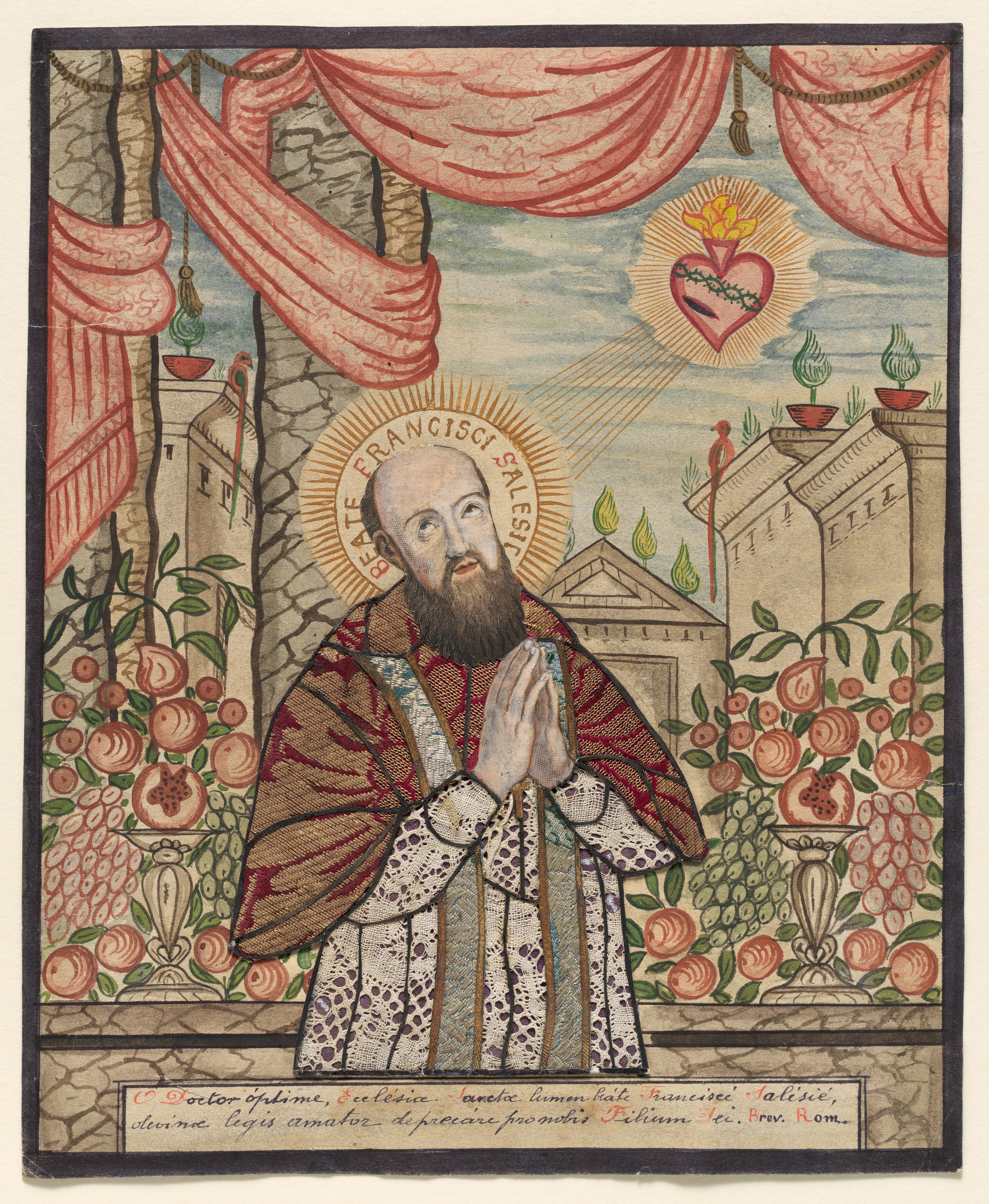
Artwork: Saint Francis de Sales, anonymous artist, eighteenth century; mixed media with hand-colored engraving, fabric, lace, and paint on paper. Metropolitan Museum of Art, Gift of Mrs. Richard Riddell, 1977. Photograph by Hyla Skopitz, released under CC0; see the Wikimedia Commons source and license. No additional image edits were made for this article; the website may crop its display.
