Catholic saint biography
St. Ursula
- Commemoration:
- October 21
- Lived:
- Early Christian period; dates uncertain — Cologne, Germany
Why dates and liturgical observances can differ
Read the sources for this biography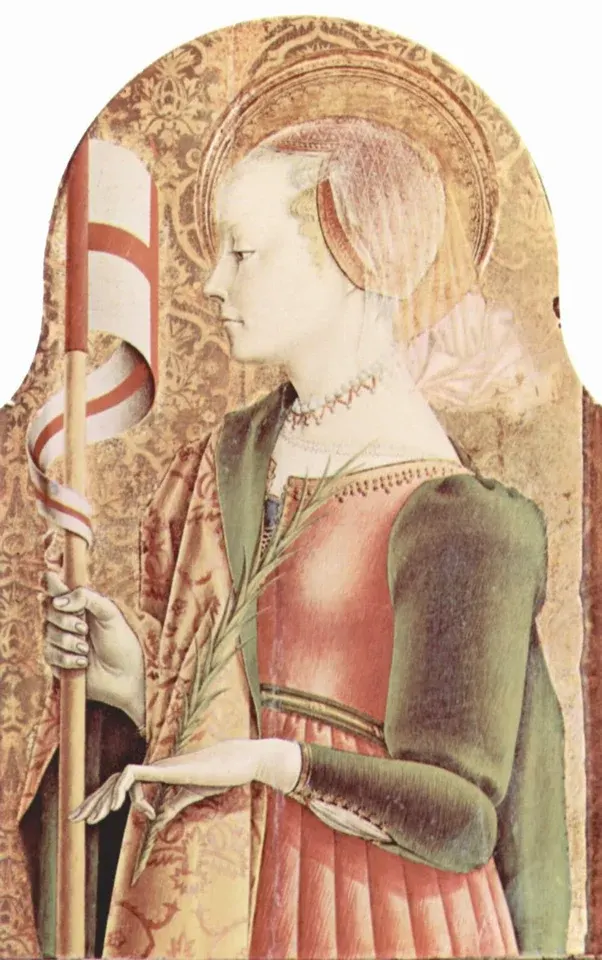
Biography
Ursula is associated with the ancient veneration of a group of female martyrs at Cologne. An inscription connected with their church provides evidence of that cult, but does not establish their names, number, or the circumstances of their deaths. Later calendars and narratives gradually supplied more detail.
The inscription names Clematius as the person responsible for rebuilding a basilica in honor of the martyrs. Its value lies in witnessing an established place of remembrance. It does not supply the large company, royal ancestry, or detailed travel narrative familiar from much later versions.
The legend’s popularity gave artists and worshippers a story of pilgrimage, solidarity, and fidelity under threat. Those themes account for its devotional force without resolving its historical difficulties. The early cult and the later story are both part of Ursula’s legacy, but they answer different questions.
The famous story of a princess traveling with eleven thousand companions is a developed legend rather than reliable biography. A responsible account preserves the distinction between the early memory of martyrs and the elaborate narrative that grew around it. Ursula’s October 21 commemoration and her lasting influence in Christian art reflect the importance of that devotional tradition.
Context & contribution
A patroness for a new form of women's religious life
Ursula's influence extends into the history of women's institutions. In 1535 Angela Merici founded the Company of Saint Ursula at Brescia, offering women an alternative to a cloistered religious vocation. The Ursulines explain Angela's choice through her devotion to Ursula's remembered courage, fidelity, and dedication to Christ.
The later Ursuline educational tradition made that patronage visible far beyond Cologne. This is a documented history of reception, distinct from establishing the princess's legendary journeys or the number of her companions. A story with uncertain early biographical details could nevertheless provide a compelling model for a founder, a name for a community, and an enduring point of reference for its mission.
Explore the sources for this section
AI-assisted source comparison updated 2026-09-26. Editorial approach
From the Saint Discovery blog
Keep exploring your faith
Practical guides to prayer, the saints, and living the Catholic faith.
Why Do Catholics Pray to Saints? Intercession Explained
Why do Catholics pray to saints? Learn how intercession differs from worship, how it relates to Jesus, and a simple way to ask a saint to pray for you.
A next step with your saintRead the article Living the seasonsHow to Celebrate Your Patron Saint's Feast Day at Home
Celebrate your patron saint's feast day with prayer, a short biography, and an act of kindness. A practical plan for families, sponsors, and individuals.
A next step with your saintRead the articleFrom reading to reflection
What will you carry with you?
After reading about St. Ursula, take a moment to consider:
- Distinguish Ursula as a figure of early martyr tradition from Ursula as Angela Merici's chosen patroness; explain what evidence is needed to study each role.
These are reflection prompts from Saint Discovery, not quotations from the saint.
Sources and further reading
Biography source comparison recorded on . This is an AI-assisted comparison, not independent human or ecclesiastical approval.
What the recorded review covers
AI-assisted expansion using the linked historical and ecclesiastical sources; devotional traditions distinguished from documented history.
A source list helps you check an account; it does not establish that every claim is certain. Follow the biography’s qualifications about historical evidence, traditions and feast calendars.
Suggest a correction to this biography
How we research these pages and handle corrections · Directory corrections log
More lives to explore
Suggestions based on the site’s quiz themes, not a historical relationship or a measure of holiness.