Catholic saint biography
St. Sabina
- Commemoration:
- August 29
- Lived:
- Early Christian period; dates uncertain — Rome, Italy
Why dates and liturgical observances can differ
Read the sources for this biography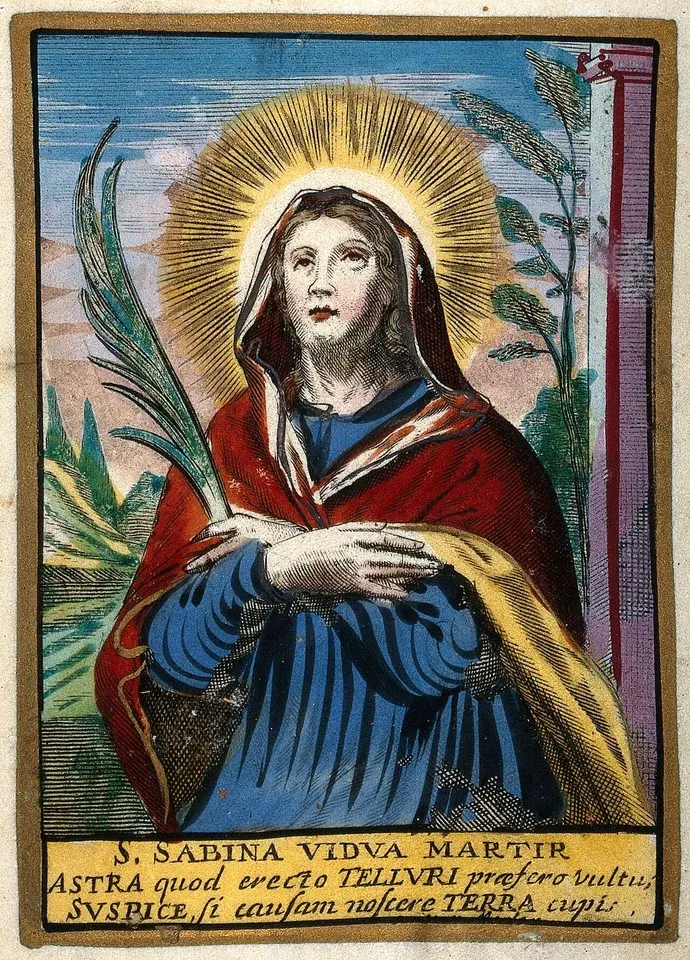
Biography
Sabina is venerated as a Roman martyr whose name is preserved in the ancient basilica on the Aventine. A later narrative describes her as a widow converted through Serapia, an enslaved Christian woman in her household, and says that both women died for their faith.
In the traditional story, Serapia’s influence reverses the expected hierarchy of a Roman household: the enslaved woman becomes the teacher of her mistress. This is an important theme in Sabina’s devotional memory, although the narrative cannot establish the circumstances of either woman’s life.
The basilica’s dedication preserves both women’s memory, and the transfer of relics to the Aventine is associated with the fifth century. Sabina’s story is therefore best approached through the history of Christian remembrance and worship, rather than expanded with unsupported childhood or family details.
The Catholic Encyclopedia explicitly cautions that the surviving martyrdom story is not reliable as a historical biography. Details about Sabina’s family, conversion, and exact date of death should therefore be treated as tradition. Her longstanding veneration and the church bearing her name provide firmer points of reference than the narrative’s individual episodes. Her feast is August 29.
Context & contribution
A building’s memory and an uncertain life
The basilica associated with Sabina supplies evidence of an enduring Roman commemoration. It does not, by itself, establish the family relationships and conversion sequence told in the later Acts. The Catholic Encyclopedia explicitly questions the historical reliability of that narrative.
The association with Serapia is nevertheless significant within the received story: an enslaved woman is portrayed as the one who introduces her mistress to Christianity. Readers can examine that reversal of expected social authority as a theme of the tradition while keeping the limits of the biographical evidence clear.
Explore the sources for this section
AI-assisted source comparison updated 2026-09-26. Editorial approach
From the Saint Discovery blog
Keep exploring your faith
Practical guides to prayer, the saints, and living the Catholic faith.
Why Do Catholics Pray to Saints? Intercession Explained
Why do Catholics pray to saints? Learn how intercession differs from worship, how it relates to Jesus, and a simple way to ask a saint to pray for you.
A next step with your saintRead the article Living the seasonsHow to Celebrate Your Patron Saint's Feast Day at Home
Celebrate your patron saint's feast day with prayer, a short biography, and an act of kindness. A practical plan for families, sponsors, and individuals.
A next step with your saintRead the articleFrom reading to reflection
What will you carry with you?
After reading about St. Sabina, take a moment to consider:
- What can a church dedicated to Sabina tell us about her remembrance that it cannot tell us about her daily life?
These are reflection prompts from Saint Discovery, not quotations from the saint.
Sources and further reading
Biography source comparison recorded on . This is an AI-assisted comparison, not independent human or ecclesiastical approval.
What the recorded review covers
AI-assisted expansion using the linked historical and ecclesiastical sources; devotional traditions distinguished from documented history.
A source list helps you check an account; it does not establish that every claim is certain. Follow the biography’s qualifications about historical evidence, traditions and feast calendars.
Suggest a correction to this biography
How we research these pages and handle corrections · Directory corrections log
More lives to explore
Suggestions based on the site’s quiz themes, not a historical relationship or a measure of holiness.