Catholic saint biography
St. Thecla of Iconium
- Commemoration:
- September 23
- Lived:
- Traditional apostolic-era setting; historical details uncertain — Traditionally Iconium, Asia Minor
Why dates and liturgical observances can differ
Read the sources for this biography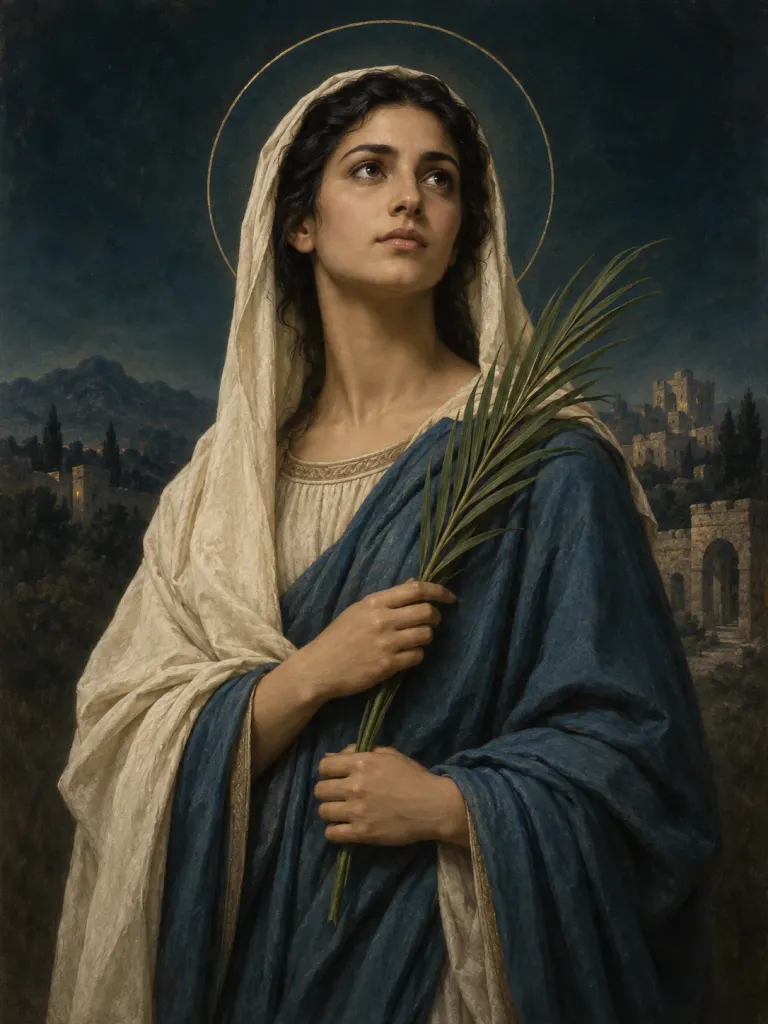
Biography
Thecla is the central figure of the Acts of Paul and Thecla, an early Christian work outside the New Testament. Its story presents her as a woman moved by Paul’s preaching to embrace Christian faith and a life dedicated to God. It recounts repeated dangers, miraculous deliverance, and her proclamation of the Gospel.
The story moves from Iconium to scenes of trial and deliverance elsewhere in the eastern Mediterranean. Fire and wild animals fail to destroy her, and she continues her chosen vocation. These episodes made her a memorable literary model of a woman remaining faithful despite powerful social pressure.
Her veneration spread in both East and West, with important associations at Seleucia and Iconium. Eastern Christians gave her titles emphasizing apostolic witness and female martyrdom. This extensive reception is historically significant even when the narrative cannot establish the itinerary or experiences of an individual woman.
The narrative is not a contemporary biography, and its historical basis remains uncertain. Thecla’s importance also lies in the influence of her story on early Christian devotion and ideals of courage and consecrated life. Western tradition commemorates her on September 23; Eastern calendars commonly use September 24.
Context & contribution
Influence does not settle historicity
The Acts of Paul and Thecla circulated widely and helped shape devotion in both Eastern and Western Christianity. The Catholic Encyclopedia places the text around the late second century and distinguishes its legendary narrative from the possibility of an earlier historical person behind it.
That distinction allows two different investigations. One asks what can be known about a woman in the apostolic period; the other asks how later Christians imagined female discipleship, teaching, and courage. The text supplies much stronger evidence for the second question than for a precise itinerary of Thecla’s life.
Explore the sources for this section
AI-assisted source comparison updated 2026-09-26. Editorial approach
From the Saint Discovery blog
Keep exploring your faith
Practical guides to prayer, the saints, and living the Catholic faith.
Why Is Saint Luke's Symbol an Ox? Meaning and Biblical Roots
Discover why Saint Luke's symbol is a winged ox, its biblical roots, and how the image connects his Gospel with priesthood and sacrifice.
Go deeper into ScriptureRead the article Prayer & reflectionHow to Pray the Jesus Prayer: A Catholic Beginner's Guide
Learn the Jesus Prayer, its Eastern Christian roots and biblical meaning, with a simple Catholic practice focused on Christ and mercy.
Go deeper into ScriptureRead the articleFrom reading to reflection
What will you carry with you?
After reading about St. Thecla of Iconium, take a moment to consider:
- How could a text be important evidence for early Christian ideals while remaining unreliable as a detailed biography?
These are reflection prompts from Saint Discovery, not quotations from the saint.
Sources and further reading
Biography source comparison recorded on . This is an AI-assisted comparison, not independent human or ecclesiastical approval.
What the recorded review covers
AI-assisted expansion using the linked historical and ecclesiastical sources; devotional traditions distinguished from documented history.
A source list helps you check an account; it does not establish that every claim is certain. Follow the biography’s qualifications about historical evidence, traditions and feast calendars.
Suggest a correction to this biography
How we research these pages and handle corrections · Directory corrections log
More lives to explore
Suggestions based on the site’s quiz themes, not a historical relationship or a measure of holiness.