Catholic saint biography
St. Boniface
- Commemoration:
- June 5
- Lived:
- Seventh–eighth centuries; died about 754 — England and continental Europe
Why dates and liturgical observances can differ
Read the sources for this biography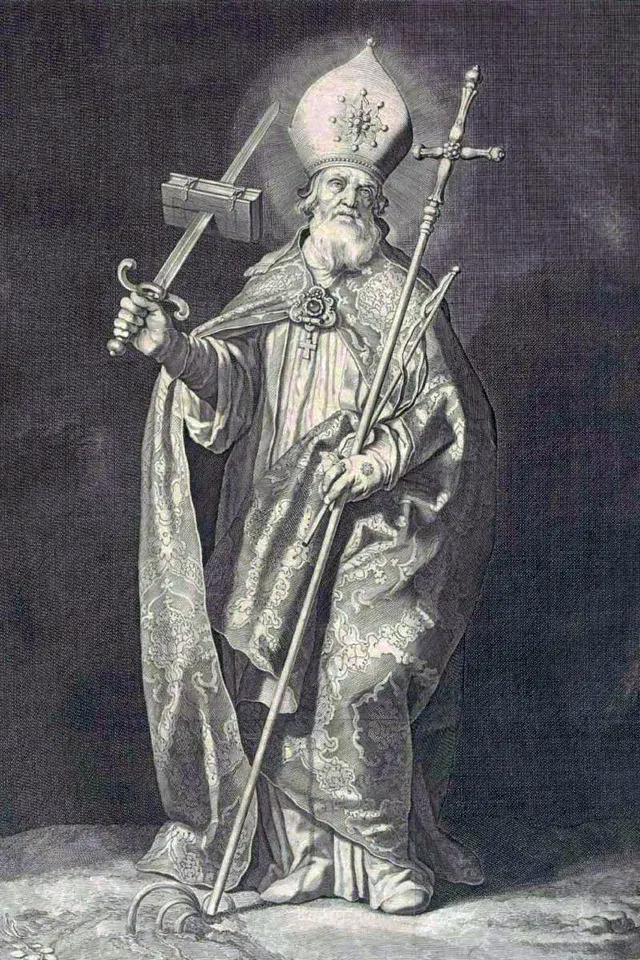
Biography
Boniface, originally named Winfrid, was an English monk and teacher who undertook missionary work on the European continent. His first journey to Frisia in 716 met political obstacles, but he returned to his missionary vocation after seeking authorization in Rome.
His monastic education included Scripture, grammar, rhetoric, and poetry. Before becoming a missionary abroad, he had responsibility for teaching in England. The organizational and literary skills visible in his later ministry therefore grew from substantial preparation rather than from missionary enthusiasm alone.
He declined the opportunity to remain an abbot in his homeland and sought papal support for further work on the continent. His career involved relationships with rulers and bishops as well as preaching. Those structures were essential to the survival of the communities connected with his mission.
Known as the Apostle of Germany, he combined preaching with the organization of dioceses and the development of church life. His learning is reflected in his correspondence as well as his teaching. He died as a martyr in the mid-eighth century, and his remains came to rest at Fulda. His commemoration is June 5.
Context & contribution
The women and books behind a mission
Boniface's correspondence and institutional work reveal a mission sustained by people who supplied books, church furnishings, encouragement, and their own labor. Women such as Lioba and Thecla belonged to this network and became leaders of religious communities. Their participation complicates a picture of evangelization conducted by a solitary traveling bishop.
The development of monasteries and centers for educating clergy also mattered because a mission needed to continue after its first preacher moved on. Books required readers; congregations required trained ministers; new foundations required reliable relationships. Boniface's organizational achievement is best understood through those dependencies. His letters preserve the anxiety and assistance behind the public accomplishments, making them valuable evidence for the collective work involved in building early medieval church life.
Explore the sources for this section
AI-assisted source comparison updated 2026-09-26. Editorial approach
From the Saint Discovery blog
Keep exploring your faith
Practical guides to prayer, the saints, and living the Catholic faith.
What Is the Domestic Church? John Paul II on Faith at Home
What Catholics mean by the domestic church, how John Paul II explained family life, and practical ways to begin with prayer, forgiveness and welcome.
Bring reflection into prayerRead the article Prayer & reflectionHow to Make a Spiritual Communion When You Cannot Receive
Learn how to make a spiritual communion, with a short original prayer and clear guidance on Mass, Confession, and times when you cannot receive.
Bring reflection into prayerRead the articleFrom reading to reflection
What will you carry with you?
After reading about St. Boniface, take a moment to consider:
- Map Boniface's mission as a network of teachers, women religious, messengers, donors, and local clergy; which connections would be hardest to replace?
These are reflection prompts from Saint Discovery, not quotations from the saint.
Sources and further reading
Biography source comparison recorded on . This is an AI-assisted comparison, not independent human or ecclesiastical approval.
What the recorded review covers
AI-assisted expansion checked against retrieved historical and institutional sources; traditions distinguished from documented history; not ecclesiastical approval
A source list helps you check an account; it does not establish that every claim is certain. Follow the biography’s qualifications about historical evidence, traditions and feast calendars.
Suggest a correction to this biography
How we research these pages and handle corrections · Directory corrections log
More lives to explore
Suggestions based on the site’s quiz themes, not a historical relationship or a measure of holiness.