Catholic saint biography
St. Symphorian of Autun
- Commemoration:
- August 22
- Lived:
- Third century; chronology uncertain — Autun, Gaul
Why dates and liturgical observances can differ
Read the sources for this biography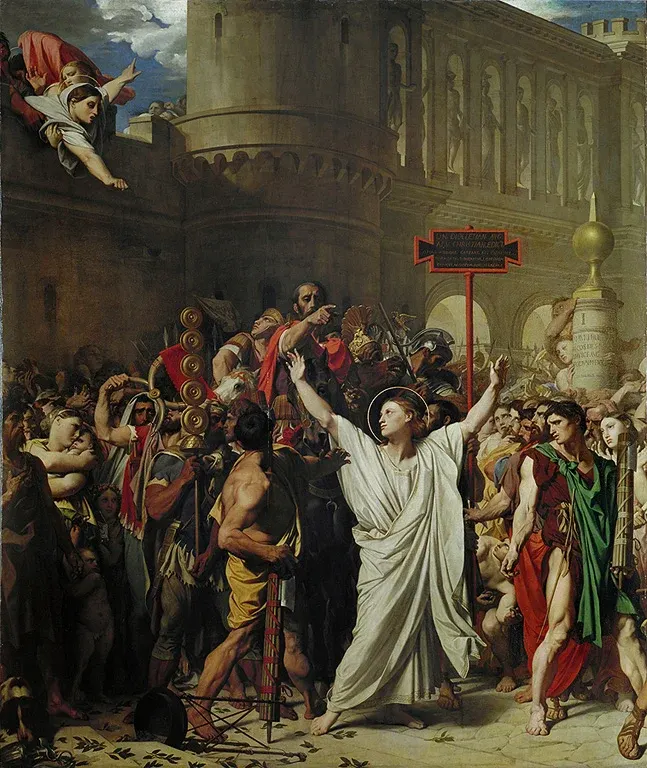
Biography
Symphorian was a young Christian martyr associated with Autun. The traditional account describes his refusal to honor a pagan goddess during a public religious procession. He was imprisoned and condemned to death, while his mother encouraged him to remain faithful as he was led outside the city.
Autun’s position on a Roman route gives the traditional scene a recognizable public setting. A civic religious procession becomes a test of allegiance for a Christian who refuses to participate. The story locates his witness in ordinary urban life, where worship and public identity were closely connected.
His mother’s presence is central to the account: from the walls she encourages him to remember God rather than surrender his faith. This remembered exchange made family formation part of his legacy. It is meaningful within the martyr tradition even though its words cannot be established as a contemporary transcript.
The precise date and individual details are not securely established; the Roman Martyrology’s cautious wording reflects that limitation. His longstanding local veneration remembers the courage of a young believer and the support of his family under persecution. Churches bearing his name preserve that memory, and his local feast is celebrated on August 22.
Context & contribution
A martyr's name in the archive of a community
The medieval religious house dedicated to Symphorian at Autun left evidence beyond his martyrdom story. The university research corpus Monastères cites Bishop Ansbert's testament of 696 and later documents naming the basilica, church, and community. It also records successive institutional forms, including a community of regular canons.
These records show how remembrance acquired a continuing social setting: land, gifts, clergy, and rules of common life. They do not settle the uncertain details of Symphorian's death centuries earlier. They instead allow a more precise account of his legacy, showing that a saint's name could organize the life and identity of a local religious institution across many generations.
Explore the sources for this section
AI-assisted source comparison updated 2026-09-26. Editorial approach
From the Saint Discovery blog
Keep exploring your faith
Practical guides to prayer, the saints, and living the Catholic faith.
Why Do Catholics Pray to Saints? Intercession Explained
Why do Catholics pray to saints? Learn how intercession differs from worship, how it relates to Jesus, and a simple way to ask a saint to pray for you.
A next step with your saintRead the article Living the seasonsHow to Celebrate Your Patron Saint's Feast Day at Home
Celebrate your patron saint's feast day with prayer, a short biography, and an act of kindness. A practical plan for families, sponsors, and individuals.
A next step with your saintRead the articleFrom reading to reflection
What will you carry with you?
After reading about St. Symphorian of Autun, take a moment to consider:
- Look at the dated documents in the Monastères record. Separate evidence about Symphorian's later community from evidence about the martyr himself.
These are reflection prompts from Saint Discovery, not quotations from the saint.
Sources and further reading
Biography source comparison recorded on . This is an AI-assisted comparison, not independent human or ecclesiastical approval.
What the recorded review covers
AI-assisted expansion using the linked historical and ecclesiastical sources; devotional traditions distinguished from documented history.
A source list helps you check an account; it does not establish that every claim is certain. Follow the biography’s qualifications about historical evidence, traditions and feast calendars.
Suggest a correction to this biography
How we research these pages and handle corrections · Directory corrections log
More lives to explore
Suggestions based on the site’s quiz themes, not a historical relationship or a measure of holiness.