Catholic saint biography
St. Sylvester I
- Commemoration:
- December 31
- Lived:
- Pope 314–335 — Rome
Why dates and liturgical observances can differ
Read the sources for this biography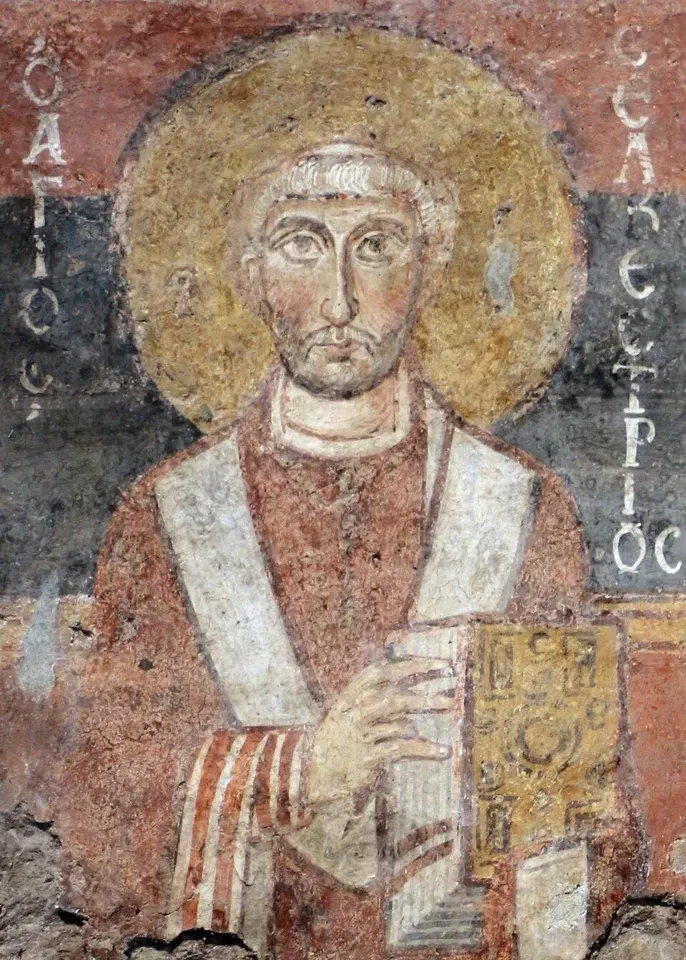
Biography
Sylvester I led the Church of Rome during the transformation that followed Constantine’s recognition of Christianity. His pontificate coincided with the construction of major Roman basilicas and the Council of Nicaea, which addressed the controversy over the divinity of Christ.
Elected in 314, he served as Christian worship acquired a new public setting. Major churches associated with Constantine, including the Lateran and Saint Peter’s, changed the religious landscape of Rome. These foundations gave the city’s Christian community buildings and visibility unlike those available during persecution.
The period also demanded clarity about Christian belief, most famously at Nicaea in 325. Sylvester’s memory belongs to this wider transition from a persecuted church to one entangled with imperial patronage. His veneration as a confessor emphasizes faithful service in that changed environment rather than death by execution.
The details of Sylvester’s personal involvement in the period’s major negotiations are uncertain. His biography should therefore distinguish the events of his pontificate from claims that he personally directed each one. He was honored as a confessor rather than a martyr. His December 31 commemoration remembers a bishop serving as the Church entered a dramatically changed public situation.
Context & contribution
A pontificate remembered through a changing city
Sylvester’s period in office coincided with Christianity’s new public position under Constantine and the development of major Roman churches. Buildings made this change durable and visible. His biography therefore benefits from the history of worship spaces as well as the chronology of papal office.
The Vatican News account acknowledges uncertainty about his personal role in some major disputes and councils. Events occurring during a pontificate are not automatically actions directed by that pope. Separating those categories helps a reader appreciate Sylvester’s historical setting without attributing every development of the Constantinian period to him.
Explore the sources for this section
AI-assisted source comparison updated 2026-09-26. Editorial approach
From the Saint Discovery blog
Keep exploring your faith
Practical guides to prayer, the saints, and living the Catholic faith.
Why Do Catholics Pray to Saints? Intercession Explained
Why do Catholics pray to saints? Learn how intercession differs from worship, how it relates to Jesus, and a simple way to ask a saint to pray for you.
A next step with your saintRead the article Living the seasonsHow to Celebrate Your Patron Saint's Feast Day at Home
Celebrate your patron saint's feast day with prayer, a short biography, and an act of kindness. A practical plan for families, sponsors, and individuals.
A next step with your saintRead the articleFrom reading to reflection
What will you carry with you?
After reading about St. Sylvester I, take a moment to consider:
- Choose one event from Sylvester’s pontificate and ask whether the source establishes his direct involvement or only the shared date.
These are reflection prompts from Saint Discovery, not quotations from the saint.
Sources and further reading
Biography source comparison recorded on . This is an AI-assisted comparison, not independent human or ecclesiastical approval.
What the recorded review covers
AI-assisted expansion using the linked historical and ecclesiastical sources; devotional traditions distinguished from documented history.
A source list helps you check an account; it does not establish that every claim is certain. Follow the biography’s qualifications about historical evidence, traditions and feast calendars.
Suggest a correction to this biography
How we research these pages and handle corrections · Directory corrections log
More lives to explore
Suggestions based on the site’s quiz themes, not a historical relationship or a measure of holiness.