Catholic saint biography
St. Maximin of Aix
- Commemoration:
- June 8
- Patron Saint of:
- Diocese of Aix
- Lived:
- Early bishop in local tradition; dates uncertain — Aix-en-Provence, France
Local feast in Aix; May 29 is associated with Maximin of Trier.
Why dates and liturgical observances can differ
Read the sources for this biography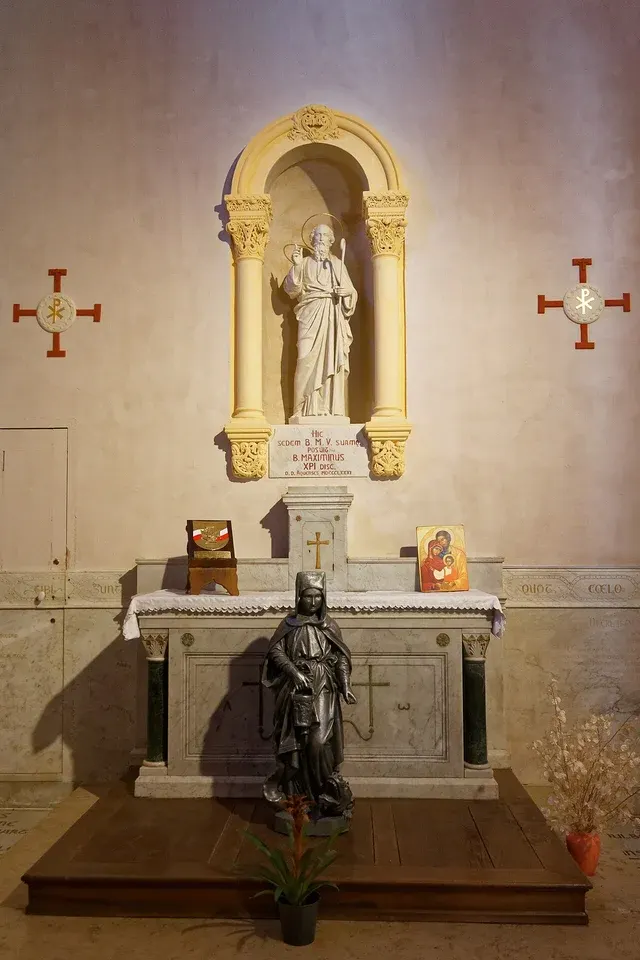
Biography
Maximin is honored as an early bishop connected with the beginnings of Christianity in Aix-en-Provence. The Roman Martyrology cautiously associates him with the city's first Christian preaching. Local devotion preserves his name in churches, shrines, and traditions surrounding the origins of the diocese.
The regional narrative ties the beginnings of Christianity in Provence to people known from the Gospels. It gives local worship a direct apostolic origin, but that purpose does not establish the voyage as history. The cautious wording of the martyrological remembrance avoids making those detailed identifications a condition of honoring him.
Later Provençal legend identifies him with a disciple of Jesus and a companion of the family of Bethany and Mary Magdalene. Those details are not securely established history and should be presented as regional tradition. He is the patron of the diocese of Aix and is celebrated locally on June 8. He is distinct from Maximin of Trier.
Local place-names and dedications testify to the persistence of his cult. They can establish where he was remembered more readily than where he was born or whom he accompanied. The enduring association with Aix is consequently the center of a restrained biography, leaving the Bethany connection clearly within Provençal legend.
Context & contribution
What a named sarcophagus can establish
France's Ministry of Culture lists a marble Christian sarcophagus at Saint-Maximin-la-Sainte-Baume under the traditional name of Maximin's tomb. Its heritage record identifies the object, its location in the basilica, and its protection in the 1840 historic-monument list, while leaving its century of manufacture unspecified.
This modest catalog entry is useful precisely because it separates observable material heritage from the identity claimed for it. A sarcophagus can document the setting in which a saint was commemorated without proving who first occupied it. Reading the traditional name alongside the catalog's limits provides a concrete way to appreciate Provençal devotion while leaving Maximin's uncertain chronology and legendary companions unresolved.
Explore the sources for this section
AI-assisted source comparison updated 2026-09-26. Editorial approach
From the Saint Discovery blog
Keep exploring your faith
Practical guides to prayer, the saints, and living the Catholic faith.
Why Is St. Thérèse the Patron Saint of Missions?
Why is St. Thérèse patron saint of missions? Discover her support for missionaries and practical ways to participate in the Church's mission from home.
Sharing the faithRead the article Everyday faithWhat Is Evangelization? A Catholic Guide to Sharing the Faith
What is evangelization? Learn the Catholic meaning, the new evangelization, and practical ways to share your faith with respect, confidence, and love.
Sharing the faithRead the articleFrom reading to reflection
What will you carry with you?
After reading about St. Maximin of Aix, take a moment to consider:
- Read the Ministry of Culture record and sort its information into physical description, legal protection, traditional attribution, and unanswered historical questions.
These are reflection prompts from Saint Discovery, not quotations from the saint.
Sources and further reading
Biography source comparison recorded on . This is an AI-assisted comparison, not independent human or ecclesiastical approval.
What the recorded review covers
AI-assisted expansion of the existing source-reviewed biography with comparison to retrieved cited sources; not ecclesiastical approval
A source list helps you check an account; it does not establish that every claim is certain. Follow the biography’s qualifications about historical evidence, traditions and feast calendars.
Suggest a correction to this biography
How we research these pages and handle corrections · Directory corrections log
More lives to explore
Suggestions based on the site’s quiz themes, not a historical relationship or a measure of holiness.